
Old friends make changes. A new dress, a different hairstyle, a goatee, or a tattoo are all worth acknowledging. Going to the gym and getting into shape is beneficial and praise-worthy. Guns aren’t my friends, but I take notice when changes are made to tools I respect. I don’t feel emotional attachment toward firearms, although certain types may bring on a wave of nostalgia. What I do despise are unreliable firearms.
I have a great and well-founded respect for the Glock pistol. They all operate the same way, the handling is standardized, and every Glock centerfire handgun I have tested has proven reliable. Glock recently introduced a new version of its service pistol. The Glock Generation 6 is an interesting handgun and, in several important ways, a solid improvement over previous generations.
I’m not certain everyone should trade in a well-proven Generation 5 pistol to adopt the Generation 6 — but I will be doing so. I have always deployed the best, most proven handgun I could afford. Let’s look at the Glock Generation 6 and see what it has to offer.
Some Things Are the Same
The Glock Generation 6 operates in the same manner as previous versions. Anyone trained on the original Glock 17 may pick up the newest pistol with complete familiarity. The slide lock, magazine latch, trigger, sights, and takedown procedure remain the same. Only the details differ.

Previous Glock generations introduced incremental improvements including different grip textures, interchangeable backstraps, accessory rails, MOS optics systems, and the Glock Marksman barrel. The Generation 6 represents a more substantial mechanical redesign. Certain internal components are no longer interchangeable with earlier pistols, and it may take some time before the aftermarket catches up with triggers and barrels.
Fortunately, Glock magazines remain unchanged, and the Generation 6 still fits existing Glock holsters.
One reason for the redesign was Glock’s desire to prevent illegal “Glock Switch” conversion devices from fitting the pistol. From a corporate standpoint, it was a valid concern and less expensive to address during the design phase than later through litigation and redesigns. The short-lived V-series models served as a stopgap but are no longer offered. The Generation 6 appears intended to address those concerns more permanently. We will see how quickly Chinese innovation reacts.
On a side note, never underestimate the adversary. Our protein-fed ex-con criminal class doesn’t usually arm itself with pocket pistols or five-shot revolvers. The majority carry polymer-frame, striker-fired 9mm handguns. Figure that reality into your training. Take into account the possibility that an assailant may possess some degree of skill. That pocket .380 or snub-nose .38 doesn’t look nearly as comforting in the harsh light of reality.
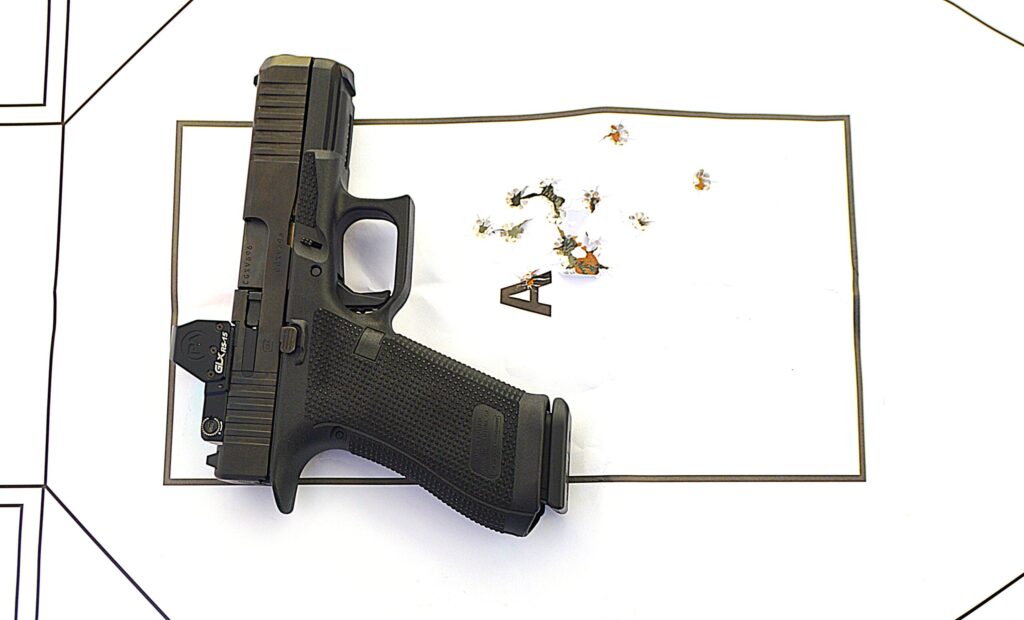
The second major change to the Generation 6 involved making the Glock more suitable for carry optics. Glock needed a lower deck height and a more secure mounting system.
Grip and Handling
The Generation 6 grip frame features an aggressive but well-balanced texture. It offers good adhesion without becoming abrasive during long firing sessions. The surface also avoids the sticky feeling that tends to grab clothing during concealed carry.
Several features introduced in the Generation 5 remain but have been refined further. The trigger guard undercut is more pronounced, slightly lowering the bore centerline and improving recoil control. An elongated grip tang makes the pistol more comfortable during extended firing.
Lowering the bore axis also benefits optics mounting and slightly reduces leverage for muzzle flip.
Two textured indexing pads ahead of the trigger guard accommodate modern thumbs-forward shooting techniques. These pads may also be used to position the trigger finger during tactical movement. Walking with the finger inside the trigger guard is a dangerous mistake. For years I used the old hooked finger position outside the guard, but I now prefer indexing the trigger finger flat against the frame. The Generation 6 stabilizing pad helps maintain that placement consistently.
The frame also retains the standard Glock accessory rail.
Slide and Optics Improvements
The slide profile remains familiar, and the pistol ships with Glock’s typical white-outline sights. Slide cuts remain compatible with aftermarket sight upgrades. Cocking serrations are slightly sharper than those on the Generation 5, offering improved purchase without becoming overly aggressive.
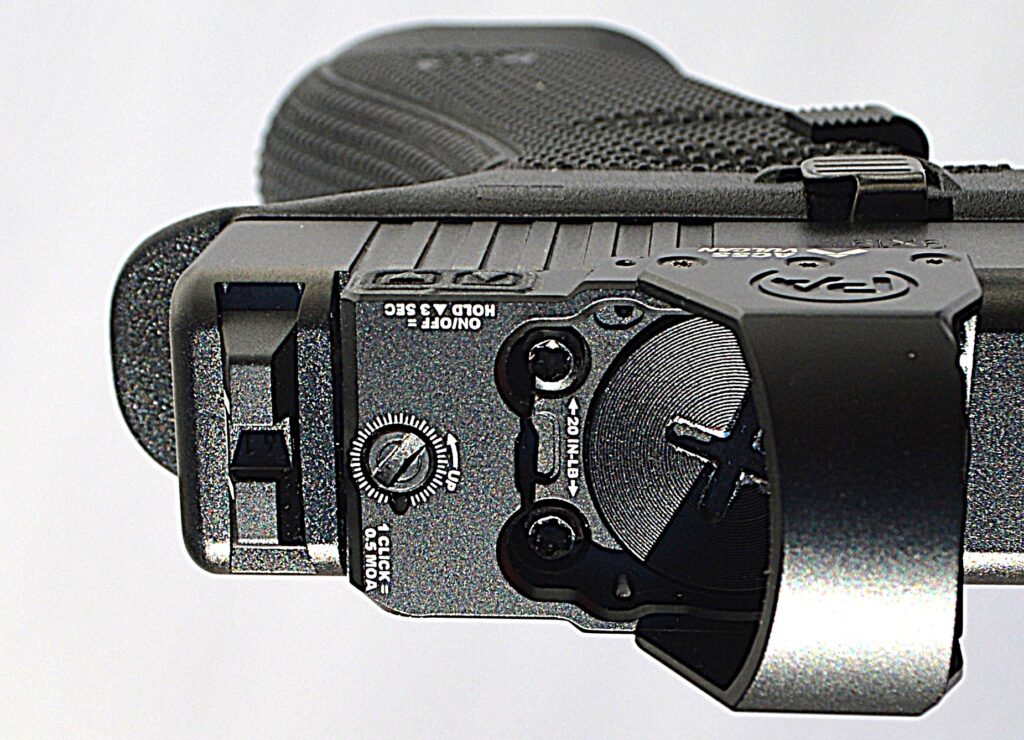
The major changes involve the extractor tunnel and optics mounting system.
The extractor channel has been redesigned to reduce the likelihood of overly long screws or excess Loctite entering the extractor area. The system appears robust and proved completely reliable during testing with both brass- and steel-cased ammunition.
The primary improvement in the Generation 6 is the optics system itself. Earlier MOS systems were acceptable for their time, but the new setup offers a noticeably lower mounting deck.
I recently tested more than twenty optics for Gun Digest’s Optics Ready Red Dot Sights for Modern Handguns. As a rule, direct-mount optics are generally more secure and sit lower on the slide. In most cases where optics became loose, the mounting plate — not the optic itself — was responsible.
Of course, proper installation matters. I use the correct screws, a Real Avid torque wrench, and blue Loctite when mounting carry optics.
The new direct-mount system accommodates three footprints using Glock-supplied compression washers. Washers are included for the RMR, DeltaPoint Pro, and C-More footprints. Each polymer washer incorporates recoil studs to properly position the optic.
There are valid reasons for choosing each footprint. The Trijicon RMR remains well proven, while the Leupold DeltaPoint Pro has seen law enforcement adoption, including use by the U.S. Marshals Service.
Several aftermarket companies are already offering metal adapter plates for the ACRO footprint and others. We will have to see how well those systems work long-term, as some may approach the height of the original MOS setup.
Time will tell.
Trigger and Shooting Impressions
The Generation 6 features a flat-faced trigger. Pull weight is similar to the Generation 5, but the trigger feels better due to the shorter perceived reach and improved trigger geometry.
Testing three examples showed trigger pulls averaging approximately 5.8 pounds. After break-in and removal of factory grease, I would expect that to settle closer to 5.6 pounds.
The Glock trigger still demands concentration and coordination. Reset remains sharp and positive. With proper technique, the Glock performs very well in practical shooting drills. It is not difficult for a trained shooter to make cranial-ocular hits at 25 yards.
Those who practice regularly will find the Generation 6 a capable performer.
My personal example is the Glock 45. Among the three initial offerings — the Glock 17, Glock 19, and Glock 45 — the 45 best suits my preferences. The full-size grip offers excellent control, while the shorter slide clears leather quickly and tracks smoothly onto target.
Since I typically deploy a carry optic, the shorter sight radius compared to the Glock 17 is of little consequence.
I initially tested the Glock 45 with fixed sights before moving to optics. Felt recoil seems slightly reduced compared to the Generation 5, likely due to the revised grip texture and extended beavertail tang.
Carry Optics Evaluation
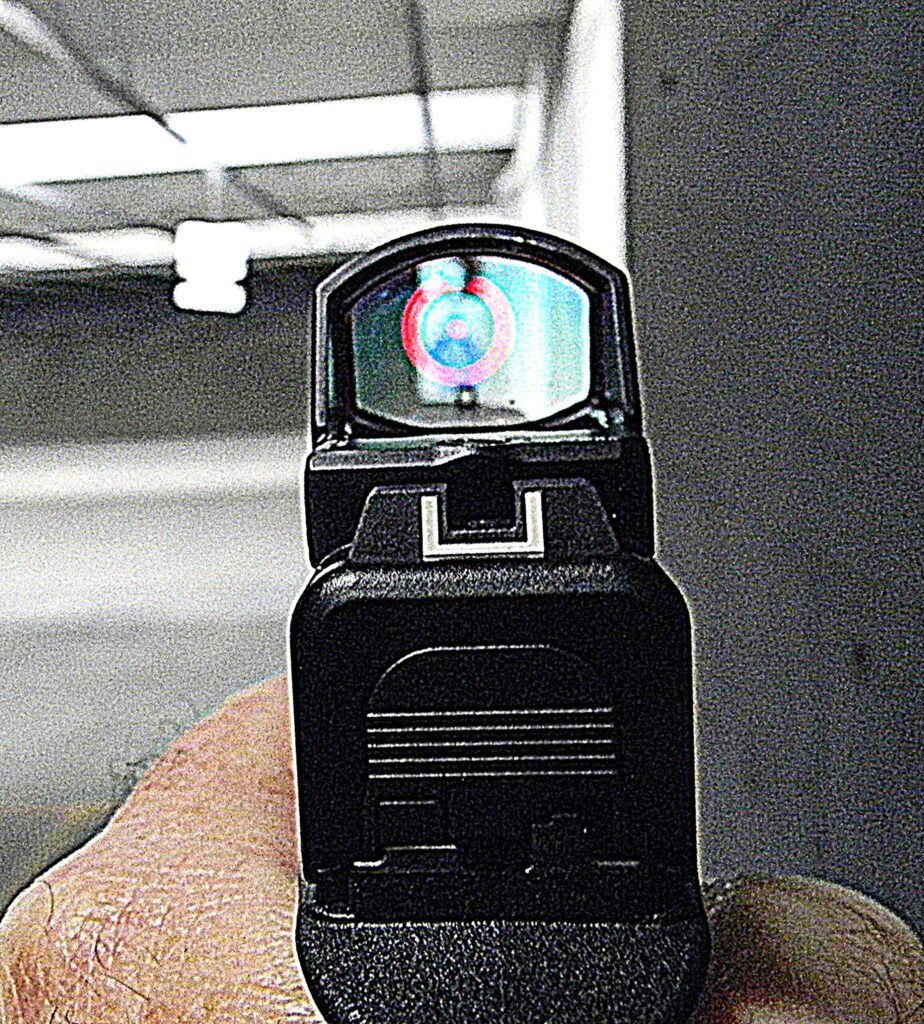
For optics testing, I selected the Primary Arms GLx RS-15. I have used this optic extensively and felt it paired well with the Glock platform.
The GLx RS-15 features a generous 26x20mm viewing window. One advantage of the C-More footprint is its ability to support larger optics with top-loading battery compartments. The battery cap secures with a Phillips-head screw and provides a solid lockup. The optic uses a CR2032 battery.
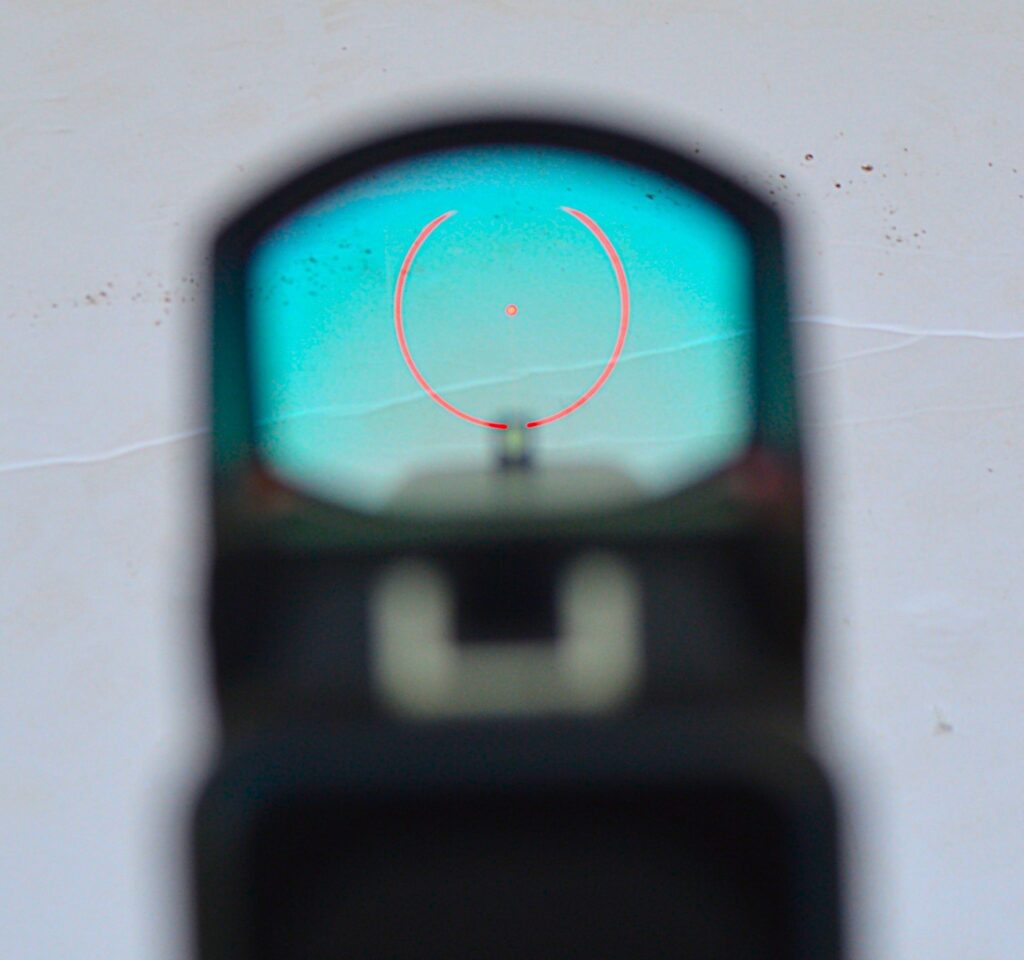
This sight also incorporates the ACSS Vulcan reticle, which offers genuine utility. The central aiming point is a 3 MOA dot, while the outer Vulcan ring extends to a massive 230 MOA.
The value of this system becomes obvious during presentation drills. If the shooter does not have a proper sight picture, portions of the outer ring immediately appear in the window and guide correction. The ring also proves useful during moving-target exercises.
For concealed carry, it offers an interesting balance between competition-style speed and defensive practicality.
Shooters preferring a conventional dot may simply disable the Vulcan ring.
Firing Tests
I have fired the Glock 45 Generation 6 extensively over several months. Results have been excellent. There have been no failures to feed, chamber, fire, or eject.
Ammunition tested included full metal jacket, hollow point, solid copper, handloads, and steel-cased ammunition. I am no fan of steel-cased ammunition. Because the steel case does not obturate like brass, powder blowback tends to foul the pistol quickly.
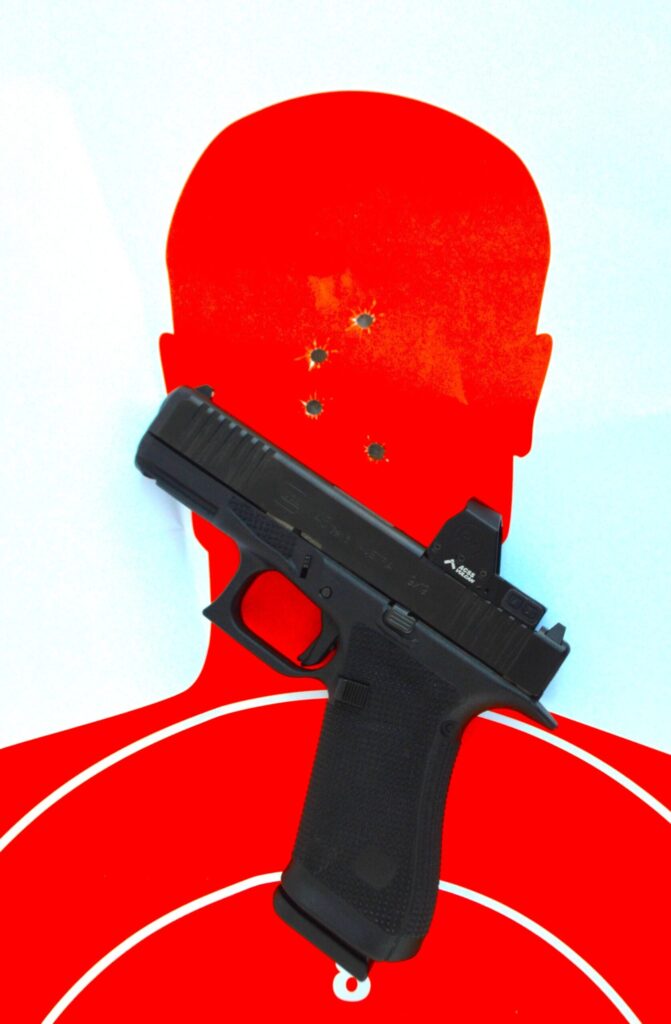
Still, previous Glock pistols generally handled steel-case ammunition well, so it was important to verify the Generation 6 did the same.
It did.
The pistol functioned reliably with both brass and steel-case ammunition, and handloads presented no issues.
The lower optics deck, improved trigger face, and revised grip texture all contribute to a noticeably better shooting experience. Benchrest accuracy remains comparable to previous Glock pistols, which is to say very respectable for a service handgun.
Most Generation 5 pistols will group around 2.5 inches at 25 yards with quality ammunition. My Generation 6 equals that standard and occasionally improves upon it. Black Hills 124-grain JHP loads consistently produced groups under two inches. Federal 124-grain HST performed similarly.
Carrying the Glock Generation 6
For concealed carry testing, I selected the Tulster ARC holster. Tulster offers a wide variety of modern carry gear including light-bearing holsters, optics-ready rigs, and advanced magazine carriers.
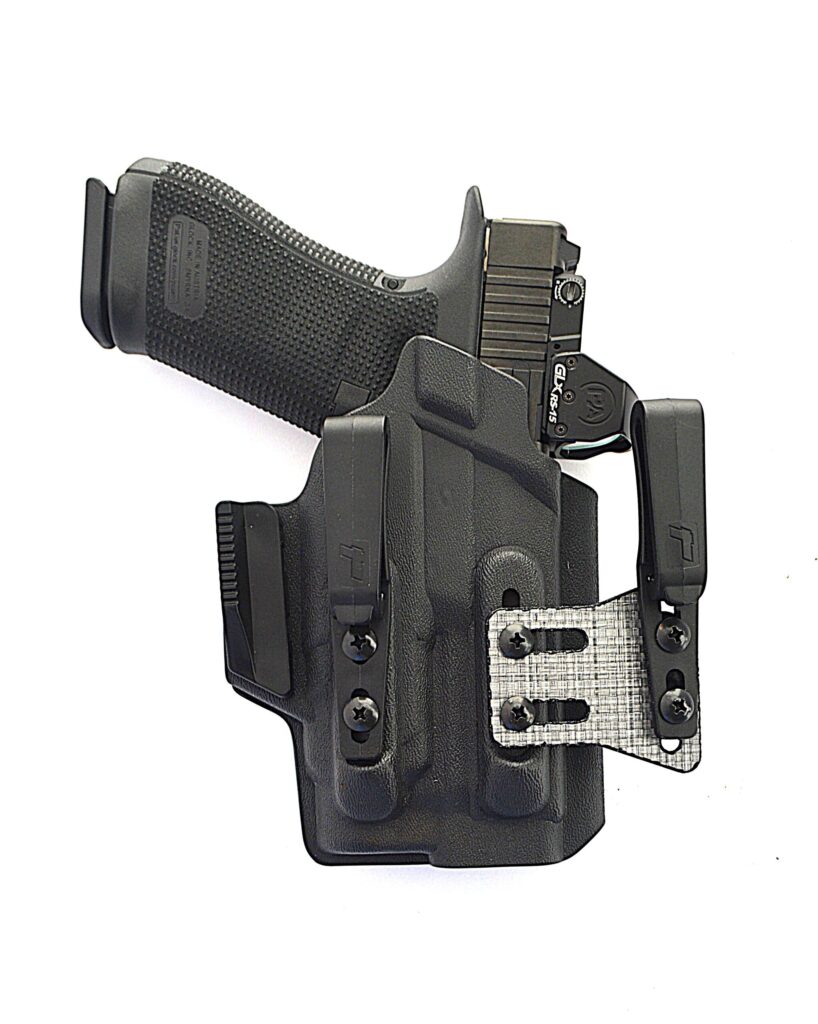
The ARC may be configured for either traditional IWB or appendix carry. The Tulster Wing helps prevent outward rotation and keeps the pistol tight against the body.
I generally carry IWB, but I decided to spend time working with appendix carry during this evaluation. If you intend to carry AIWB, invest in a properly designed holster. I practiced presentation and reholstering extensively in dry fire with a triple-checked unloaded pistol before carrying the Glock in that role.
There is definitely something to the AIWB method when paired with a quality holster.
The ARC proved to be that holster.
Final Thoughts
The Generation 6 has proven itself during testing. Between my own range time and that of several associates, the pistol has already surpassed one thousand rounds.
The first guy at the range with a new pistol always attracts attention.
One younger shooter who recently purchased a Glock 47 liked the Generation 6 but wasn’t ready to trade up. Another shooter still carrying a Generation 3 decided immediately that he would.
As for the author, my long-serving Generation 5 may soon move into a supporting role.
Shooters already heavily invested in a Generation 5 may not feel compelled to switch immediately. However, anyone purchasing their first Glock should strongly consider the Generation 6 over earlier models.
The Generation 6 makes the grade.