
Among the most interesting handgun calibers is the .38 ACP Super. A combination of superb performance, high velocity, good penetration, and versatility makes the .38 ACP Super an attractive caliber. Most refer to it as the .38 Super, and many affectionately call the cartridge the Super .38. They are one and the same.
The .38 ACP Super may demonstrate performance superior to the 9mm Luger and 7.62×25mm Tokarev, and in some cases, it compares favorably to the .357 Magnum. This versatility is best realized by a careful handloader. While there are a number of high-performance .38 Super factory loads, they are not as widely available as 9mm Luger ammunition. There is also little demand for match-grade accuracy in .38 ACP Super factory ammunition.
A handloader can control his loads and always have exactly what he expects on hand. When dealing with a less popular cartridge such as the .38 ACP Super, handloading is often the best way to keep the cartridge up to speed in terms of performance.
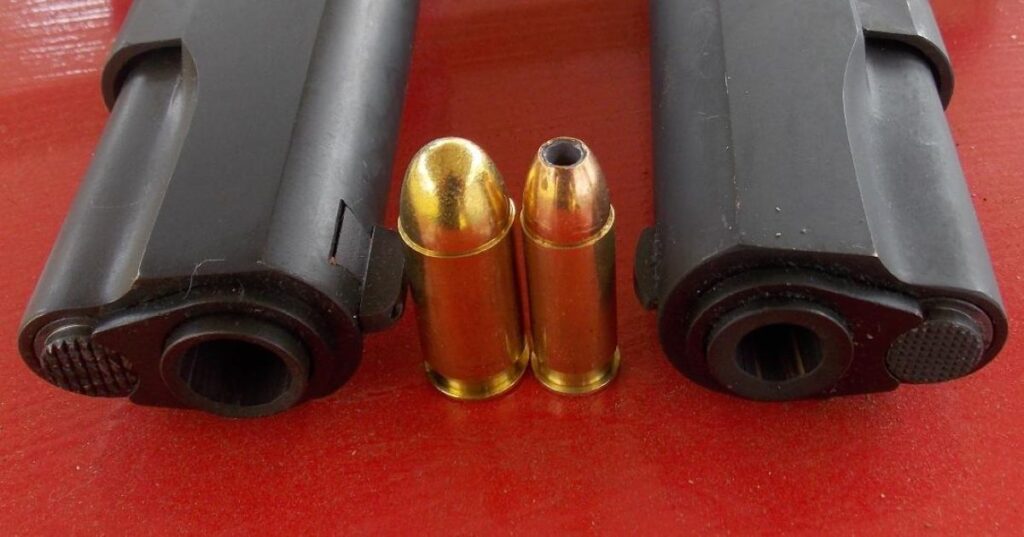
The .38 ACP Super is as accurate as any common handgun caliber. Fired in a Government Model 1911, the .38 ACP Super will perform alongside the .45 ACP in accuracy. Add a Bar-Sto precision barrel, and there is a similar improvement in either caliber.
At one time, factory .38 Super barrels headspaced on the case rim rather than the case mouth, resulting in problematic accuracy in some pistols. While these pistols were not always as accurate as their .45 ACP counterparts, they were usually accurate enough for personal defense.
Colt changed the way its barrels headspaced in 1981. Modern 1911 handguns chambered in .38 ACP Super properly headspace on the cartridge case mouth. Bar-Sto had moved to this system long before and provided some of the finest barrels available for .38 Super pistols. They still do.
My Experience with the .38 Super
My first experience with the .38 Super came with a Colt Combat Commander. The 4.25-inch-barreled 1911 handled quickly, and I really liked it. I had read a feature on handloading the .38 ACP Super by Rick Miller and felt the cartridge had great promise.
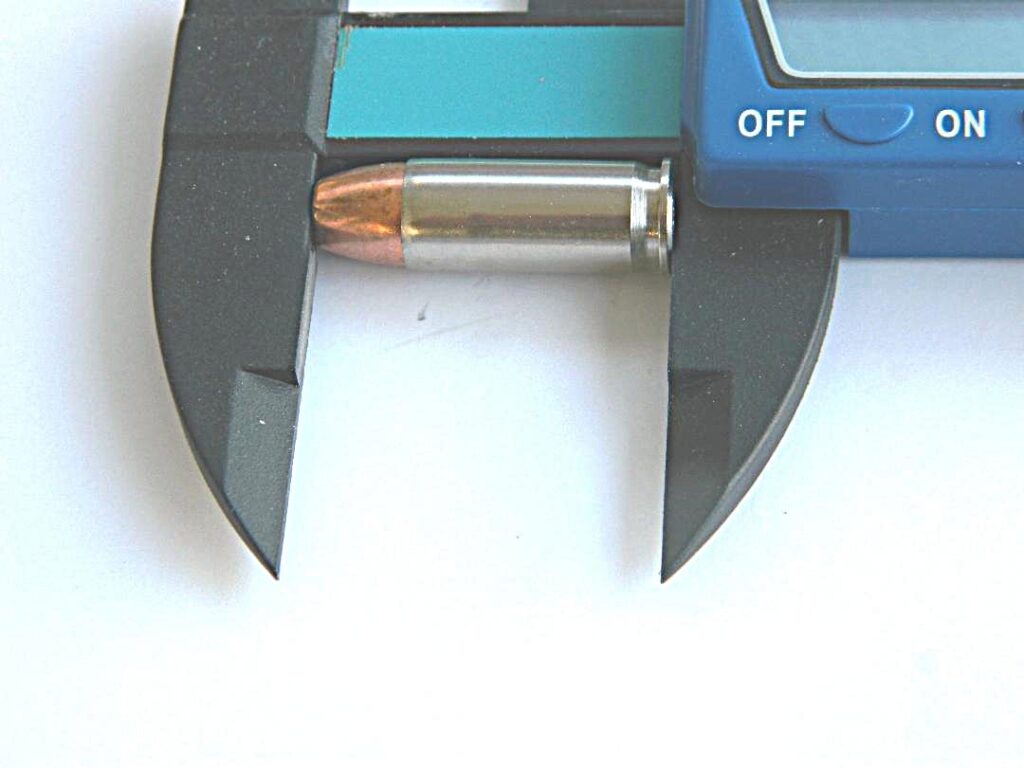
I added a Bar-Sto barrel and high-visibility sights and carried the pistol for several months as a patrol lieutenant. I loaded the pistol with handloads. As I recall, the combination was a Speer 125-grain JSP and enough Unique powder to achieve 1,300 fps.
I eventually moved to a larger agency with a firewall of regulations, and the .38 Super was sacrificed in a trade. At the time, I could afford only those handguns with a well-defined mission. The four-inch-barreled .357 Magnum wasn’t altogether a step down, and when I finally stopped wearing a badge, I was carrying a 1911 .45 ACP.
Recently, I have renewed my interest in the .38 ACP Super. After all, a cartridge capable of shooting through two car doors and maintaining a flat trajectory out to 100 yards is a worthwhile loading. It offers all this performance with the reliable, fast-handling action of the 1911 handgun.
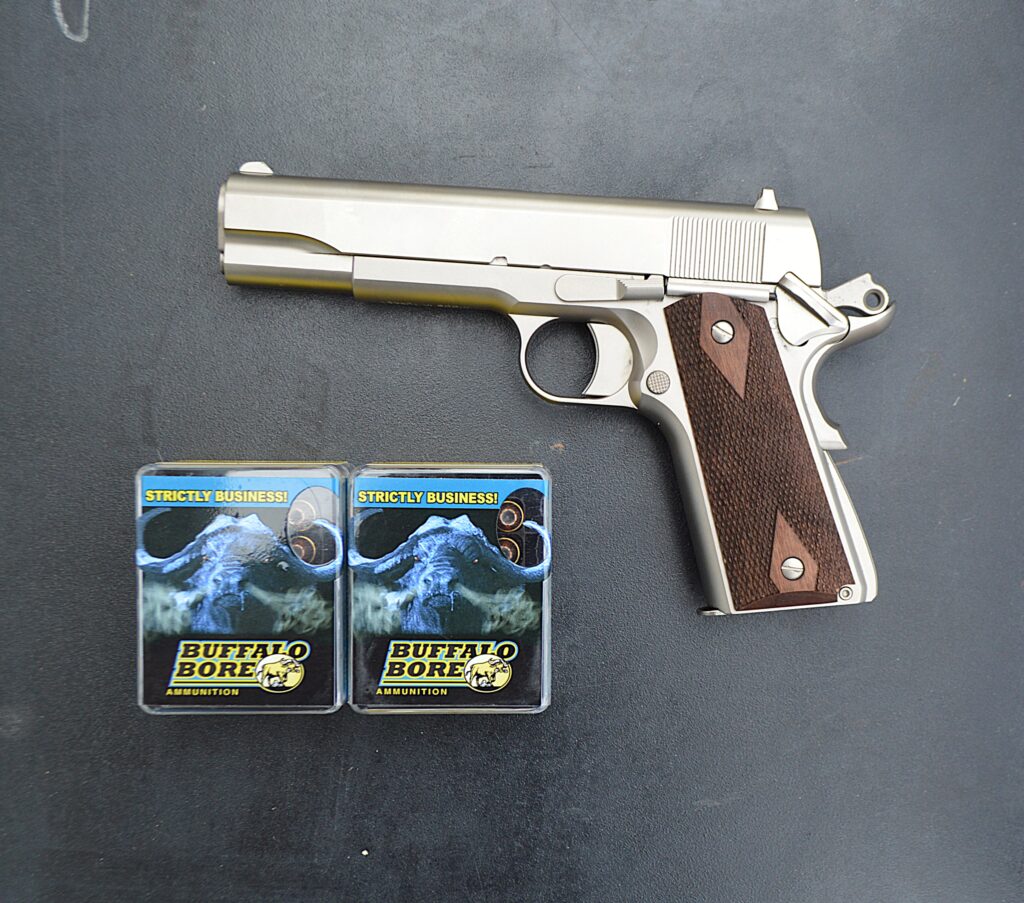
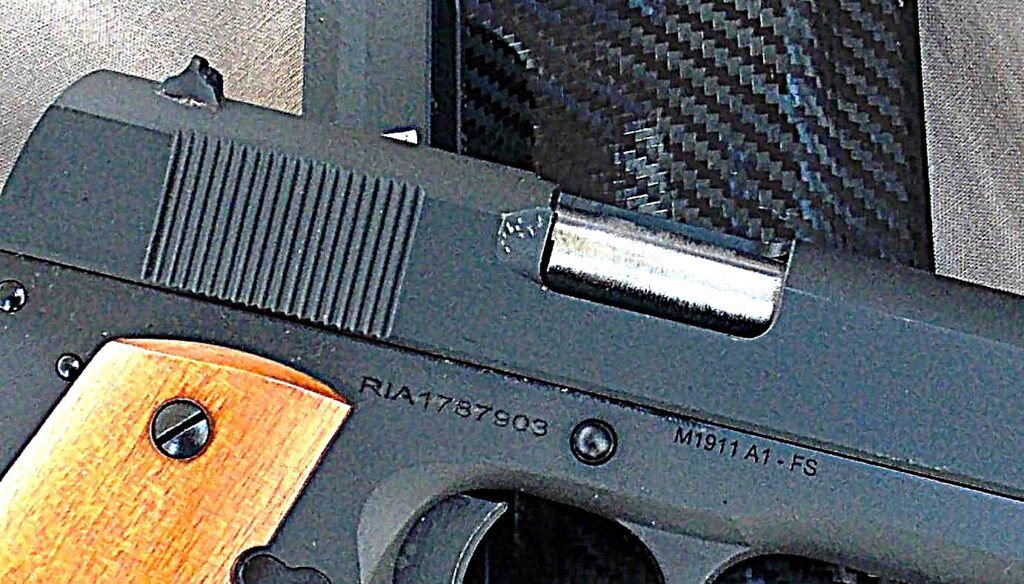
I ran across a Tisas .38 Super in a shop at a fair price. The kicker? The pistol is a factory special edition with a spare 9mm barrel. This allows the high-performance Super to be utilized for certain situations while the 9mm provides an economical option for practice. Each barrel features a ramped feed ramp.
I also used a Ruger SR1911 Lightweight Commander. No, Ruger does not manufacture a factory .38 Super pistol. This particular handgun was fitted with a Bar-Sto barrel. All that was needed was to carefully fit the barrel and secure Mec-Gar magazines in the proper caliber.
I have also used Rock Island 1911 .38 Super pistols from time to time. I have been impressed by the relative accuracy of these affordable handguns. At present, the Tisas is my primary test pistol.
Handloading the .38 ACP Super
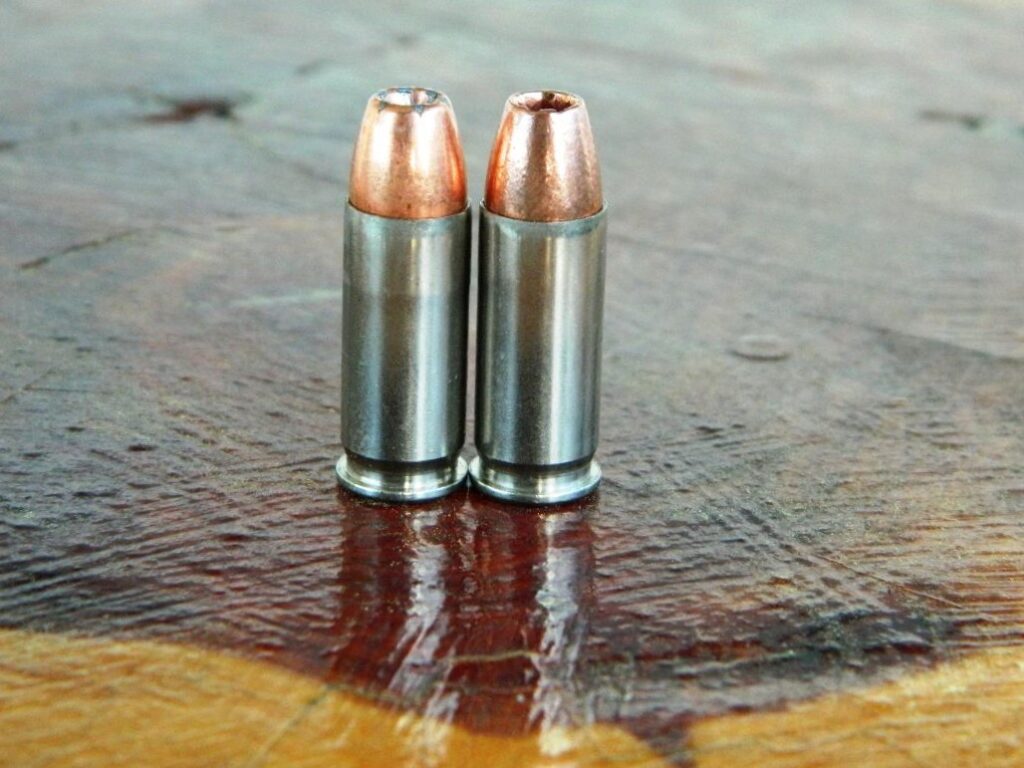
As a handloader, I am interested in economy as well as performance. The .38 ACP Super uses .355-inch bullets, so the wide variety of 9mm Luger bullets makes for a good selection. The .357 Magnum typically uses .357-inch bullets, and these may be suitable for certain loads.
I concentrated on 9mm bullets because I believe the spectrum of 90- to 147-grain bullet weights is well suited to the .38 ACP Super.
Cast bullets work about as well in the .38 ACP Super as they do in the 9mm Luger, which means some are accurate and others less so. I have not found the right combination for great accuracy with hard-cast bullets, despite trying several types, weights, brands, and coatings. They are accurate enough for government work, I suppose.
I mentioned that the .38 ACP Super could outperform the 7.62×25mm Tokarev. The maximum performance for the Tokarev is approximately 86 grains at 1,500 fps. I have handloaded the Tokarev cartridge to 1,400 fps with a 100-grain Hornady XTP and 1,500 fps with the Hornady 85-grain XTP. The factory Wolf 85-grain JHP runs a sedate 1,240 fps but expands well.
A correspondent reports dropping a coyote in its tracks at a considerable 105 yards with a similar loading from his Tokarev.
It isn’t difficult to run the Hornady 90-grain XTP at 1,550 fps in the .38 ACP Super, considerably exceeding the Tokarev’s performance. I find this important because the 7.62×25mm enjoys a reputation for high velocity and penetration that few cartridges can challenge.
The Barnes 95-grain XFB is another good combination in the Super, although velocity is lower.
When comparing these loads to the .357 Magnum, it is easy to see that the .38 ACP Super achieves similar or sometimes greater velocity. The .357 Magnum has an advantage with bullet weights of 140 grains and heavier, particularly when the barrel is longer than four inches.
Just the same, the .38 ACP Super is a great all-around personal-defense and field cartridge.
When loading the .38 ACP Super, I encountered no real stumbling blocks. This straight-walled cartridge uses relatively economical, fast-burning powder. Standard small pistol primers are used.
Finding the Right Bullet Weight
After some interesting experimentation with lightweight bullets for the caliber, I realized that the best choices are in the 115- to 124-grain range. Accuracy and the balance of expansion and penetration favor the 124-grain bullet.
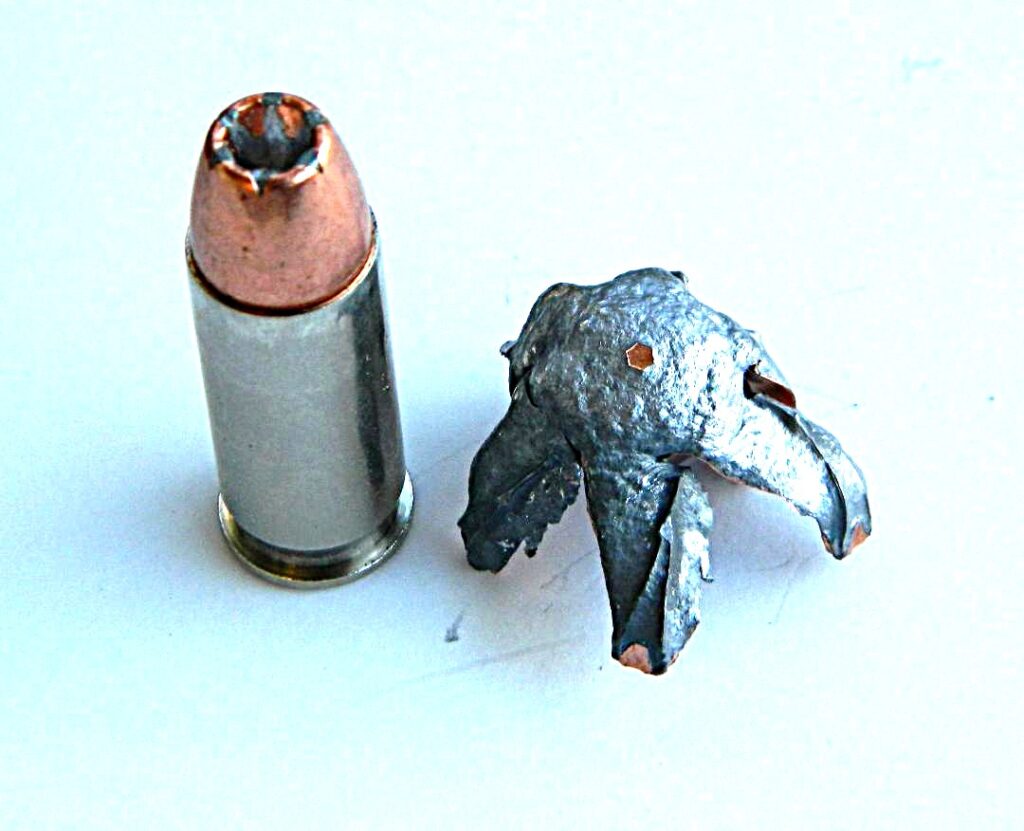
The Hornady 115-grain XTP is a good starting point. The XTP offers a good balance of expansion and penetration. Designed to perform at 1,000 to 1,200 fps in the 9mm Luger, the 115-grain XTP expands to a greater extent at the Super’s velocities of 1,300 fps or more.
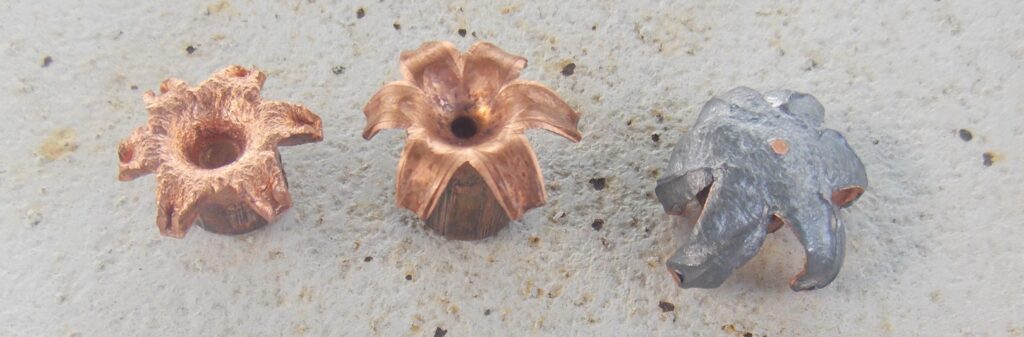
The Speer Gold Dot is another great performer. The Gold Dot grew wings and expanded dramatically at velocities exceeding 1,300 fps. It was the top bullet for expansion, with some bullets measuring .83 inch in test media.
The Hornady XTP remains a solid choice for most loads. Sierra’s 124-grain V-Crown also offers good expansion and accuracy.
Muzzle signature is limited with all loads. There was never a trace of excessive muzzle flash. At most, there was a warm orange glow, and that occurred only with the slower-burning powders. The .38 ACP Super demonstrates excellent efficiency and a complete powder burn with most loads.
The Heavyweight 147-Grain Bullet
I decided to put aside my previous experience with the 147-grain XTP bullet in the 9mm Luger cartridge. This isn’t a dynamically expanding bullet at typical 9mm velocities, although penetration is good. Accuracy has never been difficult to achieve.
In the .38 ACP Super, accuracy is excellent with nearly any 147-grain load, due primarily to the bullet’s long bearing surface.
As I experimented with higher velocities, the Hornady 147-grain XTP exhibited good expansion in artificial media. This balance of expansion and penetration, favoring penetration, is desirable in many situations.
I was surprised that recoil did not increase noticeably with the heavier bullet, another advantage of the .38 ACP Super.
At 1,100 fps, the 147-grain XTP demonstrated modest recoil, virtually no muzzle flash, excellent accuracy, and, in ballistic testing, a good balance of expansion and penetration.
The minimal expansion of this bullet weight at 9mm Luger velocities was not indicative of its expansion at .38 ACP Super velocities. When comparing 9mm JHP bullets, the 147-grain XTP shows the greatest proportional improvement at .38 ACP Super velocities.
However, the limited cartridge case capacity of the .38 Super also restricts heavy-bullet performance. Velocity means a great deal. A small-bore cartridge relies upon velocity and expansion for effectiveness rather than bullet mass and diameter.
The .38 Super has plenty of velocity to initiate expansion in a well-designed bullet. However, with 147-grain bullets, a hot .38 Special loaded with 158-grain bullets may outperform the .38 Super.
Just be certain of what you want and what you are getting.

More Than 40 Years with the Super
I did a quick reference check and found that I have more than 40 years of experience with the .38 Super. It hasn’t been continuous, but I have used the cartridge during various periods of my life, from 1981 to the present. Still, the experience runs pretty deep.
Which load is my favorite? Personal preference and subjective criteria lead to different conclusions.
I find the 124-grain Hornady XTP loads, at velocities exceeding 1,300 fps, the most useful and the loads I would prefer for personal defense.
For those facing heavily clothed felons or threats behind cover on a regular basis, the 147-grain XTP offers excellent performance. For field use against varmints or predators, the fast-stepping 115-grain bullet offers good accuracy.
For sheer enjoyment, the 90-grain class is exceptional.
You pay your money, and you take your choice. The .38 ACP Super is a cartridge with excellent performance.
Load Data and Safety Considerations
Warning: The following data was recorded during testing in good-quality firearms with carefully checked headspace. These are historical test results, not independently verified loading recommendations. Some reported loads may exceed current published limits.
The author cautions against using these loads in older .38 Super pistols, particularly inexpensive Spanish Llama or Star pistols, even those marked .38 Super.
The Tisas features a ramped barrel that provides additional support for the cartridge case head. However, firearms chambered for the same cartridge can differ in construction, chamber dimensions, and tolerances.
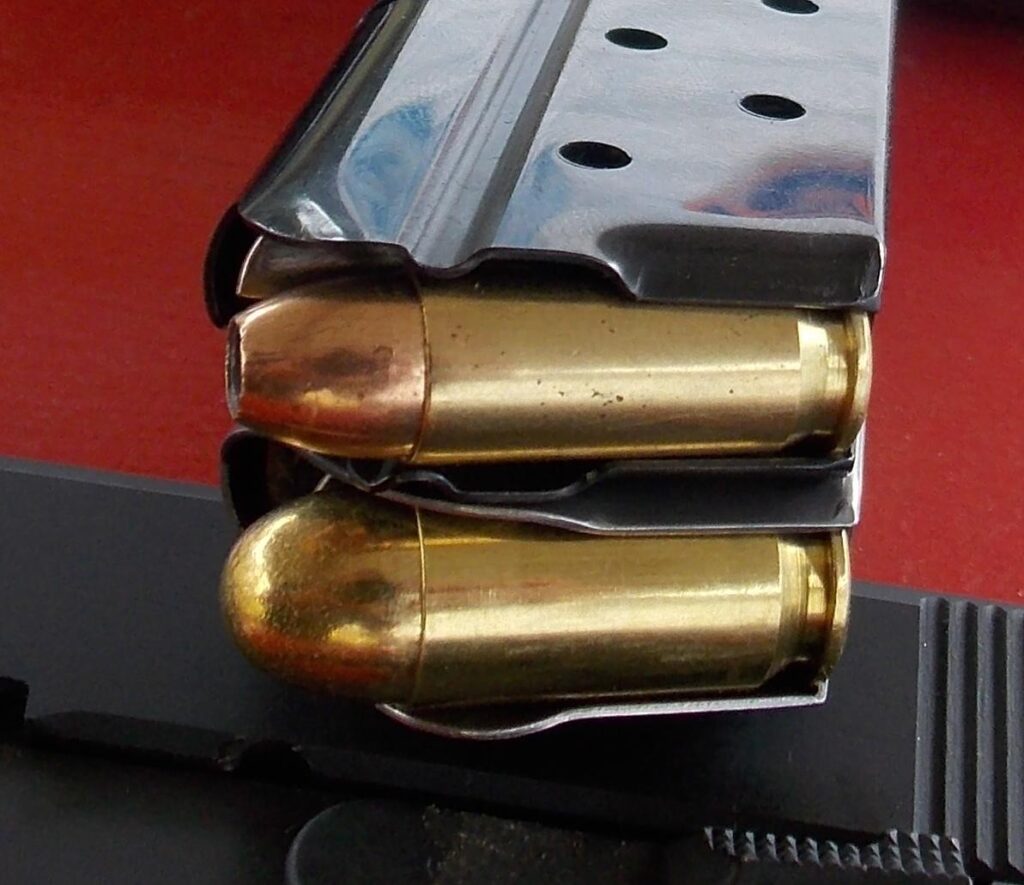
The original article emphasizes the importance of cartridge overall length and warns that seating a bullet too deeply can sharply increase chamber pressure. Even well-made pistols with tight tolerances may not safely accommodate the same ammunition.
A quirk of the .38 Super is that it may reach a point of efficiency where additional powder no longer produces a corresponding increase in velocity.
Experienced handloaders will find the Super an interesting cartridge for many applications. Best of all, it combines performance with nostalgia and a sense of history.
.38 ACP Super — Reported Velocity Results
| Bullet | Powder tested | Reported velocity (fps) |
|---|---|---|
| Hornady 90-gr. XTP | Titegroup | 1,319–1,541 |
| Hornady 90-gr. XTP | WW231 | 1,290–1,366 |
| Hornady 90-gr. XTP | Power Pistol | 1,399–1,470 |
| Sierra 90-gr. JHP | Titegroup | 1,433 |
| Sierra 115-gr. FMJ | Power Pistol | 1,360 |
| Sierra 115-gr. JHP | Power Pistol | 1,437 |
| Sierra 115-gr. JHP | True Blue | 1,366 |
| Speer 115-gr. Gold Dot | HS-6 | 1,199 |
| Hornady 124-gr. XTP | Titegroup | 1,140 |
| Hornady 124-gr. XTP | Vihtavuori N105 | 1,469 |
| Speer 124-gr. Gold Dot | Power Pistol | 1,260 |
| Speer 124-gr. Gold Dot | HS-6 | 1,220–1,290 |
| Sierra 124-gr. V-Crown | Power Pistol | 1,250–1,278 |
| Sierra 124-gr. V-Crown | Titegroup | 1,155 |
| Montana Gold 130-gr. FMJ | Ramshot Zip | 1,170 |
| Montana Gold 130-gr. FMJ | True Blue | 1,188 |
| Hornady 147-gr. XTP | Accurate No. 7 | 1,144 |
| Hornady 147-gr. XTP | HP-38 | 1,005 |
| Hornady 147-gr. XTP | Vihtavuori N105 | 1,190 |
Notes: The author reported that the 90-grain combinations were enjoyable to develop and fire, although the lighter bullets were not particularly accurate. The Speer 115-grain Gold Dot with HS-6 was described as an accurate, mild practice load. The Hornady 124-grain XTP with Titegroup was among the most accurate combinations tested.
Additional Bullet Tests
| Bullet | Powder tested | Reported velocity (fps) |
|---|---|---|
| Barnes 95-gr. XFB | Titegroup | 1,360–1,455 |
| Barnes 115-gr. X | Unique | 1,260–1,350 |
| Magnus 122-gr. cast | Titegroup | 1,150 |
| Magnus 122-gr. cast | WW231 | 1,120 |
| Rim Rock 160-gr. RNL | Unique | 1,050 |
Comparative Velocity — 4.25-Inch Bar-Sto Commander Barrel
Ruger SR1911 converted to .38 Super
| Bullet | Powder tested | Velocity (fps) |
|---|---|---|
| Hornady 90-gr. XTP | Titegroup | 1,519 |
| Sierra 115-gr. FMJ | Power Pistol | 1,414 |
| Sierra 115-gr. JHP | True Blue | 1,352 |
| Hornady 124-gr. XTP | Vihtavuori N105 | 1,401 |
| Sierra 124-gr. V-Crown | Power Pistol | 1,180 |
Accuracy Results — 25 Yards
Average of two five-shot groups, measured in inches.
| Bullet | Tisas | Ruger / Bar-Sto |
|---|---|---|
| Hornady 90-gr. XTP, Titegroup | 3.60 | 1.90 |
| Hornady 90-gr. XTP, Power Pistol | 3.40 | 1.50 |
| Sierra 115-gr. JHP, Power Pistol | 2.90 | 1.20 |
| Speer 115-gr. Gold Dot, HS-6 | 2.90 | 1.25 |
| Hornady 124-gr. XTP, Titegroup | 3.55 | 1.90 |
| Hornady 124-gr. XTP, N101 (as reported) | 2.90 | 1.60 |
| Hornady 147-gr. XTP, HP-38 | 2.45 | 1.20 |
| Magnus 122-gr. RN, W231 | 3.50 | 2.00 |
Expansion and Penetration in Water
| Bullet | Velocity (fps) | Expansion (in.) | Penetration (in.) |
|---|---|---|---|
| Sierra 115-gr. JHP | 1,370 | Fragmented | 10 |
| Hornady 115-gr. XTP | 1,290 | 0.64 | 19 |
| Hornady 147-gr. XTP | 1,099 | 0.54 | 24 |
| Speer 124-gr. Gold Dot | 1,402 | 0.81 | 16 |
| Sierra 124-gr. V-Crown | 1,203 | 0.60 | 14 |
Editorial note: The original accuracy table identifies one powder as “N101,” while the earlier velocity data refers to “N105.” This discrepancy should be checked against the author’s original test records. The Barnes bullet designation should also be confirmed before publication. Water-test penetration figures should not be treated as equivalent to calibrated ballistic-gelatin results.