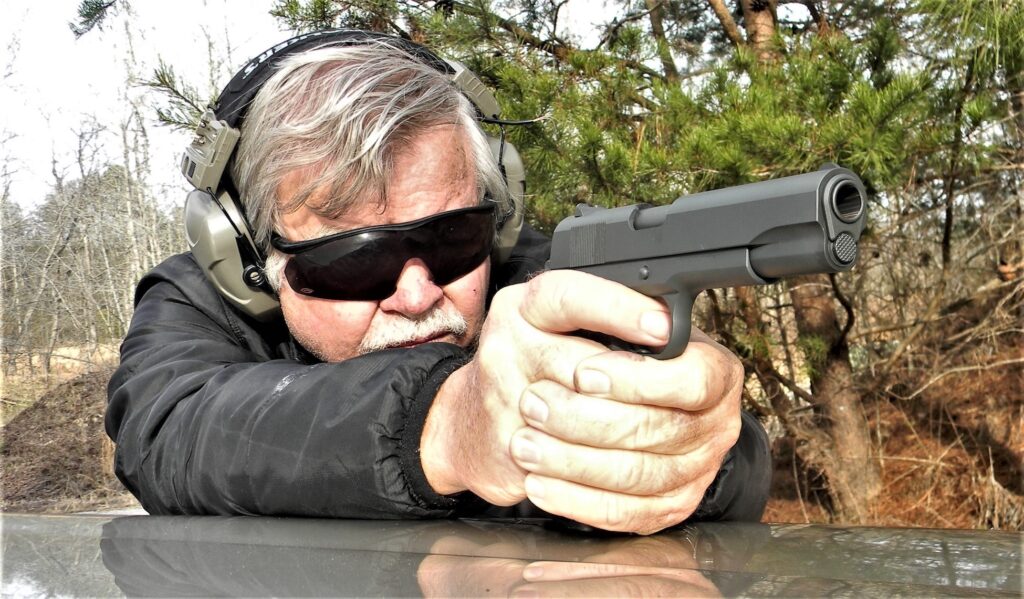
Handloading has many directions and goals. Not to mention joys! Some like to set down and carefully load a few rifle cartridges in the hope they exhibit a tight group at 200 yards. They weigh each charge and use custom seating dies. Others wish to load a maximum effort .44 Magnum revolver load that will anchor a deer or hog with authority at longish handgun range. Others like to load up a 5.56mm rifle or 9mm handgun load that is as accurate as possible for fast moving competition but also affordable. Sure each firearm has their tackdriver loading. Other loads are accurate enough for most uses. Then there is the guy like me. I shoot a lot of 9mm and .45 ACP.
For a number of decades I have loaded clean reliable ammunition suitable for use in any handgun or carbine in the battery. A combination that is reliable, clean burning, and reasonably accurate in a compact, mid size or long slide handgun is desirable. At one point carbines became important. If I trade guns or have a new purchase the loads are something I may count upon. I have developed my handloads to the point a firearm that doesn’t feed and function well with these loads is sick. As an example not long ago I test fired the Ruger LC 45 .45 ACP carbine. Loads worked up for a Thompson .45 ACP carbine did just fine in the Ruger. I would have been surprised had they not. Likewise the loads function well in my .45 ACP handguns. The combinations are sensibly loaded with a little less velocity than most factory loads but with enough energy to function in a wide range of firearms. While reliability is foremost these loads are accurate enough for most uses. A few are exceptionally so. But do I use only the most accurate performers? Not always. I use the loads that are the best general purpose loads.
The .45 ACP is a low pressure cartridge. Muzzle flash is limited and standard loads do not stress the firearm. Accuracy is often good to excellent. A modest charge of fast burning powder is all that is needed. Cartridge cases will last for many loadings. A few years ago I was able to own and fire an Auto Ordnance Thompson carbine extensively. The piece is heavy and the trigger reset is slow. You’ve got to love it and this isn’t a target gun. I found that with a little tweaking loads put up for Colt, Kimber and Springfield 1911 handguns worked just fine. The Thompson is interesting but it isn’t difficult to find another firearm that serves better in almost any role. I enjoyed loading and cranking that big 50 round drum magazine and the carbine got a lot of attention at the range. Owning the Thompson is a brash thing to do, to own something that has no purpose. I enjoyed the Thompson for a while but became interested in other things.
Loading Notes
I have loaded more .45 ACP cartridges than any other caliber, perhaps more than all the rest put together. As a young peace officer it was nothing for me to fire 500 rounds in a month- sometimes more. Unique Powder and cast lead bullets were affordable. All that mattered was that the piece functioned and l learned a great deal.
The 1911 is a locked breech design and operates best at standard pressure- 230 grains at 800 to 850 fps. 1911 handguns will usually run just fine with 230 grains at 790 fps. Carbines operate well with much the same type of load in my experience. Something that is misunderstood is the strength of a carbine. These firearms are a straight blowback design. You increase pressure and velocity at your own risk. Battering is the result of a heavy hand with the powder measure. You don’t need high velocity with the .45 ACP. The .45 ACP doesn’t gain much velocity in a 16 inch barrel. Most of the cartridge’s powder energy burns in a 5 inch 1911 barrel. The carbine may exhibit a gain of 50 fps. 9mm may gain 100 to 200 fps in a carbine. It is a whole different beast but the .357 Magnum may gain 800 fps in a carbine due to its heavy charge of slow burning powder.
45 ACP doesn’t become a speed demon in a carbine. The advantage of the carbine is all about easy handling and accuracy. A person who has a difficult time with the pistol will excel with a long gun. The recreational value is high. With practice a .45 ACP carbine is a great home defense and ranch gun for moderate range use. I didn’t wish to work up separate loads for each pistol caliber firearm. As for defense use my carry gun and carbine are both loaded with the Black Hills Ammunition 230 grain JHP. A load duplicating this load’s point of impact over the sights was desirable. Let’s jump ahead to feed reliability- this is important but bullet profiles similar to 230 grain hardball worked well.
In the carbine there are different rules but also the same rules. As an example fast burning powder is good but medium burning powder works well also. Slower burning powder such as Accurate#7 results in slower locktime in the milliseconds. In other words the bolt is closed longer. The slower burning powder provides slightly greater velocity and sometimes accuracy is improved. Toads are often more accurate in some 1911 handguns. But on the other hand the powder charge is greater and this means more powder is eventually used in high volume loading. It all depends on the application. Besides, I am a gun crank and enjoy an experiment. If not I would be doing loading only for economy and that isn’t nearly as satisfying.
A drawback with slower burning powder came up
A medium burning powder in a handgun isn’t anywhere like a slow burning Magnum powder but there is a difference. In a pistol barrel slower burning powder doesn’t completely burn. The result is powder burning outside the barrel and this is exhibited in muzzle blast. In a carbine the .45 ACP with slower burning powder may exhibit ejection port flash. This flash isn’t dangerous but distracting. I abandoned such experiments with the Thompson. The .45 ACP was loaded with Bullseye powder, a fast burning number in original military loads. The original Thompson had the Blish delayed locking block, modern clones do not, that’s fine, they work well with most loads.
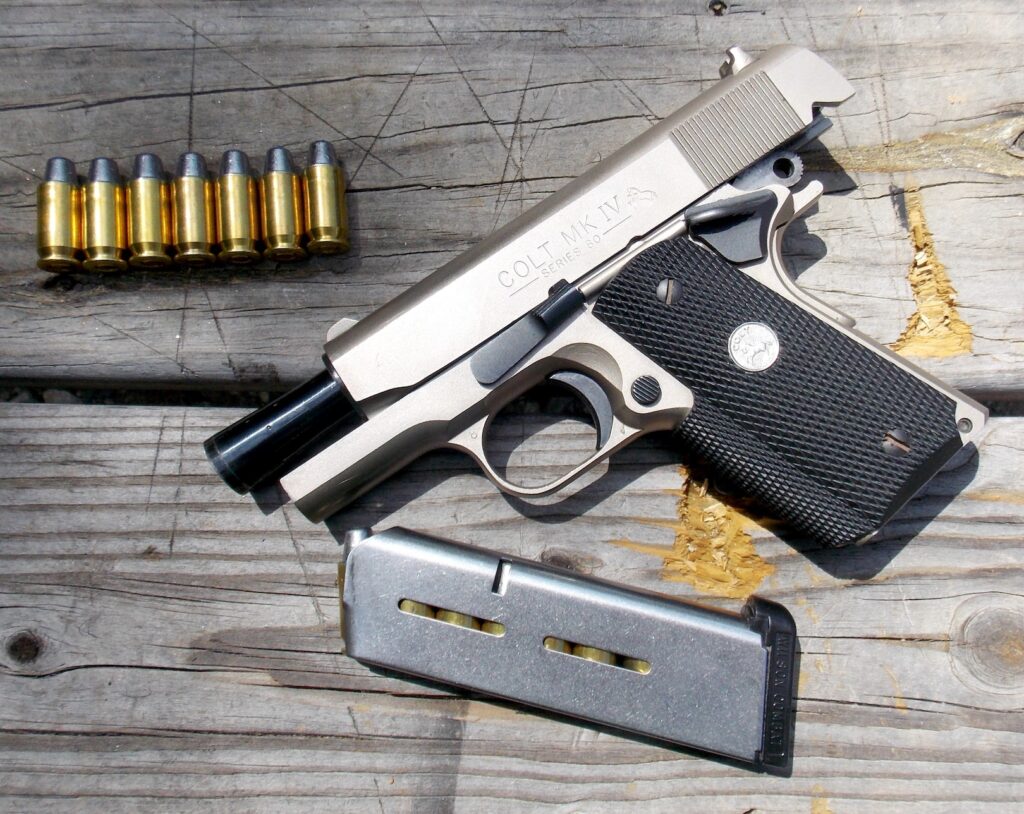
I ended up with Titegroup powder. This is a very clean powder that will produce excellent accuracy. Bullseye is still good and so is Winchester 231. I used 230 grain bullets for the most part with some 200 grain bullets. Hardcast is the way to go for economy and accuracy. Hardcast is not lead, the bullet is alloyed with tin and other material. The coated bullets from ACME are especially useful. No one enjoys cleaning a bore but the .45 ACP doesn’t need cleaning as often as some calibers. The traditional taper crimp works just fine. Lead bullets over the same powder charge provide more velocity given equal weight. I worked up some loads with the Hornady 230 grain XTP. This bullet is among the most accurate projectiles ever designed.
I had a great few days of loading a number of years ago and loaded practically every .45 ACP case I could find and some new brass was ordered in. Starline brass is first quality no question. For special purposes and experiments I occasionally used new Starline brass and jacketed bullets when seeking the final degree in accuracy. Experiments with 185 grain XTP bullets were not satisfactory. They shot a little flatter but were not as accurate as 230 grain bullets. At long range they struck below the point of aim. 200 grain XTP bullets are superbly accurate in handguns. In carbines, I never found a load that equals the 230 grain XTP. The 200 grain XTP loads were never a dog or inaccurate but simply did not meet the standard set by 230 grain loads. In the final fruits of my load development firing from a solid benchrest firing position the Thompson would sent five shots into three inches with 230 grain XTP loads. This is at 50 yards. That is exceptional. With most factory ammunition the Thompson is about as accurate as an AK 47 or a GI .30 carbine. In off hand fire an eight pound trigger action limited accuracy. The Thompson is a great recreational firearm and of historical interest. But there are more practical pieces.
Heckler and Koch USC Carbine
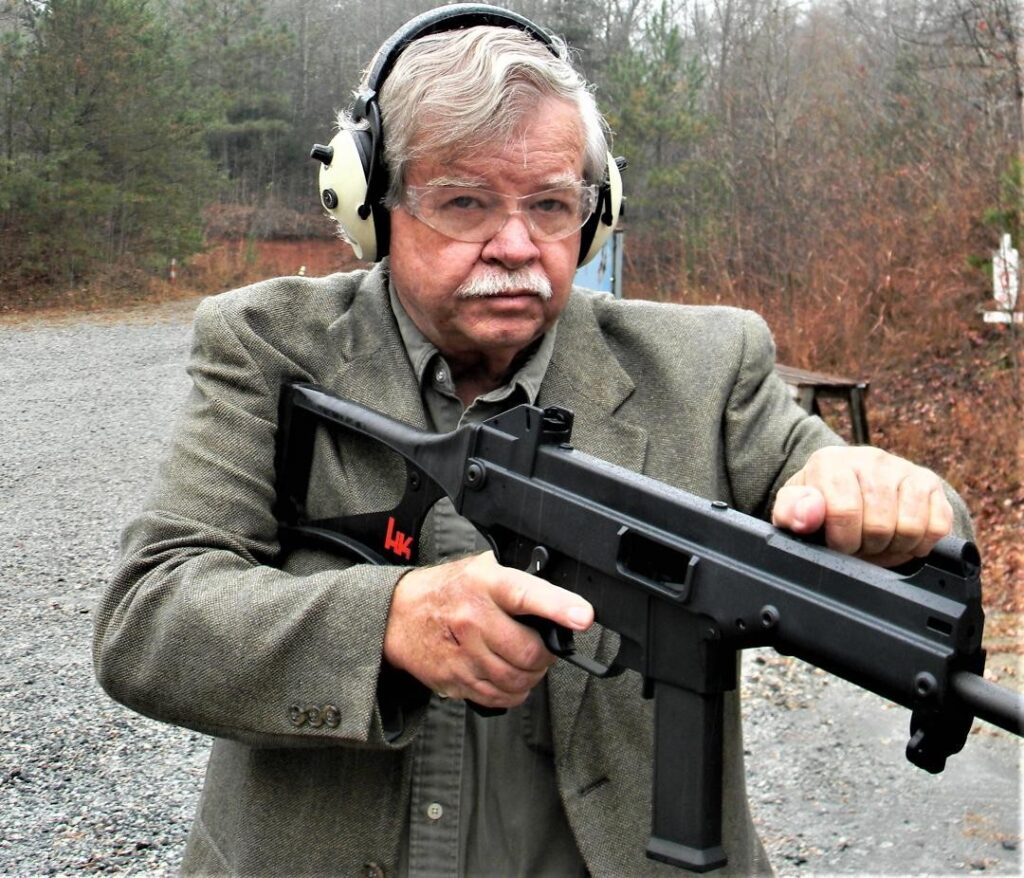
The HK USC is an overlooked and underappreciated .45 ACP firearm. This is a dirt tough, modern, and reliable firearm. For home defense, agency use, or as an effective all around defensive carbine there are few carbines as reliable. The HK handles well. Ergonomics are superbly designed. Some years after I traded the Thompson I obtained the HK. There was a sizable ammunition can of loads marked THOMPSON. Sure I could have used them in the 1911 but here was an opportunity. I never loaded anything specifically for the HK. All of the loads tested were originally worked up for the Thompson. As it panned out the HK was an even better performer. The HK was slightly more accurate in 50 yard testing. In offhand dynamic firing at multiple targets the HK simply ate up my results with the Thompson. But it should. Some time later I was able to test the loads in the Ruger LC 45. Some loads, at least. The Ruger is more optics friendly and affordable and probably the best choice among the three carbines for all around use, especially since it takes Glock M21 magazines. I tested some but not all loads in the Ruger with good results.
I am presenting the loads for your interest, the best performers and the not so best so we have a frame of reference. The groups are five shot groups from a solid bench rest at 50 yards.
Powder charge in grains/ bullet- Velocity/ Group
7.5 grains Unique 185 grain Rainier 1260 fps 3.6 in. Thompson
3.0 in. HK
2.0 in. Ruger
8.5 AA#5 200 grain XTP 1100 fps 3.0 in. Thompson
2.8 in. HK
7.2 Unique 200 grain XTP 1213 fps 3.65 in. Thompson
2.5 in. HK
2.65 in. Ruger
6.8 Unique Hornady 230 grain FMJ 880 fps 4.0 in. Thompson
3.0 in. HK
7.0 Unique 230 grain XTP 966 fps 3.25 in. Thompson
2.5 in. HK
4.7 Titegroup 858 fps 3.6 in. Thompson
I had surprisingly good results with a heavy JHP
6.8 Unique Sierra 240 gr. JHP 905 fps 3.9 in. Thompson
2.4 in. HK
1.8 in. Ruger
Hard Cast bullet results
200 grain SWC cast from Magma mold
7.2 grains Unique 1222 fps 4.0 in. Thompson
1.9 in. HK
230 grain RNL
5.8 grs. WW 231 1090 fps 3.1 in. Thompson
1.9 in. HK
2.0 in. Ruger
5.0 grs. Titegroup 899 fps 2.6 in. Thompson
1.5 in. HK
1.4 in. Ruger
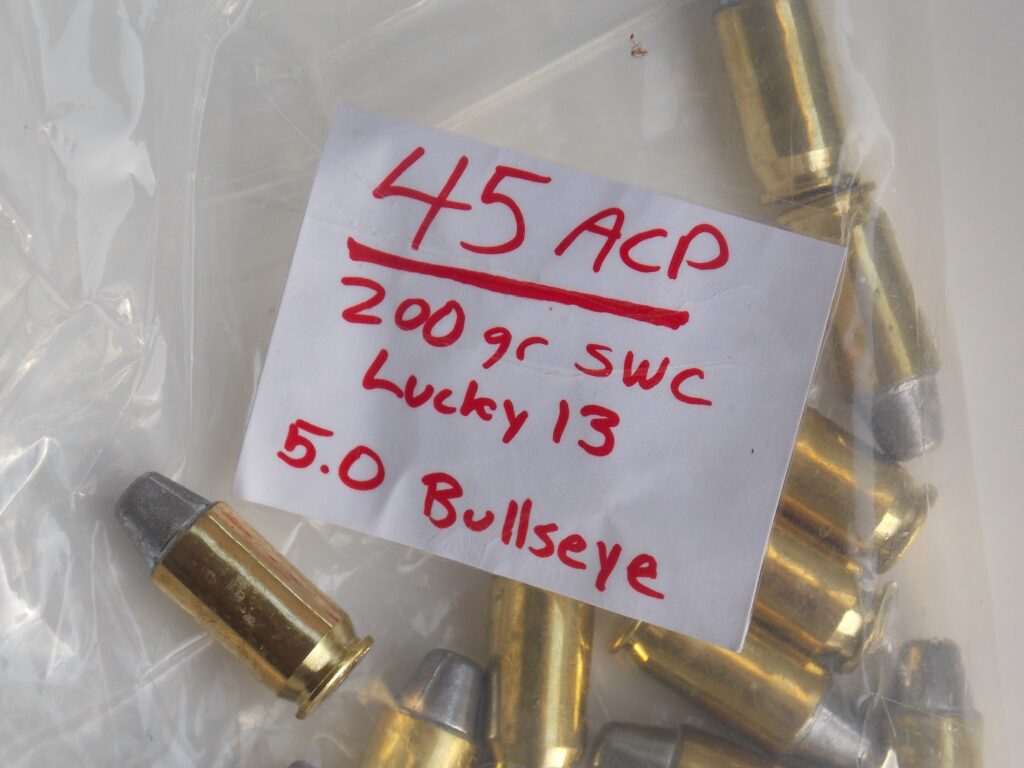
5.0 Bullseye 900 fps 1.5 in. HK
Use caution! These loads are safe in individual firearms. They may not be in AR 15 type .45s or others. Begin ten per cent below listed loads. These are fast burning powders. While I adhered to the standard 1.250 overall length- some of the lighter bullet loads were slightly shorter. Just a small amount of power or a bullet seated more deeply may drive pressure up considerably. Handloading isn’t for the careless or slightly interested. 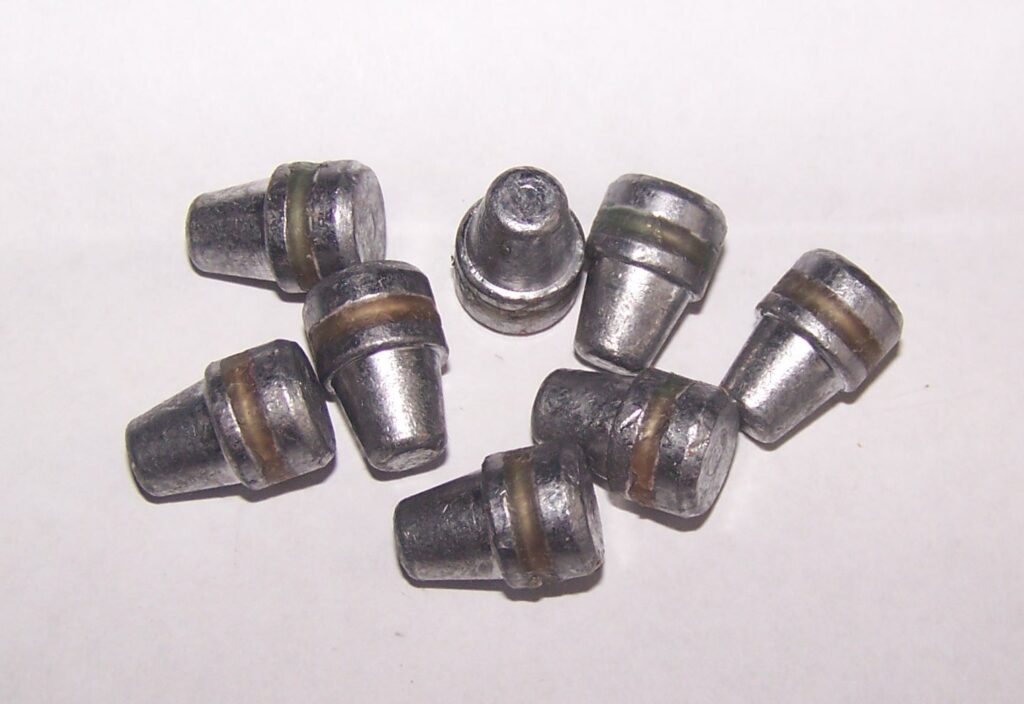
How well do the carbine loads work in a handgun?
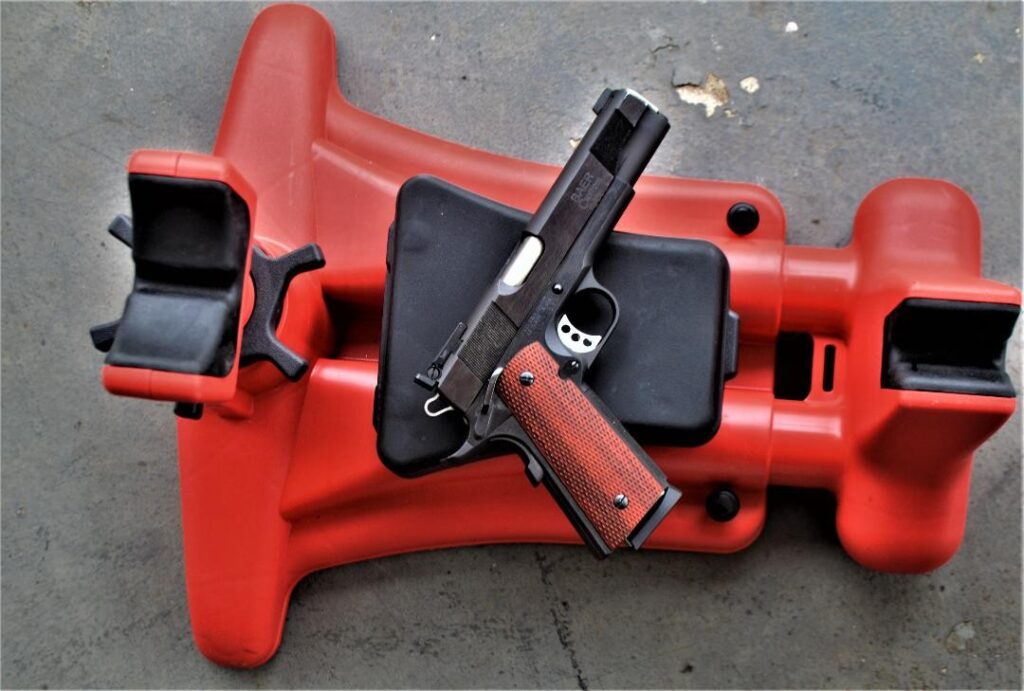
I had worked up these loads carefully and fired them for reference in 1911 handguns on hand at the time. My present go to Government Model 1911 is a Les Baer Premier. The Les Baer comes with a three inch group at 50 yards guarantee. I am certain it will perform in that range of accuracy in a machine rest. I cannot shoot that well so I limited testing to 25 yards.
As it turned out the carbine centered loads did well in the handgun. Load Groups at 25 yards using 7.2 Unique with 200 grain XTP reaching a velocity of 1100 fps and grouping of 2.0 in.
This is a strong load well suited to hunting thick skinned game uses 5.8 WW 23 with 230 grain RNL reaching a velocity of 860 fps and a grouping of 1.5 in.
This is a good bowling pin load using 5.0 Titegroup with 230 grain RNL reaching a velocity of 841 fps and grouping of 1.4 in.
The .45 ACP is surprisingly accurate in the right firearm. Use good load practice and the results are stellar.