
Once, I used to believe “faster” was synonymous with “better.” If I could squeeze just a little more velocity out of a load, tighten the spread just a hair, or hit a higher power factor cushion, it felt like the winning side of the track. On paper, I was. On the timer? Not always.

Not until I began spending more time behind steel frame pistols — 1911s, double-stack 2011-style guns, heavier competition builds — did I realize something essential:
Velocity is no match for recoil impulse. And once you start to tune for impulse, not speed, everything changes.
Steel Frames Don’t Lie. Polymer guns mask a lot. They flex. They absorb. They’re forgiving. Steel-frame pistols are honest. They provide immediate feedback for you.
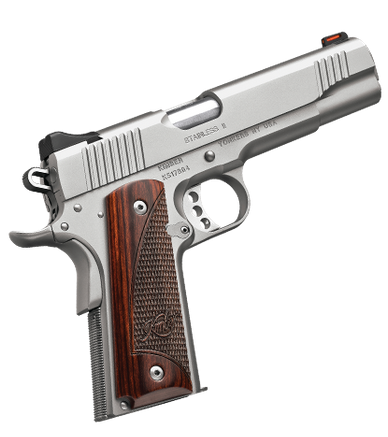
The first thing I noticed when I transitioned more heavily into steel guns was how differently they get back to zero. The increased weight stifles movement, yes — but it also underscores the load’s character. And not just how hard it hits. How it feels.
There’s a sharp recoil impulse. There’s a rolling push. There’s a snappy flip. It has a flat, almost hydraulic motion.Two loads can chronograph almost the same but seem entirely different in a steel frame pistol. That insight altered my approach to reloading.
It’s Not About Speed. It’s About Shape.
To a great extent, most shooters think about recoil in terms of magnitude—how much force is involved. But I’ve come to think about shape.
How fast does the impulse build? How fast does the slide accelerate suddenly? How does the gun track through recoil? How predictable is the return?
Especially in a steel frame pistol of good fit, the mass does its work. When it’s carefully adjusted, the gun doesn’t “snap.” It goes around with authority, but without violence.
I began to give into the craze of chasing that hottest safe load, instead opting for smooth-burning powders and bullet weights that would yield a more predictable, flat movement.
What surprised me was how much faster my follow-up shots began to be—not because the gun recoiled less, but because it recoiled better.
Bullet Weight Made All the Difference for Me
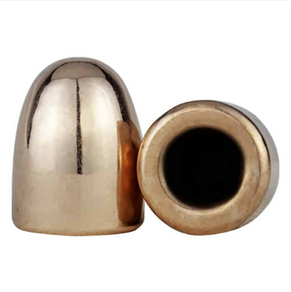
The simplest action one can take in the realm of recoil impulse is to control the bullet weight.
Smaller projectiles, in 9mm, tend to feel faster and sharper. And when loaded with the proper powder characteristics, heavier bullets tend to produce more of a rolling thrust.
In steel guns, I have a preference for a smooth impulse that allows a front sight—or dot—to track steadily upward and return to the same lane no matter the time.
The point is not to take away movement. It’s to control it.
A heavier frame and a properly tuned load can make it feel as if the slide glides, rather than snaps. That means confidence under speed all the way through.
When the gun reacts similarly each time, you no longer give a thought to recoil and begin focusing on transitions.
That’s where matches are won.
The Hidden Variable Is Slide Velocity. Something that we don’t talk about enough is the velocity of the slide.
While overdriving a steel gun isn’t always apparent initially. The gun runs. It locks back. It ejects cleanly.
But pay attention to:
How violently brass ejects. How violently the slide snaps back to battery. How the dot tracks (or not—you’re running optics). How much muzzle dip you’re fighting.
Slide speeds that are too fast can make a gun feel harsh, even in heavy frames. It can beat up springs. It can change timing. It brings with it potential inconsistencies that don’t manifest themselves until you’re under duress.
When I started deliberately tuning loads to cycle the gun correctly—but not excessively—I had an interesting feeling:
The gun felt calmer.
Not slower. Just calmer.
And calm guns are fast guns.
Spring Weight and Load Go Hand in Hand
Reloading on its own is only half the battle. Steel frame pistols respond extremely well when ammunition and recoil spring weights are paired correctly.
I’m not talking about getting exotic or taking on extremes. What I’m telling you is that ammunition and mechanical tuning have to be partners.
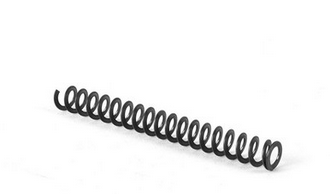
If your load is soft and your spring is heavy, the gun will feel sluggish and inconsistent.
Under extreme loads and with too light a spring, the gun can feel violent and erratic.
When those two things balance, the gun starts cycling like it’s on rails.
Here’s the point where it all just clicks—when recoil becomes a predictable beat rather than a disruption.
That’s what I tune for.
Chronographs Are Tools, Not Goals
I still chronograph. Always.
But I can no longer chase the highest number.
I look for consistency.
I don’t want high deviation.
I search for the window which gives good reliability and smooth tracking. Steel frame pistols reward consistency. They amplify it. Once you find your impulse and velocity, you’ll get it right immediately on target transitions. The dot stops wandering.
The sights get put where they should.
It’s subtle, but once you feel it, you can’t un-feel it.
Steel Guns That Are Suppressed: Another Conversation
The recoil impulse tuning when you add a suppressor to the combination becomes even more apparent.
Steel frame pistols generally manage the extra mass remarkably well. But suppressors add gas dynamics and additional back pressure that alter slide behavior. Here again adjustment for smoothness—as opposed to speed—makes a big difference.
A well-balanced subsonic load in a steel gun with a can feels polished, not dramatic; it works instead as if the gun was in balance with life itself.
Controlled. Intentional.
That’s the sweet spot.
What I Tell Shooters Now
When a client inquires about load development of their steel competition gun, I do not begin by setting up velocity goals.
Key Questions to Consider:
How do you want the gun to feel?
How does it track right now?
Is it snapping? Rolling? Dipping?
Where is your dot going in recoil?
Then, we work backward from behavior.
You gain the advantage of mass when you go for the steel frame. As a reloader, your role is to shape the impulse to capitalize on that mass—not to fight it.
I know that shaving hundredths off a split time doesn’t come from sheer power, brute or soft.
It comes from rhythm. From predictability. From tuning the gun to make recoil background noise.
When your pistol comes back just where you expect it to come back each time, you stop reacting and start anticipating. That’s when performance really starts to see a jump. This is why I tune recoil impulse now.
It doesn’t look good because it looks good on paper.
But because it feels right in the hand—and that’s what really matters.