The following is a specially-adapted excerpt from the forthcoming book,” Top-Grade Ammo,” by author Glen Zediker, owner of Zediker Publishing. Click here to order.
by Glen Zediker
Most discussions about reloading tend to center around tools, and the cartridge case–sizing die used to refurbish a spent case is one of the most important. Last time, we were left with a case that had been expanded to the limits of the chamber, plus maybe just a little. The sizing die gets it back in shape for a reuse.
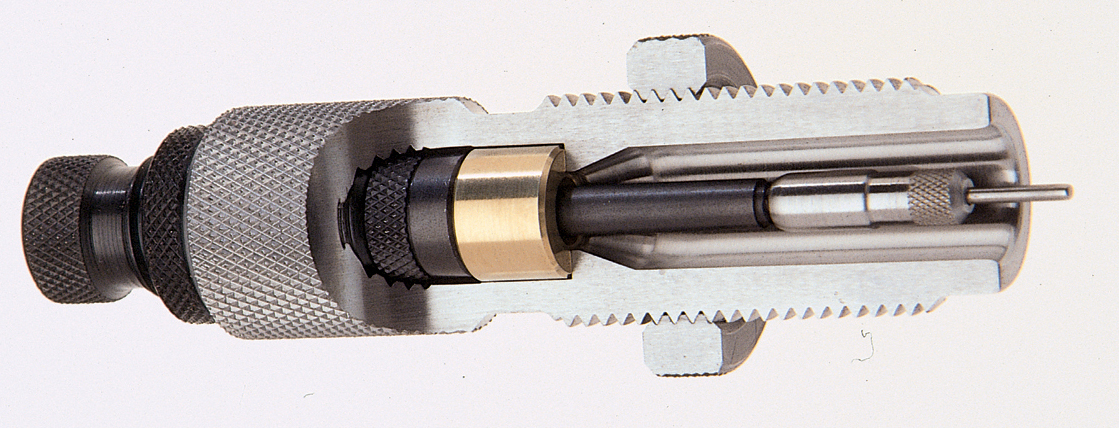
First, I only advise the use of a full-length sizing die for bolt guns or semi-autos. As suggested, a full-length die contacts the full length of the case, the full diameter, from case mouth to case head, and can also contact the shoulder area. There are neck-only dies that, as suggested, only resize the case neck so it will hold another bullet. They don’t touch the case body, and many don’t contact the case shoulder.
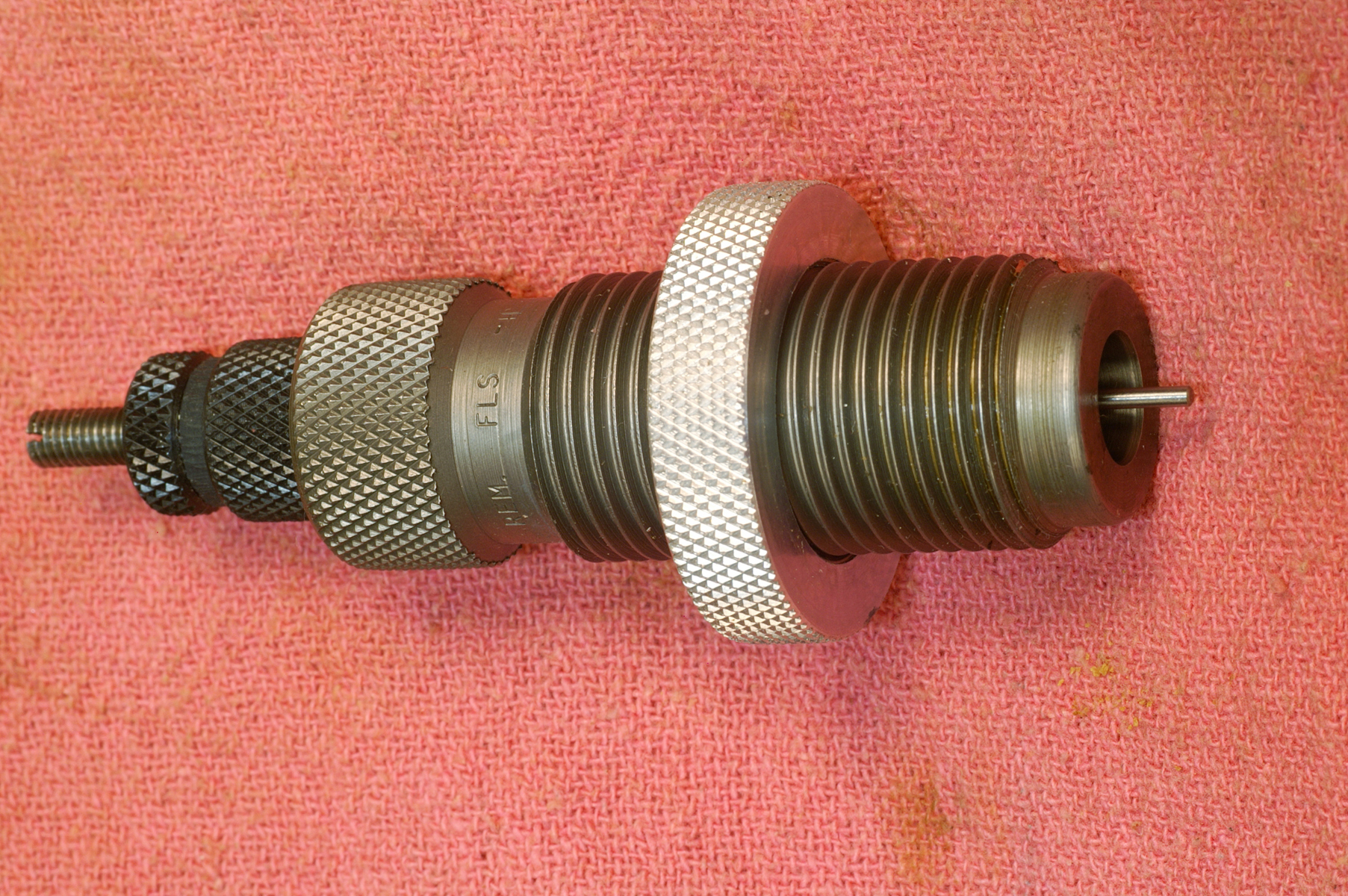
A full-length sizer will compress the case body down to the die interior dimensions, which are close to those of factory new ammo. Keep in mind that we’re talking about scant thousandths of inches, but those add up.
Whether it’s a bolt-action, lever-action, semi-automatic, a rifle has to function, and ensuring that cartridges feed into and out of the chamber is the clearly most critical functioning necessity.
If you’re big into or only into single-shots, neck-only sizing is possible, certainly. But even then there’s honestly little to no accuracy or performance benefit from it. The idea is that maintaining the case-body dimensions that more closely replicate the rifle chamber generally tightens up everything and produces better accuracy. Makes sense. But unless we’re working with measurably perfected brass and perfectly concentric rounds and seating bullets to touch the lands or rifling, none of those attributes matter a whit. Any rifle with an ejector is going to warp case bodies, for instance, so the dream of case-to-chamber harmony just can’t exist.
If neck-only sizing was all that influential, then new cases wouldn’t shoot the good groups that they will.
Another thing a full-length sizing die does, or can do, is contact the case shoulder. This is critically important in sizing for repeating rifles.
Last time we talked about what happens to a cartridge case during firing, and it’s not pretty. One of the things that happens is that the case shoulder gets blown forward, which means that if the case were standing up on the bench, that the shoulder will be higher (taller) than it was before firing. To ensure function, and safe function, that dimension needs to be corralled and brought back to what it should be.
There are full-length sizing dies with interchangeable bushings that size the case neck. The idea is to control the amount of case neck reduction, and it also allows the use of a sizing die without an inside-neck sizing appliance (usually called an expander). Good idea. Still, I don’t recommend this style of die for most shooters. One reason why is that there’s a small amount of case neck that doesn’t get sized. Over time, this can create or increase the “case neck donut,” the small raised-up ring of brass that exists inside the case at the case-neck/ case-shoulder juncture. But the die is not the sole cause. Suffice it to say, the additional and inconsistent additional constriction against the bullet isn’t a good thing.
I also do not advocate running a sizing die without an expander or sizing button to control the case neck inside diameter (i.d.). That’s another touted advantage of the bushing dies. That only works well if case necks are perfectly uniform in thickness. Otherwise, it creates off-center case mouths, and ultimately, inconsistency, in bullet pull.
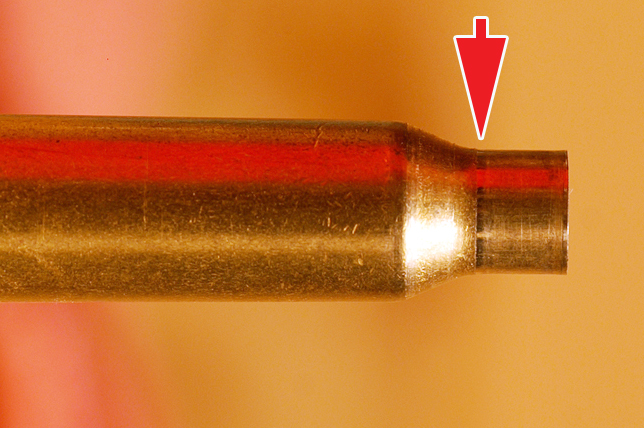
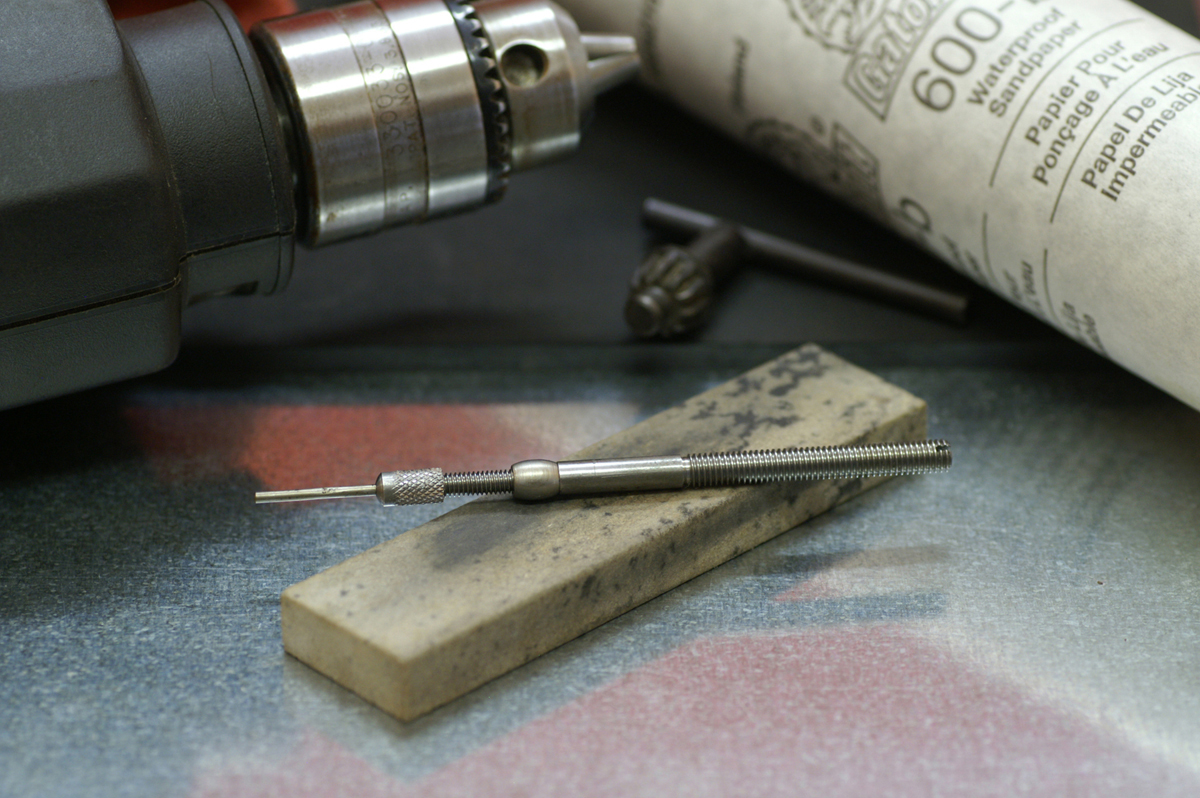
One of the reasons that the neck-bushing dies came about was from the warranted complaints that conventional sizing dies sized down the case neck outside too much. Most do. Then the expander or sizing button has to open it back up that much more. That’s a lot of stress on the case and the reason for polishing the expander. Another easy fix is to have a machinist open up the neck area in the die. That’s a good idea. I can’t get after the factory techs too much in setting the specs for their dies because they’re trying to cover their bases on all the potential combinations out there, but that doesn’t mean we can’t improve it. There doesn’t have to be more than 0.005 difference between outside diameters and inside diameters to ensure fully adequate sizing. In other words, if the case O.D. is sized down to 0.005 smaller than the measured O.D. after the expander has passed back through, that’s plenty. Check your die by sizing a case without the expander in place. Less is better, but don’t cut it too close; keep room to account for different brass brands, which have different wall thicknesses. This trick will help maintain more material consistency over the life of a case. Otherwise, it’s like bending a piece of metal back and forth until it breaks; the same effect does influence case life when there’s excessive material movement.
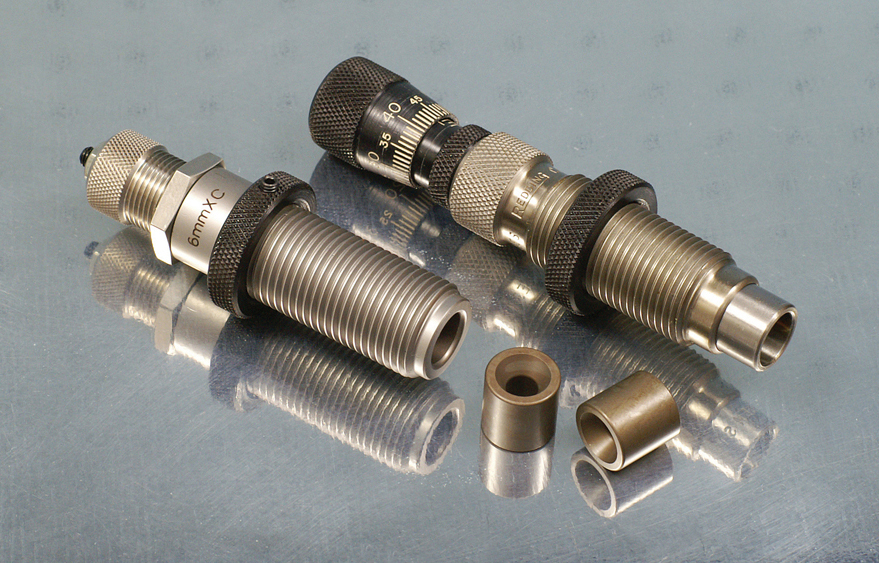
A small-base full-length sizing die is an option in some die makers’ catalogs. As implied, this reduces the lower portion of the case a tad amount more. I’ve never encountered the need for one in an AR-15. Most have fairly generous chambers, especially if it’s a true NATO-spec. However, I always use one in my M1As, especially when working with a tough case, like a Lake City, that has to fit back into a relatively undersized match chamber. One of the best I’ve used is from Dillon (just the standard die that comes on the Blue machines); Redding also makes a “National Match” sizer engineered just for that rifle.
Next time, I’ll go step-by-step on how to set up a sizing die.
17217 Brookhouser Rd.
Saegertown PA 16433
814-763-2769
800 N. 2nd St.
Canadian TX 79014
806-323-9488