Walk into just about any gun shop today, and you’ll find plenty of ammunition chambered in .223 Remington, .308 Winchester, 6.5 Creedmoor, and .30-06 Springfield. These cartridges dominate the shelves, and for good reason. They are proven performers, widely available, and supported by nearly every major firearms manufacturer. But what about those cartridges that once held a respectable place in the hunting world and have slowly disappeared from the spotlight?
I’ve always had an appreciation for firearms and cartridges that have a little history behind them. There’s something interesting about picking up an older rifle chambered in a caliber that was once considered a top performer, only to discover that many younger shooters have never even heard of it.
The truth is, many of these forgotten cartridges didn’t disappear because they stopped working. They faded because of changing hunting trends, advancements in ammunition technology, marketing, and the introduction of newer cartridges that promised better performance.
Let’s look at a few cartridges that deserve another look, especially from hunters who appreciate traditional firearms and reloaders who enjoy keeping older calibers alive.
.257 Roberts: The Gentleman’s Deer Cartridge
The .257 Roberts is one of those cartridges that probably deserved a much longer run in the mainstream hunting market.
Its history dates back to the 1920s, when firearms experimenter Ned Roberts developed a cartridge based on the 7×57mm Mauser case. His goal was to create an accurate, efficient .25-caliber cartridge capable of delivering excellent performance without excessive recoil. Remington standardized the cartridge in 1934, and it quickly developed a loyal following among hunters.
The .257 Roberts became particularly popular for deer hunting, varmint shooting, and hunting smaller Western game. It offered a relatively flat trajectory, mild recoil, and impressive accuracy. With bullets commonly ranging from 87 to 120 grains, the cartridge was versatile enough to handle everything from coyotes to whitetail deer.
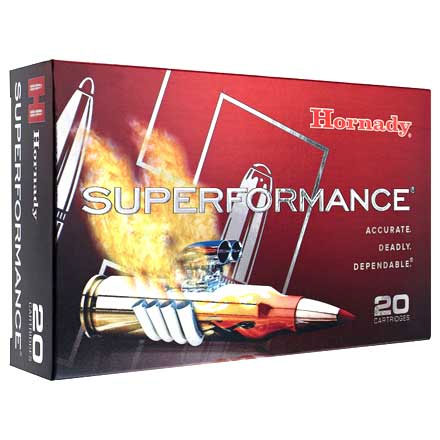
So why did it disappear from the mainstream?
Competition played a major role. The introduction of the .243 Winchester in 1955 gave hunters another mild-recoiling cartridge with strong factory support. The .25-06 Remington, standardized in 1969, offered higher velocities and greater reach. Eventually, the .257 Roberts found itself squeezed between two extremely successful cartridges.
Today, the .257 Roberts remains an excellent choice for deer hunters, particularly those who appreciate lightweight rifles and manageable recoil. For reloaders, it offers considerable flexibility, although ammunition and component availability can require some planning.
In my opinion, a quality bolt-action rifle chambered in .257 Roberts is still something worth owning.
.35 Remington: The Woods Hunter’s Favorite
Introduced in 1906 for the Remington Model 8 semiautomatic rifle, the .35 Remington became one of the most respected cartridges for hunting in heavily wooded areas.
Unlike cartridges designed around long-range velocity, the .35 Remington was developed to deliver substantial bullet weight and dependable performance at practical hunting distances.
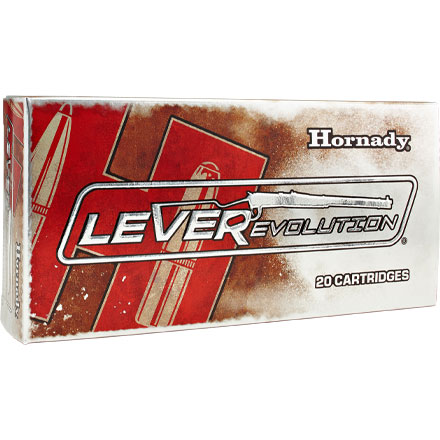
The cartridge commonly fires a 200-grain bullet at approximately 2,000 feet per second, making it a strong performer on whitetail deer and black bear at moderate ranges.
Its popularity grew significantly through rifles such as the Marlin 336 and other traditional hunting firearms. In the thick woods of the Eastern United States, where a shot might be 50 to 100 yards, the .35 Remington made perfect sense.
The larger-diameter bullet and respectable energy made it a favorite among hunters who valued dependable performance over impressive ballistic charts.
Unfortunately, changing consumer preferences began working against it.
Hunters increasingly gravitated toward cartridges offering flatter trajectories and longer effective ranges. The .30-30 Winchester also remained the dominant lever-action chambering, benefiting from broader ammunition availability and generally lower costs.
The .35 Remington gradually became more difficult to find on store shelves, and fewer new rifles were chambered for it.
Still, anyone who owns a good Marlin lever-action rifle chambered in .35 Remington knows the cartridge hasn’t lost its usefulness. For close-range hunting in heavy cover, it remains a capable option.
.250-3000 Savage: Ahead of Its Time
When Savage introduced the .250-3000 Savage in 1915, it was something special.
Developed by Charles Newton, the cartridge earned its name by pushing an 87-grain bullet to approximately 3,000 feet per second. At the time, that velocity was a significant accomplishment for a commercially available sporting cartridge.
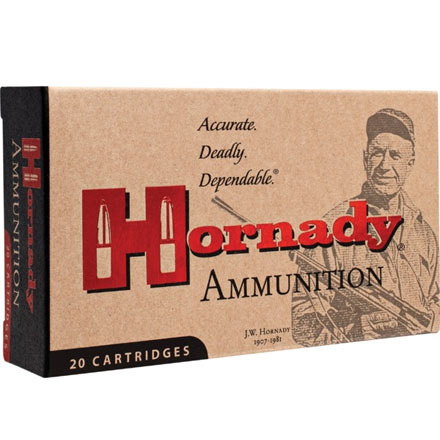
The .250 Savage became closely associated with the Savage Model 99 lever-action rifle, a firearm that remains highly collectible today.
Hunters appreciated the cartridge because it offered good accuracy, relatively mild recoil, and sufficient performance for deer-sized game when loaded with appropriate bullets.
However, the cartridge eventually faced competition from the .243 Winchester and other modern small-bore hunting cartridges. Factory ammunition choices became more limited, and the discontinuation of the Savage Model 99 removed one of its strongest platforms.
Today, the .250 Savage remains a wonderful example of how innovative cartridge development was taking place long before today’s high-velocity hunting ammunition became commonplace.
For someone who owns a Savage Model 99 chambered in .250-3000, there’s still plenty of reason to take that rifle into the deer woods.
.300 Savage: The Cartridge That Helped Shape the .308 Winchester
The .300 Savage was introduced in 1920 and quickly became one of the most successful hunting cartridges of its era.
Designed to offer performance approaching the .30-06 Springfield in a shorter cartridge suitable for the Savage Model 99, the .300 Savage provided hunters with an efficient and practical option for deer and similar-sized game.
The cartridge typically uses bullets in the 150- to 180-grain range, delivering respectable hunting performance without requiring a long-action rifle.
One of the most interesting aspects of the .300 Savage is its historical connection to the development of the .308 Winchester. Its compact design helped demonstrate the potential of shorter .30-caliber cartridges, influencing the development work that eventually produced the .308.
Unfortunately for the .300 Savage, the introduction of the .308 Winchester in 1952 created a formidable competitor. The newer cartridge offered greater performance potential, extensive military and commercial support, and widespread rifle availability.
The .300 Savage slowly moved into the background.
But for hunters carrying an older Savage Model 99 or Remington Model 722, the cartridge remains entirely capable of taking deer cleanly at sensible hunting distances.
.358 Winchester: Big-Bore Performance in a Short Action
Introduced in 1955, the .358 Winchester was essentially a .308 Winchester case necked up to accept a .358-inch bullet.
The idea was simple: deliver the advantages of a larger, heavier bullet in a compact rifle action.
The cartridge became associated with rifles such as the Winchester Model 88 lever-action and Model 70 bolt-action. It offered excellent performance for hunting deer, black bear, and larger game at moderate distances.
With bullets commonly weighing 200 to 250 grains, the .358 Winchester delivered considerable striking energy, but it came with a tradeoff. Its trajectory wasn’t nearly as flat as many smaller-caliber alternatives.
As hunters became increasingly interested in longer-range shooting, the .358 Winchester struggled to maintain its position. Limited rifle offerings and ammunition availability further contributed to its decline.
For hunters who spend their time in timber country, however, the .358 Winchester remains an interesting alternative to more common hunting cartridges.
Why These Cartridges Still Matter
One thing that stands out when looking at these older cartridges is how many were victims of changing consumer preferences rather than poor performance.
The firearms industry has always been driven by innovation, and that’s certainly a good thing. New cartridge designs, improved bullets, and advancements in rifle manufacturing have given today’s shooters tremendous options.
But there’s also something to be said for a cartridge that has been successfully harvesting game for 75 or even 100 years.
For reloaders, these older cartridges present another opportunity. Handloading can help keep rifles shooting when factory ammunition becomes expensive or difficult to locate. It also gives experienced reloaders the ability to explore different bullet designs while following published, pressure-tested load data appropriate for their firearms.
For gun dealers, there’s a lesson here as well. Not every customer walking through the door is looking for the latest rifle chambered in the newest cartridge. Some are searching for ammunition for a rifle handed down from their grandfather, while others are collectors who appreciate the history behind these firearms.
Keeping a limited selection of classic ammunition available, or establishing a reliable special-order source, can help serve a customer base that larger retailers sometimes overlook.
I don’t expect cartridges like the .257 Roberts, .35 Remington, or .300 Savage to suddenly make a major comeback. The market has moved in another direction, and manufacturers are understandably focused on cartridges with the strongest sales potential.
However, that doesn’t mean these older designs have become obsolete.
A well-maintained rifle chambered in one of these cartridges can still provide years of enjoyable shooting and dependable hunting performance.
In fact, I would argue that part of the enjoyment of owning an older firearm is understanding the history behind the cartridge it fires.
The next time you’re browsing the used rifle rack at your local gun shop, don’t automatically pass over that older Savage, Remington, or Winchester simply because it isn’t chambered in something popular today.
You might discover a piece of firearms history that still has plenty of life left in it.
And sometimes, that’s far more interesting than owning the same rifle everyone else has.