There is no shortage of bullets to choose from. Walk into any decent reloading shop and you can find several options in the same caliber and weight. Some are cheap, some are expensive, some have polymer tips, and some are solid copper. From the outside, a lot of them do not look all that different.
That changes pretty quickly once you look at how they are built.
Reloaders tend to concentrate on the easy numbers: bullet weight, ballistic coefficient, velocity, seating depth, and group size. Bullet construction matters just as much when you are loading for hunting. A 165-grain .30-caliber cup-and-core bullet, bonded bullet, and monolithic bullet may all leave the muzzle at the same speed, but that does not mean they will expand, penetrate, or hold together the same way.
That is really what this discussion is about. We are deciding what we want the bullet to do after it gets there.
Cup-and-Core: The Old Standard
Cup-and-core is the traditional bullet most of us grew up with. A lead core sits inside a copper or gilding-metal jacket. Jacket thickness, core hardness, nose design, and mechanical features can all change how the bullet performs, but the basic idea stays the same.
Simple does not mean bad.
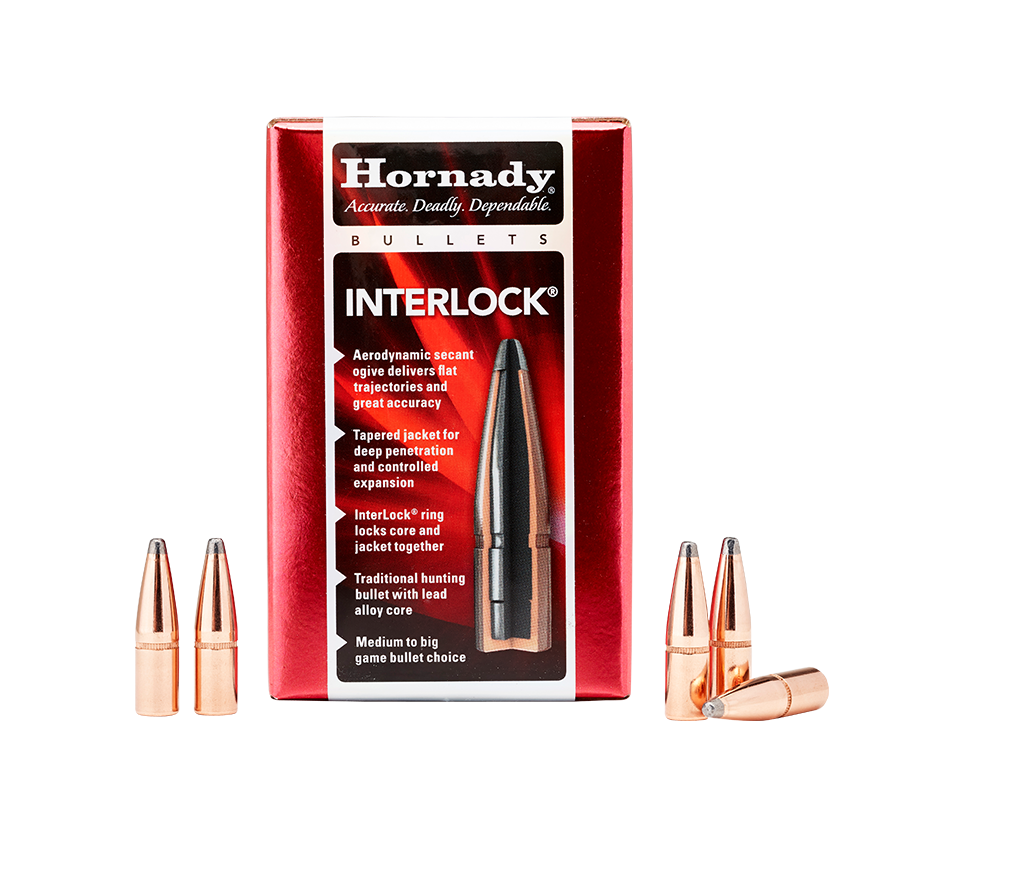
Traditional cup-and-core bullets have probably killed more game than anything else we are going to talk about here. They are affordable, generally easy to load, and often very accurate. Hornady’s InterLock is a good example of how much can be done with a conventional design. It is still a lead-core bullet, but the internal ring is intended to help keep the core and jacket together.
Where cup-and-core bullets can get into trouble is high impact velocity. Push a softer bullet fast enough and hit something close, and expansion can become violent. Lead may be shed, and the jacket can separate from the core. That is not automatically a failure, but it becomes a problem if too much of the bullet comes apart before it gets enough penetration.
This is why the same bullet may behave perfectly in a .308 Winchester and much differently when pushed faster from a .300 Winchester Magnum. If I am loading a moderate cartridge for deer and a conventional bullet shoots extremely well, I am not going to abandon it just because something more expensive exists.
Bonded: Keep the Pieces Together
Bonded bullets were created to address one of the obvious weaknesses of traditional construction. If the jacket and core can separate, find a way to keep them together.
That is basically it.
The bullet still has a lead core and a jacket, but the two are bonded together. Manufacturers use different methods, but the goal is the same: retain more of the original bullet after impact.
That extra weight retention can be useful when impact velocity is high or when the bullet has to pass through heavier material. This is one reason bonded bullets are popular with larger game and faster cartridges. If I am asking the bullet to expand, break bone, and keep moving, keeping the core and jacket together makes sense.
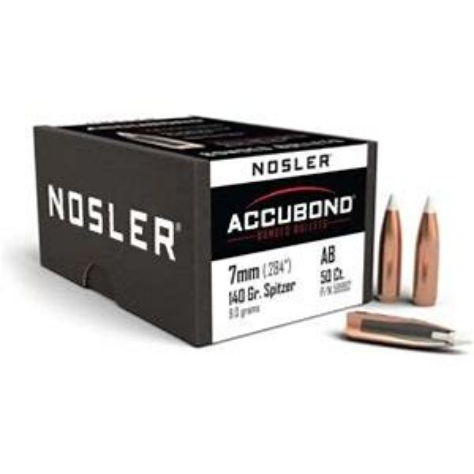
The mistake is thinking bonded means indestructible. It does not. Bonded bullets still deform, expand, and may lose some material. They also differ quite a bit from one another. A Nosler AccuBond and Swift A-Frame are both bonded, but that does not mean they behave the same way.
There is always a tradeoff. A bullet that expands into a huge mushroom creates more resistance as it moves forward. More retained weight helps penetration, but larger frontal diameter works against it. That is why the word “bonded” only tells part of the story.
Monolithic: Remove the Core
Monolithic bullets take a different approach. Instead of trying to keep a lead core attached to a jacket, they get rid of the separate core completely.
Most expanding monolithic hunting bullets are made from copper or a copper alloy. The nose is designed to open after impact, usually with a hollow point or polymer tip, while the rear of the bullet stays intact. With no separate lead core to lose, these bullets are known for very high weight retention and good penetration.
Barnes helped make this type of bullet mainstream, and now nearly every major manufacturer has some version of an all-copper or lead-free hunting projectile.
There are some things the handloader needs to remember. Copper is less dense than lead, so a copper bullet of the same caliber and weight is usually longer than a comparable lead-core bullet. That can affect seating depth, case capacity, and sometimes stabilization.
Expansion velocity matters too. Monolithic bullets are tough, which is one of their advantages, but they still need enough velocity to open properly. Some modern designs work at lower speeds than older ones, but every bullet has a limit somewhere.