The Story of the .30-30 Winchester: America’s Original Deer Cartridge
by Jonathan Kilburn
Photos by Jonathan Kilburn and Tom Phillips
There are cartridges that are faster than the .30-30 Winchester. There are cartridges that shoot flatter, hit harder, handle wind better, and look considerably more impressive on a ballistic calculator. None of that has managed to kill the .30-30.
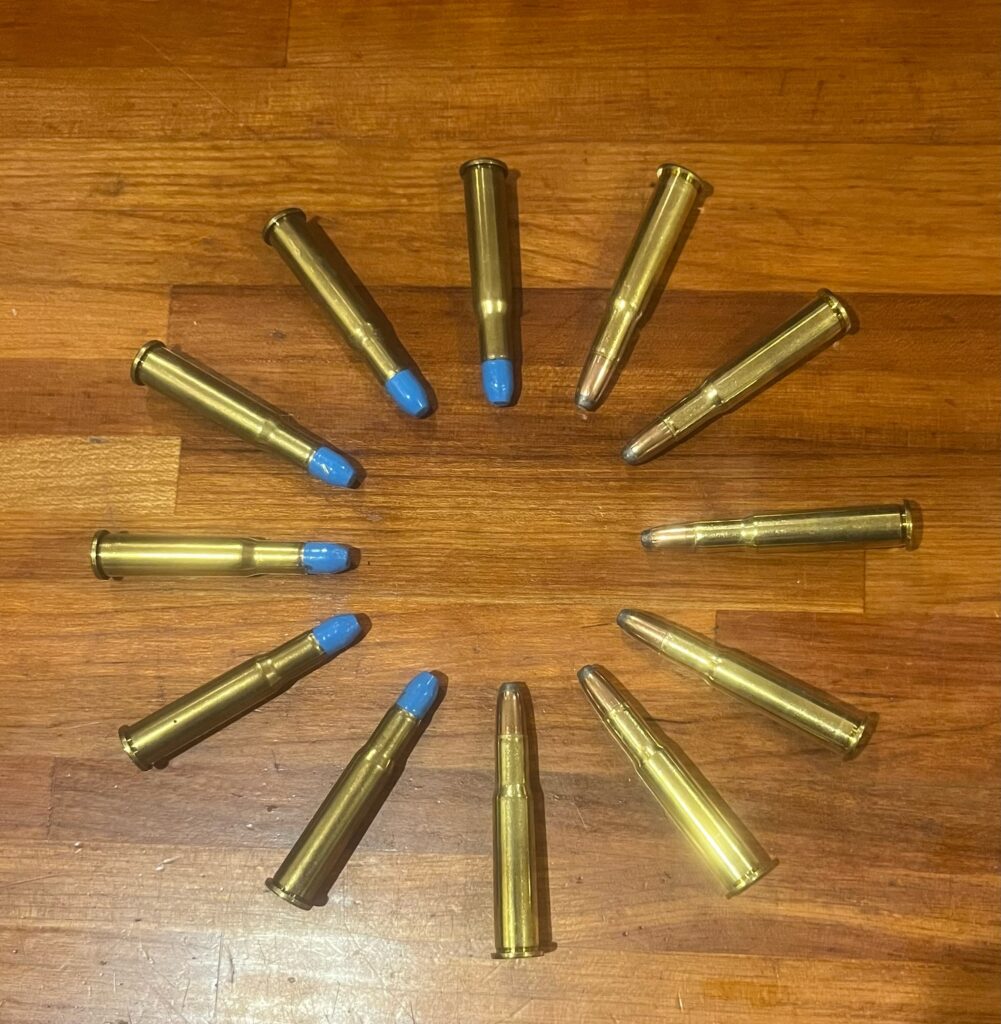
Photo by Tom Phillips
People have been predicting its death for a long time. The .308 Winchester came along. The short magnums showed up. Then we got high-BC bullets, laser rangefinders, affordable chronographs, ballistic apps, and rifles capable of making hits at distances that would have sounded ridiculous around a deer camp a few generations ago. Through all of it, somebody has continued climbing into a tree stand with an old lever gun and a handful of .30-30 cartridges.
There is a reason.
The .30-30 Winchester did not invent deer hunting, but it became one of the cartridges that defined American deer hunting. For generations, the Winchester Model 94 and the .30-30 were almost inseparable from the image of a light hunting rifle carried through hardwoods, brush, and mountain country. Winchester itself calls the Model 94 and .30-30 combination one of the most famous deer-rifle combinations ever made. That is marketing language, sure, but it is also pretty hard to argue with.
From Black Powder Thinking to Smokeless Powder
The .30-30 arrived during one of the biggest changes in sporting-ammunition history. Winchester introduced the Model 1894 in 1894, but the cartridge we now know as the .30-30 followed in 1895 as one of Winchester’s first commercial smokeless centerfire offerings. The original Winchester designation was .30 WCF, for .30 Winchester Center Fire, a name that still hangs around in older rifles, ammunition boxes, and conversations with people who have been around this stuff longer than most of us.
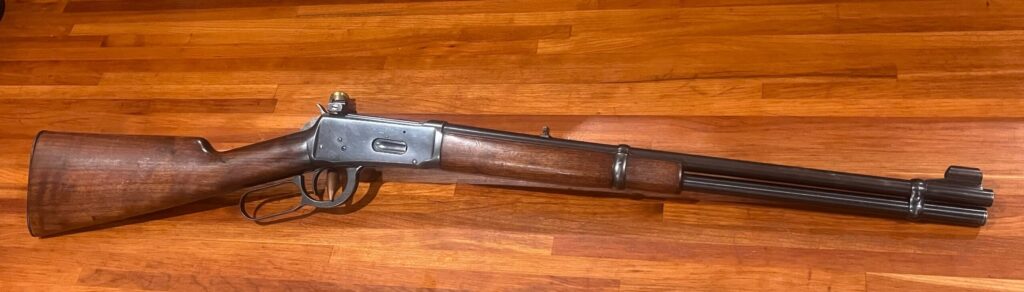
Photo by Tom Phillips
That timing is a huge part of the cartridge’s story. American shooters had spent decades working with large-bore black-powder cartridges. Smokeless propellant allowed designers to get considerably more velocity from a much smaller bore without carrying around the giant cartridge cases and heavy powder charges associated with the earlier generation. The Model 1894 was designed around that new smokeless era, and the .30-30 became one of the cartridges that helped show hunters what that change could actually do in the field.
Today, a roughly .30-caliber bullet traveling a little over 2,000 feet per second does not sound revolutionary. In 1895 it was another story. Hunters now had a compact repeating rifle firing a smokeless cartridge that offered useful velocity, manageable recoil, and enough performance for the deer-sized game most people were actually hunting.
It did not hurt that the rifle carrying it was pretty good too.
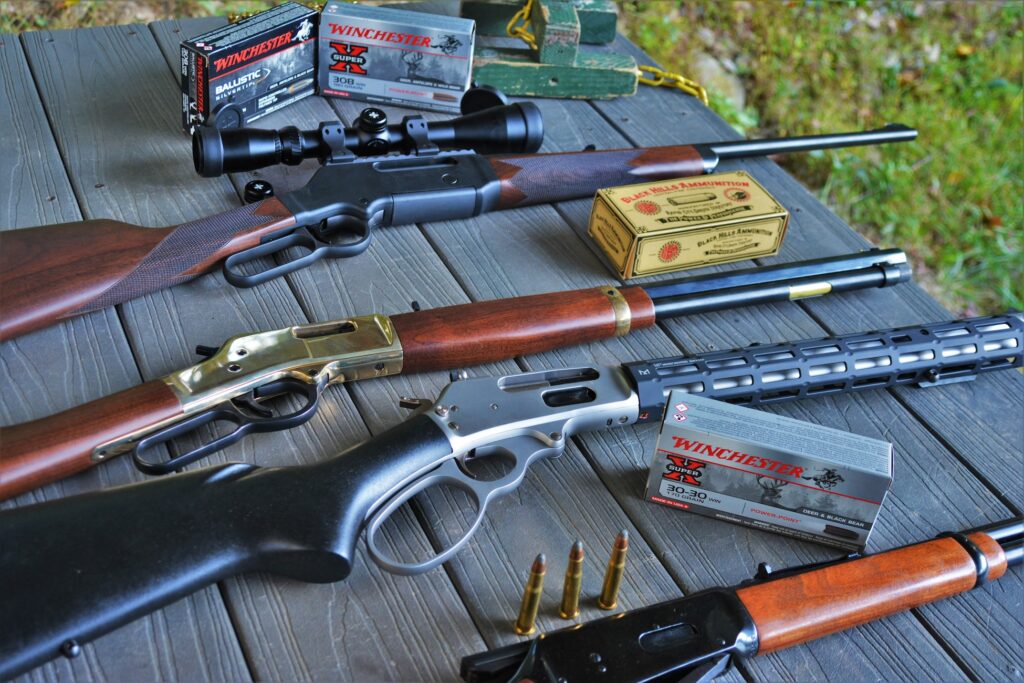
The Winchester 1894 was light, handy, quick to shoulder, and easy to carry. The lever action gave the shooter fast follow-up shots without making the rifle overly long or bulky. Put that together with a cartridge that worked inside normal hunting distances and you had something considerably more useful to the average deer hunter than whatever looked best on paper.
We still manage to forget that part today.
Why the .30-30 Worked
The .30-30 was never really about extreme performance. Its success came from having enough performance in a rifle people wanted to carry.
That sounds almost insulting now because we have become obsessed with squeezing every possible foot per second out of a cartridge. A hunting rifle apparently needs enough retained velocity to solve problems three counties away, even if most of the deer are shot inside 100 yards.
The .30-30 was built for a different reality.
Traditional .30-30 ammunition commonly uses 150- and 170-grain bullets. Those weights became part of the cartridge’s identity because they offer a practical balance of velocity, recoil, penetration, and terminal performance. They are not going to scare a modern magnum cartridge on a ballistic chart, but inside the distances where the .30-30 earned its reputation, they never needed to.
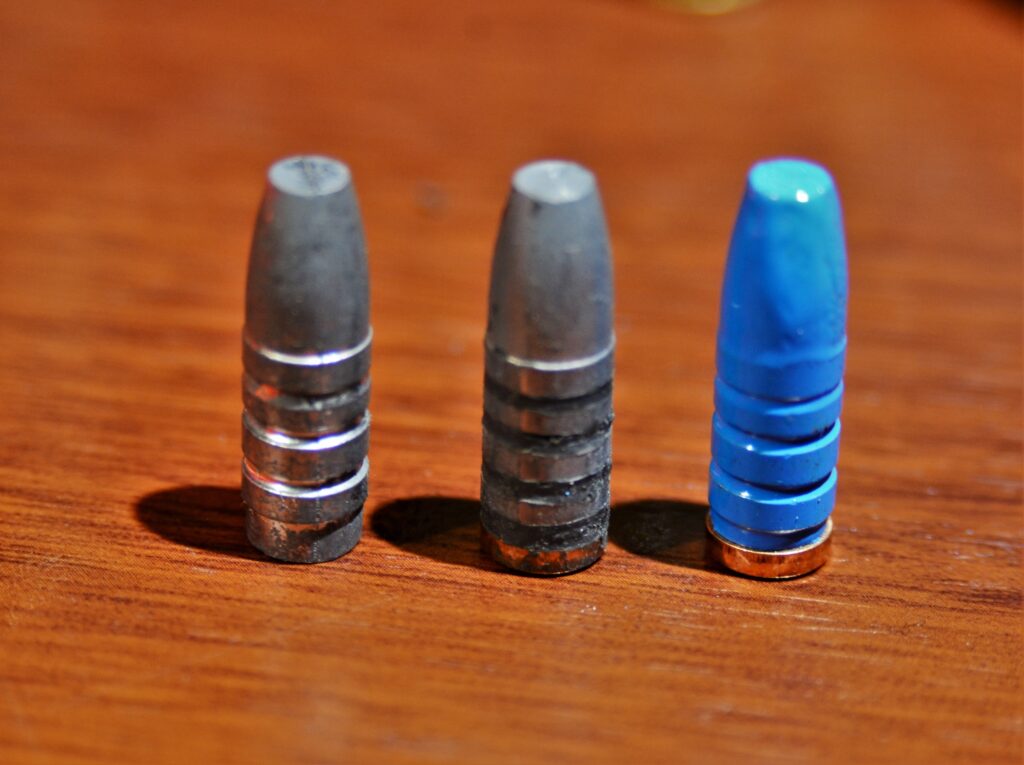
A 150- or 170-grain .30-caliber hunting bullet at traditional .30-30 velocity works very well on deer when placed where it belongs. There is no magic involved. The bullet has enough velocity to expand properly, enough mass to penetrate, and recoil is mild enough that most shooters can actually shoot the rifle well.
That last part gets overlooked.
A cartridge that produces another thousand foot-pounds of energy does not help much if the shooter flinches before touching it off. The .30-30 is pleasant enough to practice with, rifles chambered for it tend to be compact, and the entire package is easy to handle in the woods. None of those things fit neatly into a ballistic table, but deer have been finding out about them for more than a century.
The Tube Magazine Problem
The lever-action rifle also shaped the ammunition.
Traditional Model 94-style rifles use a tubular magazine. The cartridges sit nose-to-primer in a line underneath the barrel. That creates an obvious problem with conventional pointed bullets. The tip of one projectile sits directly against the primer of the cartridge in front of it, and putting a hard pointed bullet against a live primer under recoil is not something I am interested in testing for educational purposes.
That is why traditional .30-30 bullets have generally used flat or round noses. The blunt nose makes them appropriate for tubular magazines but comes with a ballistic penalty. Flat-nose bullets create more aerodynamic drag than the sleek pointed bullets we use in modern bolt-action cartridges. Velocity falls faster and trajectory gets steeper as distance increases.
For most of the .30-30’s life, that was simply part of the deal.
Hornady changed the equation considerably with its FTX and MonoFlex designs. The flexible polymer tip allows a more aerodynamic bullet shape while remaining suitable for tubular magazines. That gave the old .30-30 a way to stretch its useful range without trying to turn it into something it was never meant to be.
It did not turn the .30-30 into a .300 Winchester Magnum.
Thankfully.
It did show that a cartridge designed in the 1890s could take advantage of modern projectile technology without giving up the rifle design that made it famous.
Reloading the .30-30
For reloaders, the .30-30 is an interesting cartridge because it comes from an era when ammunition and rifle design were closely tied together. You are not simply loading a rimmed bottleneck cartridge. In most cases, you are loading ammunition that has to feed through a lever action, function through a tubular magazine, and work reliably in a hunting rifle.
That changes what I care about.
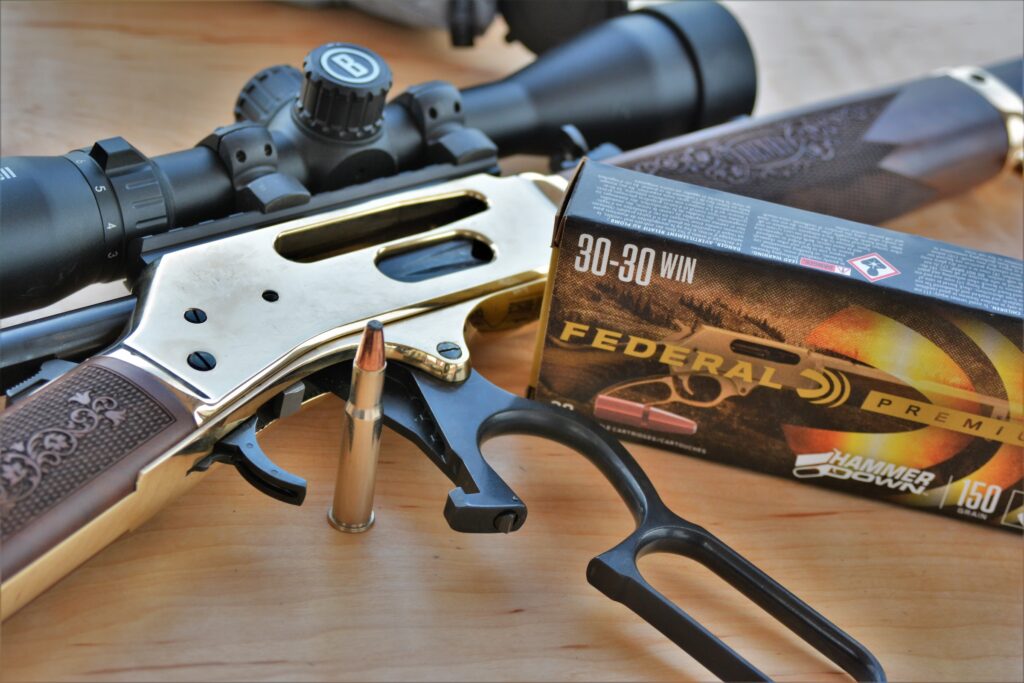
This is not normally where I start chasing bullets seated a few thousandths from the lands or trying to turn the rifle into a benchrest gun. Reliable feeding matters. Consistent cartridge length matters. Proper crimping matters when ammunition is stacked inside a magazine tube. Bullet construction matters because most traditional .30-30 rifles still need a projectile appropriate for that magazine system.
The cartridge also gives the handloader plenty of room to experiment within legitimate published data. Traditional flat-point hunting bullets remain available, while newer flexible-tip designs can stretch the practical capability of the cartridge. Lighter bullets can produce completely different handling and recoil characteristics, while the familiar 150- and 170-grain range keeps us close to what built the cartridge’s reputation.
I also think the .30-30 is one of those cartridges where trying to make it into something else misses the fun.
You can chase every last bit of velocity available in the manual. You can spend hours trying to shrink the group another quarter inch. There is nothing wrong with either one. I enjoy load development as much as anybody.
At some point, however, you are still holding a lever-action deer rifle.
Let it be one.
Obsolete for About a Century
One of my favorite things about the .30-30 is how frequently it gets described as obsolete while companies continue making rifles and ammunition for it.
That alone should probably tell us something.
Is it the best choice for hunting across an open Western basin at 400 yards?
No.
That is not exactly a shocking discovery.
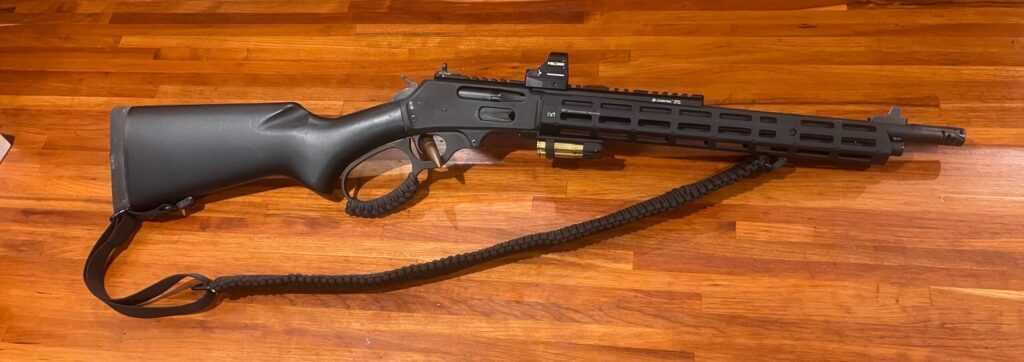
Photo by Tom Phillips
Inside the woods, mountains, and mixed terrain where shots tend to be considerably closer, its limitations become a lot less important. A light lever rifle is fast to the shoulder, easy to carry, and powerful enough for the work it has been doing since the nineteenth century.
Modern cartridges have extended the distance at which hunters can make ethical shots. Modern optics have made precise aiming easier. Rangefinders removed a lot of guessing, and modern bullets have improved terminal performance and external ballistics.
All of that is good.
None of it suddenly made a deer standing 70 yards away require a magnum.
America’s Deer Cartridge
The .30-30 Winchester survived because it was useful long before it became nostalgic. That gets lost when we talk about old cartridges. We tend to look back at them as if they somehow stayed alive because our grandfathers were sentimental about them, but nobody in 1895 was buying a .30-30 because it reminded them of the good old days. It was new. It was modern. It gave hunters a light, fast-handling rifle with enough power for the deer-sized game they were actually hunting, and it did it with far less fuss than many of the older black-powder cartridges that came before it. It earned its reputation first, and the nostalgia came much later.
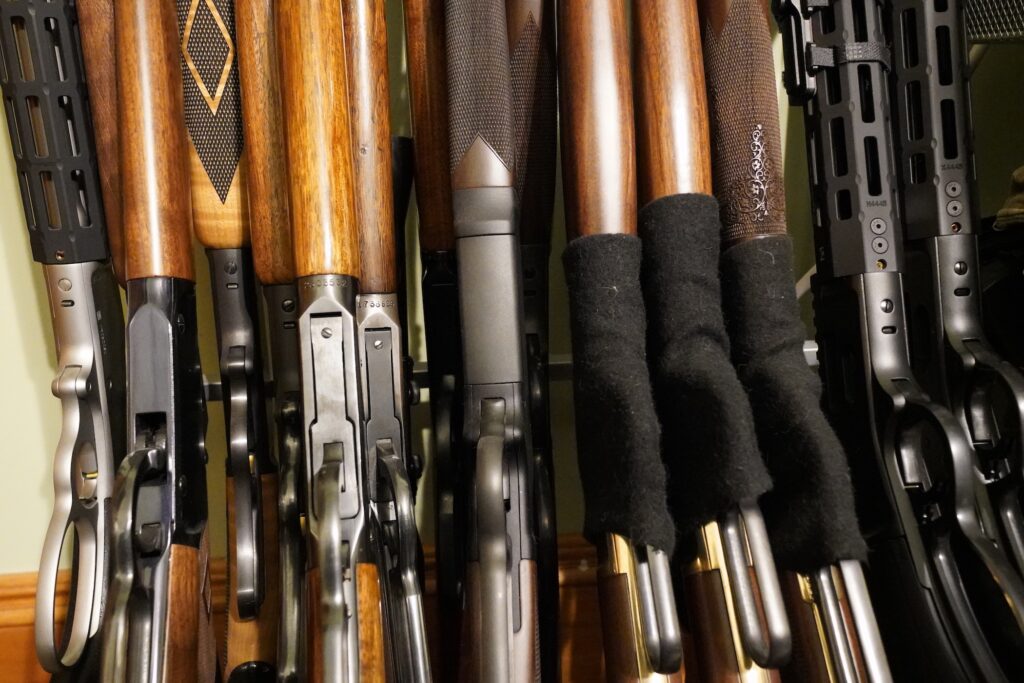
Today, there are plenty of cartridges I would choose over the .30-30 for specific jobs. If I know I am going to be shooting across open country, I want something flatter. If I am hunting larger game under different conditions, I may want more bullet and more energy. If I am shooting long range, the .30-30 is not even part of the conversation. None of that makes it obsolete. Put me in thick woods, rolling hardwoods, or a stand where most shots are inside 100 yards, and a light lever gun chambered in .30-30 still makes an awful lot of sense. It is easy to carry, quick to shoulder, easy to shoot well, and has more than enough performance for the job it built its name around.
That is probably why the cartridge is still here more than 130 years later. It came out of the beginning of the American smokeless-powder era, survived generations of newer cartridges, and continues to do the same basic job it was doing before any of us were around to argue about ballistic coefficients. Modern cartridges are faster, flatter, and in many cases more capable, but the .30-30 was never successful because it won a numbers contest. It was successful because it worked, and for the kind of deer hunting that made it famous, it still does.