
I remember sitting on the hardwood floor of my childhood living room, eyes glued to the TV as the movie Navy SEALs played. I watched Charlie Sheen and his team move through the shadows, their suppressed MP5s emitting nothing but a gentle “pfft” as they dismantled the terrorists. In my young mind, that was the peak of human achievement. I promised myself that one day, I too would own a “whisper-quiet” terrorist-ender and be the stealthiest guy at the range.
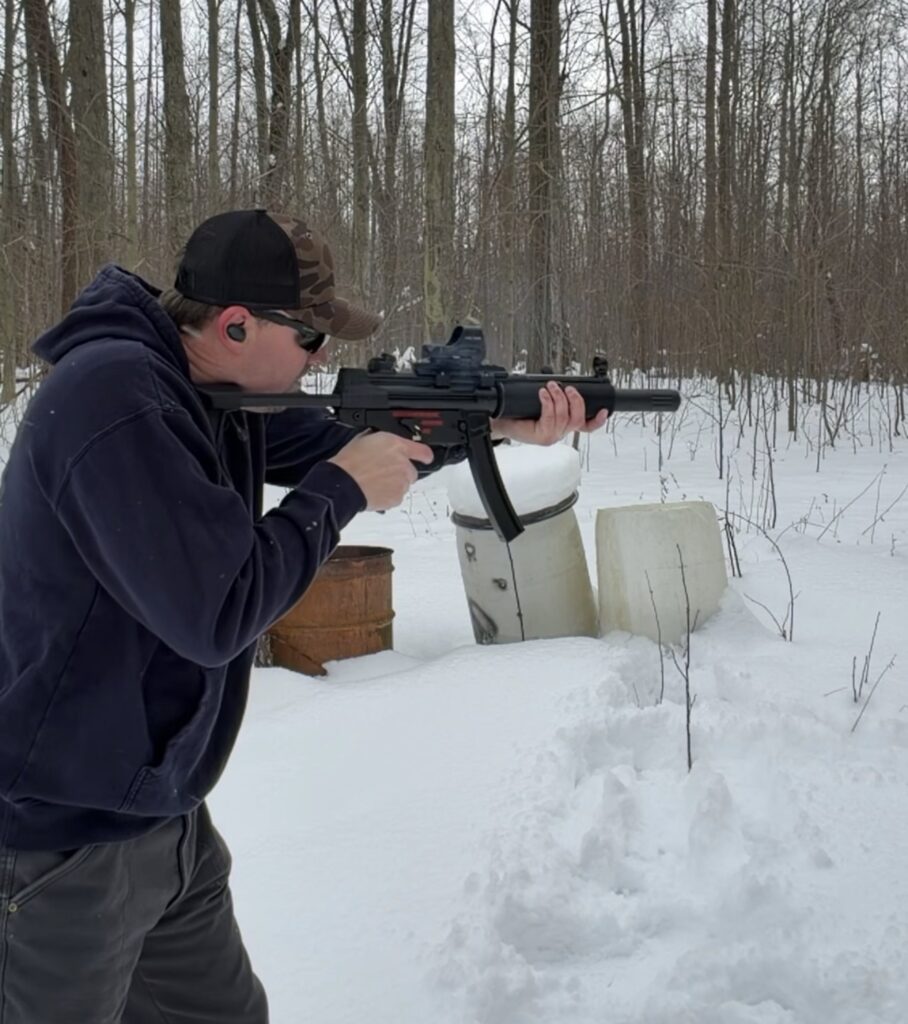
Fast forward more years than my hairline cares to discuss, and I finally made it. I had the MP5, well, the Century Arms clone. I had the suppressor, a TiON 9mm Grenadier. I looked like a budget version of an elite operator. I lined up my first shot, squeezed the trigger, and… BANG. Wait, what? It wasn’t a “pfft.” It was a “CRACK.” If I were actually engaging terrorists, they wouldn’t just know where I was; they’d probably have time to order a pizza before I could line up a second shot. My childhood was a lie.
I know what you’re thinking: Is it possible to learn the power of the silent sting? Not from a Jedi. But you can learn it from a guy with a reloading press and a basement full of brass, oh yeah, that’s me.

The Art of Modern Alchemy
I call it “Alchemy” because it sounds significantly more badass than “Chemistry” or “Following Instructions in a Manual.” It also lets me lean into my inner nerd—think Full Metal Alchemist or a high-level Artificer in Dungeons & Dragons.
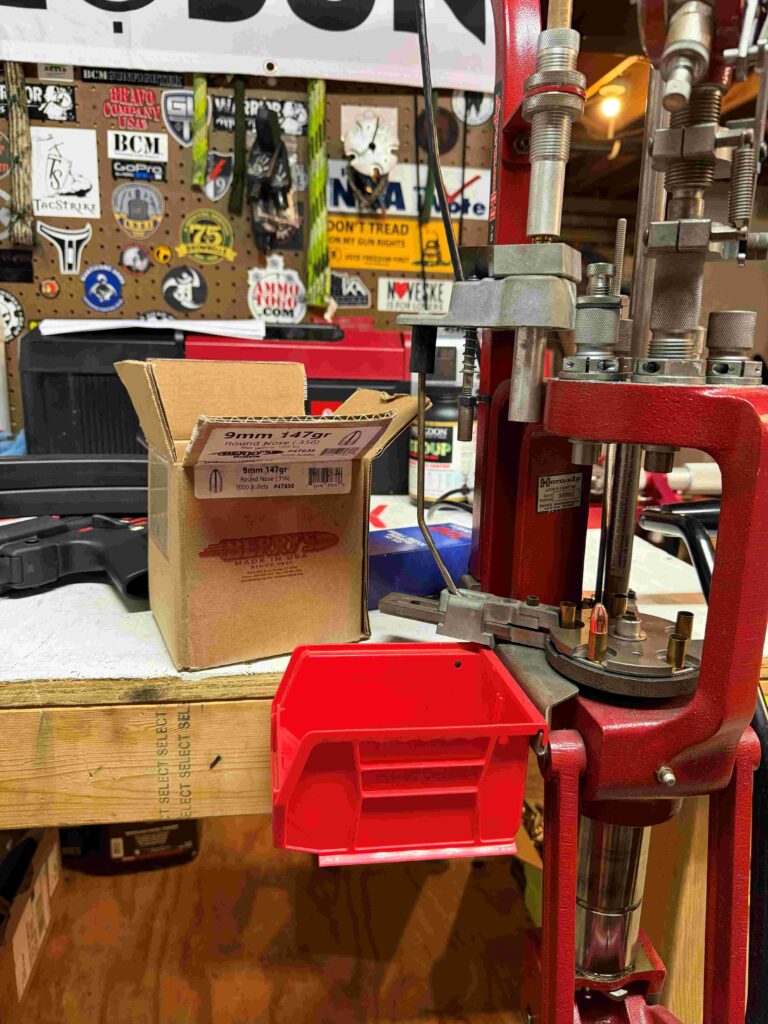
In reality, reloading is the process of taking four distinct components—brass, primers, powder, and projectiles—and transmuting them into something greater than the sum of their parts. When it comes to the “Navy SEAL” dream, reloading is the only way to get your setup actually quiet. The secret isn’t some high-tech space metal in the suppressor; it’s keeping your rounds below the speed of sound, which is roughly 1,125 feet per second.
If your bullet breaks the sound barrier, you get a “sonic crack” that no suppressor on Earth can muffle. It’s the physics equivalent of your bullet screaming, “I’M OVER HERE!” as it flies. To fix it, we have to go sub-sonic.
Teach Me This Sorcery
Your average box of 9mm from the local big-box store is designed to be snappy. It’s built to go fast and cycle any gun it’s tossed into. While a suppressor will certainly take the “bite” out of that noise, it won’t give you that cinematic hush.
This is where the Reloading Master Race reigns supreme.
- The Cost Factor: If you try to buy “Subsonic” labeled ammo at a retail store, they charge you a premium for the privilege of… well, having less powder in the casing. It’s the only industry where “less is more” actually means “less is more expensive.”
- The Reloader’s Edge: When you reload your own, subsonic rounds are actually cheaper to make because you’re using less propellant, aka powder. You’re literally saving money to be cooler. It’s a win-win that would make a goblin merchant weep with joy.
My “Secret” Potion (The Recipe)
Every alchemist has their favorite brew. After much trial, error, and squinting at chronographs, I’ve found a recipe that turns my MP5 into a legitimate “blaster” of legend.
|
Brass: |
Hornady |
|
Primer: |
CCI or Federal Small Pistol |
|
Powder: |
3.3 grains of Hodgdon Titegroup |
|
Projectile: |
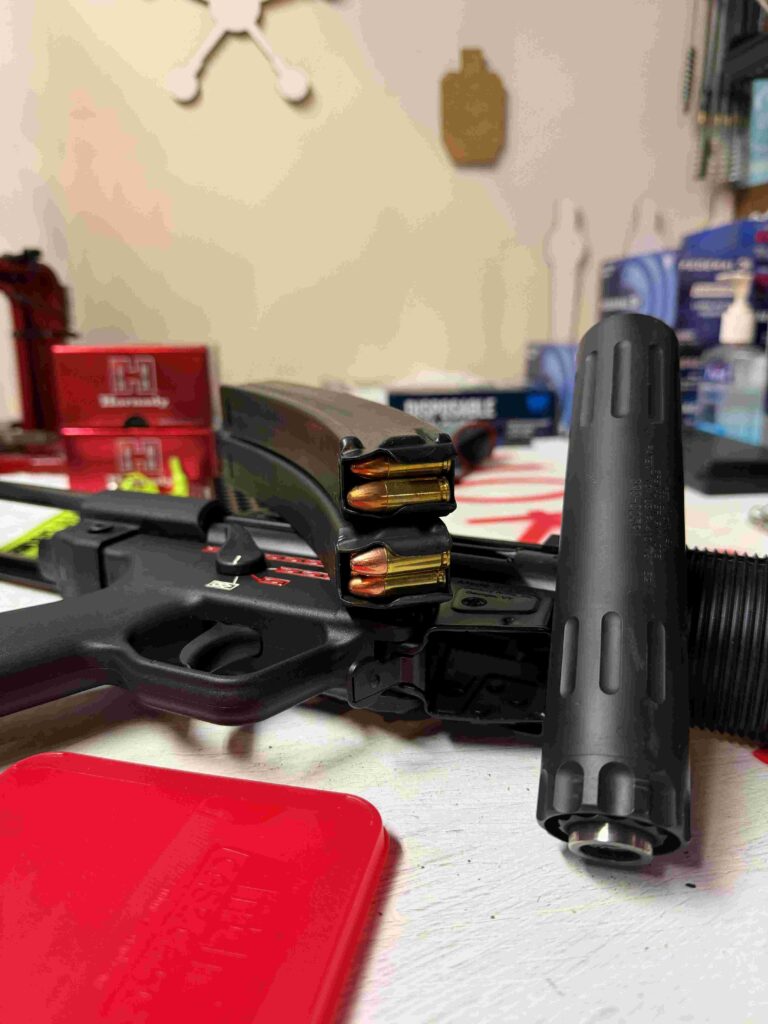
147 grain Berry’s Plated Round Nose |
A Note of Caution: Before you go rushing to your bench, remember that every firearm is a unique snowflake. A load that cycles perfectly in a long-barreled Pistol Caliber Carbine (PCC) might turn a short-barreled handgun into a manual-action paperweight. Different suppressors might mean one PCC functions, and the next doesn’t.
Always consult a reputable reloading manual. Don’t just take the word of a guy on the internet who makes Navy SEAL references. Start high, work your way down, and use the “grey matter” between your ears. You’re looking for the “Sweet Spot”—the point where the gun still functions reliably, but the bullet stays under the speed of sound.
Is It Actually Worth the Effort?
I have spent an embarrassing amount of time in my basement, staring at a pile of components and arguing with myself like Gollum. “Should we go down to 3.1 grains, Precious? Will it cycle? Will it be silent as a grave?” Is the obsession worth it?
Let me paint a picture: You show up at the range with your friends. You pull out an MP5 equipped with a TiON Grenadier 9mm suppressor. You chamber a “magical” home-rolled round and fire. The only thing people hear is the clack of the bolt and the thwack of the bullet hitting the dirt.
The look on your friends’ faces—the pure, unadulterated envy as they beg to try a magazine—is worth every second of “basement time.” In that moment, you aren’t just a guy with a hobby; you’re the action star. You’re the guy with the whisper-quiet ammunition that makes everyone else’s unsuppressed 9mm sound like a localized thunderstorm.
The Therapy of the Press
At the end of the day, there is something deeply therapeutic about the process. I can crank up some music, shut out the world, and produce a thousand rounds of subsonic 9mm tailored specifically for my gear on my Hornady LnL press.
There is a primal satisfaction in watching a heavy 147-grain bullet punch a massive hole in a target with nothing more than a polite “cough” from the muzzle. It feels like magic. It feels like I’ve finally achieved what 5-year-old me thought was possible.
I’m not just a reloader. I’m an alchemist, a cinematic operator, and the quietest guy at the range. And honestly? The view from the top of the “shush” mountain is pretty great.