
Understanding the differences in primer construction, ignition characteristics, and consistency can help reloaders make better decisions at the bench.
When it comes to reloading ammunition, we spend a tremendous amount of time discussing powders, bullet weights, seating depths, and brass preparation. However, one of the smallest components in the entire process is often one of the most overlooked: the primer.
For something so small, a primer has a pretty significant responsibility. It must provide reliable ignition of the powder charge, and it needs to do so consistently from one cartridge to the next.
Walk into just about any reloading supply store, and you’ll find several primer choices. Standard, magnum, match, and bench rest primers all have their place. But what really separates them, and is spending additional money on a premium primer going to make a noticeable difference?
Understanding the Primer’s Job
A centerfire primer consists of a small metal cup containing a sensitive priming compound and an anvil. When struck by the firearm’s firing pin, the compound ignites, producing a flame that travels through the flash hole and ignites the propellant.
Sounds simple enough, right?
However, primers aren’t all created equal. Differences in priming compounds, cup construction, sensitivity, and manufacturing tolerances can influence how they perform.
Primers are also manufactured in different physical sizes and applications. Small pistol, large pistol, small rifle, and large rifle primers are common categories, with magnum and specialty versions available within many of those groups. One important distinction is that rifle and pistol primers aren’t necessarily interchangeable, even when their diameters appear similar. Cup dimensions, thickness, and sensitivity can differ.
Standard Primers: The Everyday Workhorse
For most reloaders, standard primers are the logical starting point. They’re designed to provide dependable ignition across a wide variety of conventional rifle and handgun loads. Whether you’re loading ammunition for recreational target shooting, hunting, or general range use, standard primers often provide everything you need.
Popular examples include the CCI 400 Small Rifle, CCI 200 Large Rifle, Federal 205 Small Rifle, and Federal 210 Large Rifle.
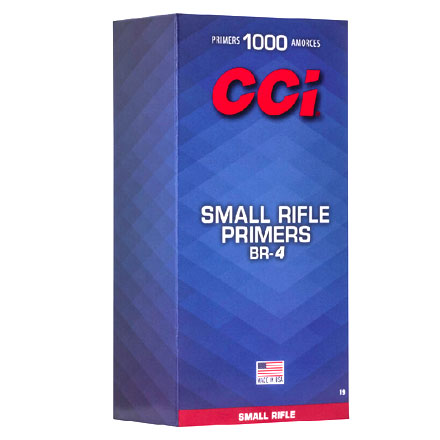
One of the biggest advantages of standard primers is their versatility. They’re widely represented in published reloading data and are generally more economical than specialty match primers.
It’s also worth remembering that a standard primer doesn’t automatically mean reduced accuracy. Plenty of excellent shooting ammunition is assembled using conventional primers.
For the average reloader producing ammunition for a weekend at the range, a quality standard primer specified in published load data is often the most practical choice.
Magnum Primers: When Additional Ignition Is Needed
The word magnum can create some confusion, particularly among newer reloaders.
A magnum primer isn’t necessarily designed to make ammunition more powerful. Instead, it’s generally engineered to provide a more energetic ignition output for applications where the powder charge may be more difficult to ignite consistently. Certain slow-burning powders, large powder charges, and demanding environmental conditions can benefit from this additional ignition energy.
For example, CCI describes its magnum primers as providing additional heat and ignition power, particularly for difficult ignition conditions.
Common examples include the CCI 250 Large Rifle Magnum, Federal 215 Large Rifle Magnum, and CCI 450 Small Rifle Magnum.
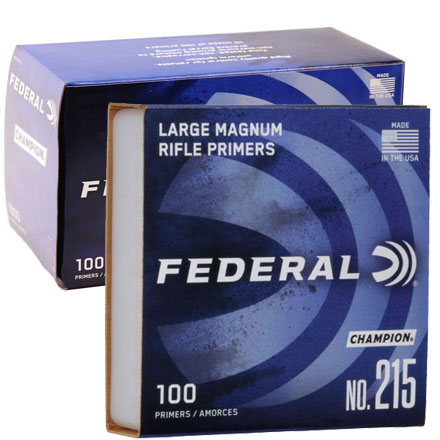
Here’s something important to understand: not every cartridge carrying the magnum designation requires a magnum primer.
Primer selection depends on the complete load combination, including the powder being used and the manufacturer’s tested data.
Additionally, substituting a magnum primer for a standard primer can change pressure and velocity characteristics. It shouldn’t be considered a harmless substitution simply because the primer fits the case.
The correct approach is to follow published, pressure-tested data specifying the appropriate primer.
Match Primers: Are They Worth the Additional Cost?
This is where things become particularly interesting for precision-minded reloaders.
Match and bench rest primers are generally manufactured with additional attention to consistency. The objective is to reduce variations in ignition characteristics between individual primers.
For example, CCI’s BR-2 and BR-4 bench rest primers are manufactured with additional assembly care intended to support consistent performance. Federal offers its Gold Medal Match primer lineup for similar precision-oriented applications.
Why does this matter?
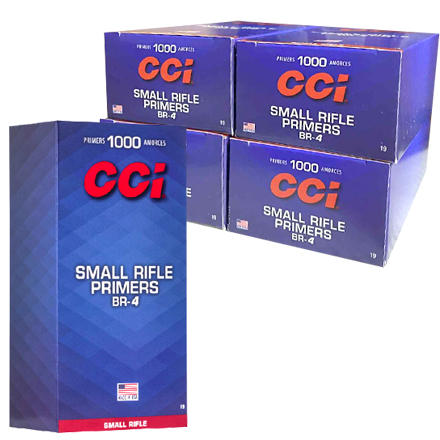
For long-range shooters, variations in muzzle velocity can translate into differences in vertical bullet impact as distance increases.
Consistent ignition is one factor that may help reduce those variations. However, there’s an important distinction between potential improvement and guaranteed improvement.
Installing match primers won’t automatically turn an average rifle into a precision instrument. Powder selection, brass uniformity, bullet quality, and the firearm itself all contribute to accuracy.
Federal identifies consistent primers as one component of its precision ammunition, alongside carefully selected propellants and tightly controlled manufacturing processes.
For competitive shooters chasing the smallest possible groups or lower velocity standard deviations, match primers may justify their additional cost.
For someone loading practice ammunition for a handgun at 15 yards, the advantage may be difficult to measure.
Comparing the Three Primer Categories

Primer Selection and Safety
Regardless of which primer category you choose, consistency and proper handling remain essential.
Primers should be stored in their original packaging, protected from excessive heat and moisture, and handled according to manufacturer instructions.
During reloading, primers must be seated correctly. Improper seating can contribute to misfires, ignition problems, or potentially hazardous conditions.
It’s also important to recognize that changing primer brands or models can alter a load’s performance. Even primers within the same general category aren’t guaranteed to produce identical results.
For shotshell reloaders, primer selection deserves particular attention. Shotshell components function as a closely matched system, and primer substitutions can produce significant pressure differences. Published shotshell recipes should be followed exactly.
Hodgdon’s Reloading Data Center identifies specific primers in its published load information, reinforcing the importance of treating primer selection as part of the complete ammunition recipe.
Making the Right Choice for Your Reloading Bench
So, which primer should you purchase?
My recommendation is relatively straightforward: start with the primer specified in reliable, published reloading data for your particular cartridge and powder combination.
If you’re producing general-purpose range ammunition, a standard primer may provide all the performance you’ll ever need.
If your selected load calls for a magnum primer, there’s a reason that component was included in the tested combination.
And if you’re pursuing precision rifle shooting, match primers are certainly worth considering, provided they’re compatible with appropriate published data.
Reloading is ultimately about consistency, attention to detail, and understanding how individual components work together.
The primer might be the smallest component on your bench, but its contribution to reliable ammunition is anything but small.
And sometimes, understanding the smallest details is what separates simply producing ammunition from becoming a better reloader.
For a complete round up of reloading primers visit www.midsouthshooterssupply.com