
Moving the Reloading Bench: Powder, Primers, Presses, and Everything Else – by Jonathan Kilburn
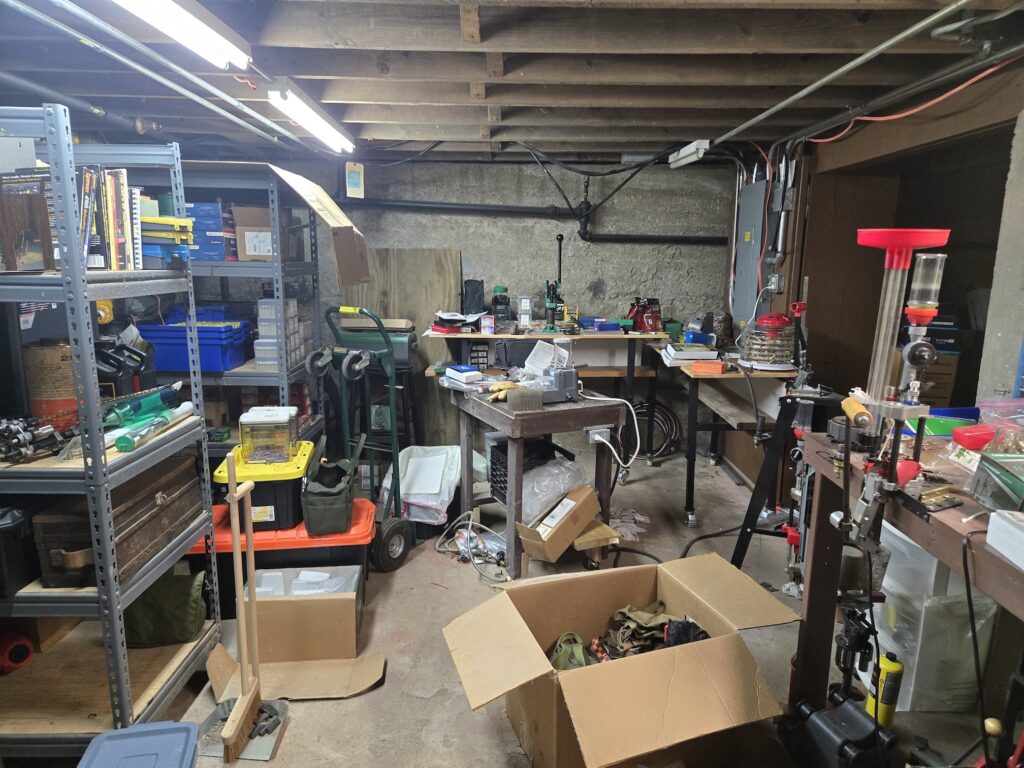
Moving sucks. I do not think there is a more technical way to put that. Everything you own has to come out of the place where you spent years finding somewhere to put it, get packed into boxes, moved across town or across the country, and somehow arrive at another house without being broken, lost, or placed in the one box you will not find for six months. Add a serious reloading setup to that equation and things get interesting pretty quickly.
A reloading bench has a way of growing. One press becomes two. Then you add a progressive because loading several hundred rounds on a single-stage press seemed like a good idea exactly once. Before long there are multiple presses, powder drops, scales, ultrasonic cleaners, annealing machines, casting pots, molds, sizing equipment, powder-coating supplies, spare parts, shellholders, dies, and enough little pieces of equipment to fill several cabinets. Then there are the components. Factory projectiles, cast bullets, lead ingots, new brass, used brass, processed brass, powder, primers, ammunition, and probably a collection of firearm parts that made perfect sense when you put them on the shelf three years ago.
When everything is sitting where it belongs, it does not seem like that much. Start trying to move it and you suddenly realize you have been operating a small manufacturing facility in the corner of your house.
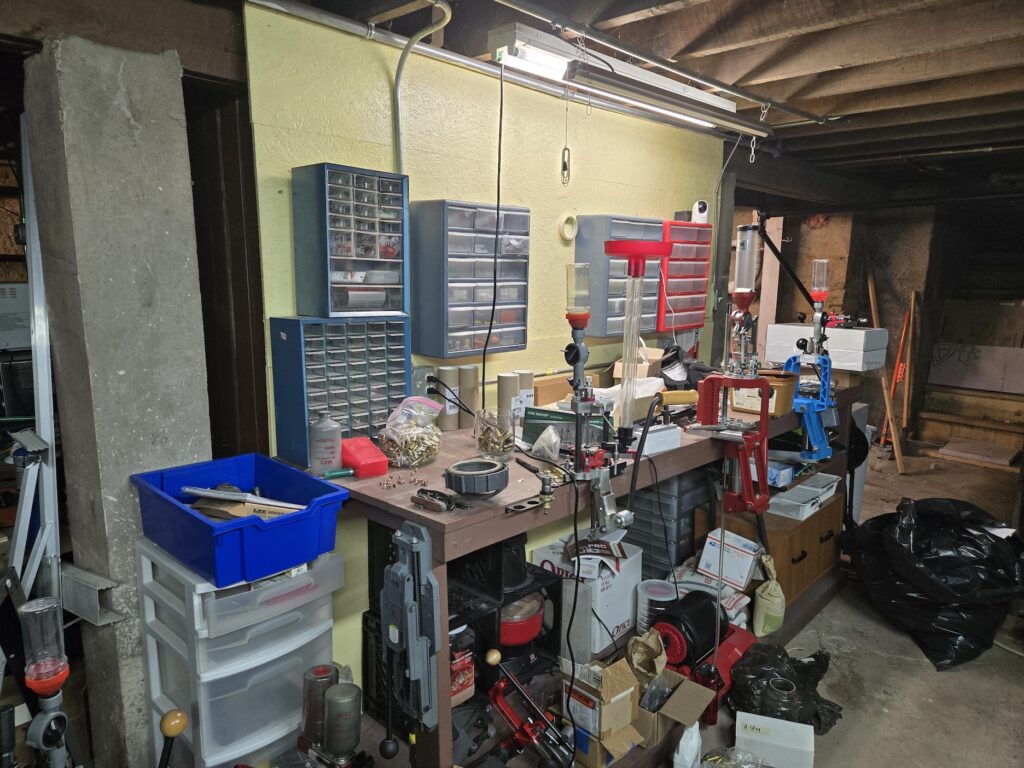
The biggest lesson for me is that moving the reloading room starts long before the press comes off the bench. If your components and equipment are already organized for normal storage, moving them is mostly a matter of picking them up and carrying them somewhere else. If everything has spent years accumulating in coffee cans, open boxes, random buckets, and whatever empty container happened to be nearby, moving day is when you finally get to enjoy all of those organizational decisions at once.
Organization Before the Move
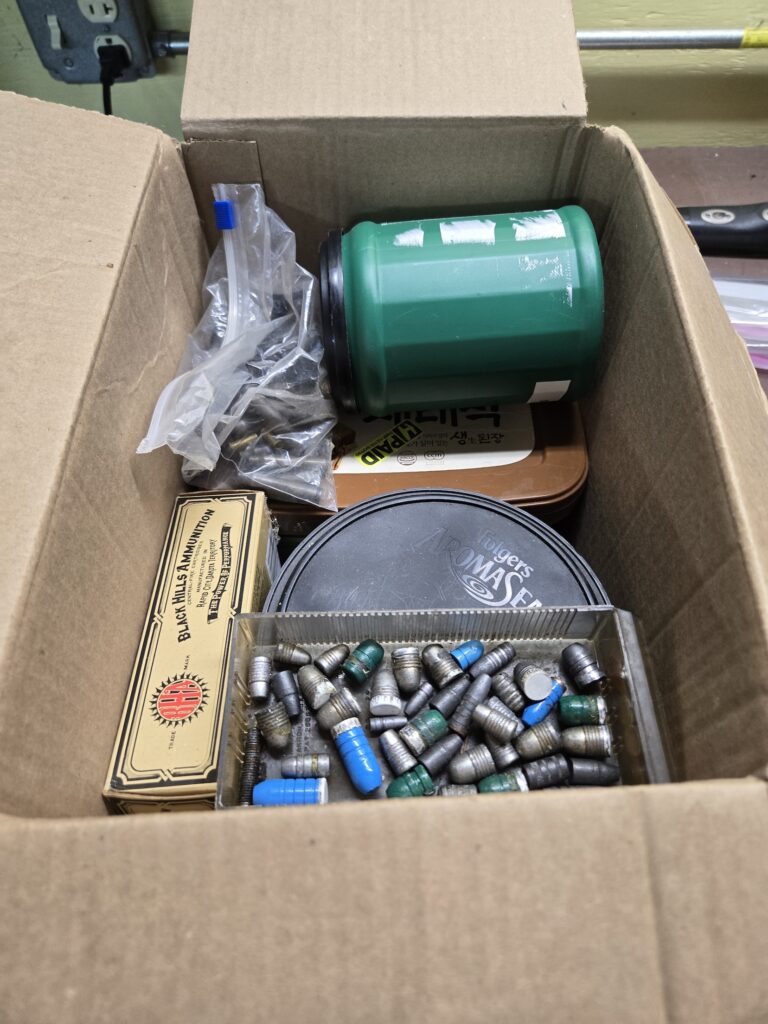
Projectiles and brass are probably the easiest examples. Both should already have some kind of organization before you start thinking about moving. Factory projectiles should stay identified by manufacturer, caliber, weight, and type. Cast bullets should be separated in whatever way makes sense for your operation, whether that is caliber, weight, mold, alloy, coating, or all of the above. Once a pile of cast bullets gets mixed together, future you gets to sit there with a scale and figure out what past you did.
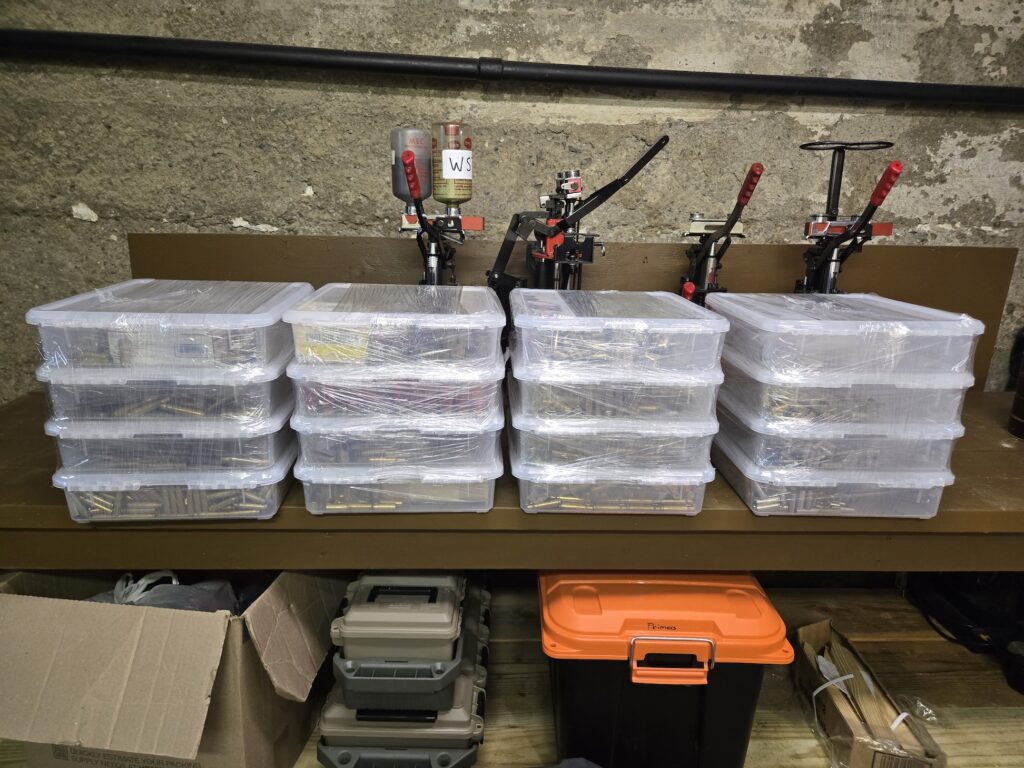
Brass is the same way. New brass, once-fired brass, cleaned brass, sized brass, trimmed brass, and brass that is completely ready to load should not suddenly become one enormous bucket because the house is being packed. If you already keep your brass organized by caliber and stage of preparation, leave it that way and move the containers as they sit. If you do not, start organizing before moving day. I have no interest in arriving at the new house with a 50-pound bucket containing .223, .308, 9mm, .45 ACP, and several hundred mystery cases that apparently joined the family somewhere along the way.
The only downside is weight. Projectiles and lead become heavy very quickly, and they do not need a particularly large container to become miserable to carry. This is one place where smaller containers are better. I would much rather carry several manageable boxes than fill one giant tote to the top and discover halfway up the stairs that I have successfully packed something no human being wants to lift. Plastic tote manufacturers apparently determine weight ratings without ever filling one with cast lead.
The same planning applies to dies, shellholders, molds, bushings, trimmers, case gauges, conversion kits, and all the other small tooling that accumulates around a serious loading setup. Keep sets together. If a die set normally lives in its factory box, leave it there. If a progressive press has a caliber-conversion kit, keep the pieces together and label them. The 150-pound press is not what I am worried about losing during a move. It is the tiny proprietary insert that costs six dollars, is currently out of stock, and prevents the entire machine from working without it.
Moving Powder and Primers
Powder and primers need more thought than a bucket of brass. I keep powder in the manufacturer’s original container. I do not combine partial containers to save room, and I do not pour powder into some other bottle because the new container happens to stack better. SAAMI recommends keeping smokeless powder in its original approved container and storing it so that, in the event of ignition, gases are not dangerously confined.
For the move itself, I keep those original powder containers together in lidded plastic totes. The tote keeps the containers organized, upright, dry, and easier to handle as a group. It is not meant to become a pressure-tight powder magazine, and I would not modify it to act like one. Powder stays separate from primers, and I do not mix either one in with ordinary household goods where it can disappear underneath six boxes of kitchen equipment.
I also break the powder up rather than putting everything into one giant container. My practical limit is no more than 50 pounds of smokeless powder grouped into a single transport container, even if that means having multiple containers. That is a handling method, not a statement that every homeowner in America is automatically allowed to store 50 pounds however he wants. Storage rules are where this subject gets more complicated.
Federal explosives law treats commercially manufactured black powder differently from smokeless propellant. Under 27 CFR 555.141, commercially manufactured black powder in quantities not exceeding 50 pounds can qualify for an exemption from the federal explosives regulations when it is intended solely for qualifying sporting, recreational, or cultural use in antique firearms or antique devices. That is a federal exemption, not a blanket rule saying every residence may store 50 pounds of black powder. State and local fire codes can be considerably more restrictive.
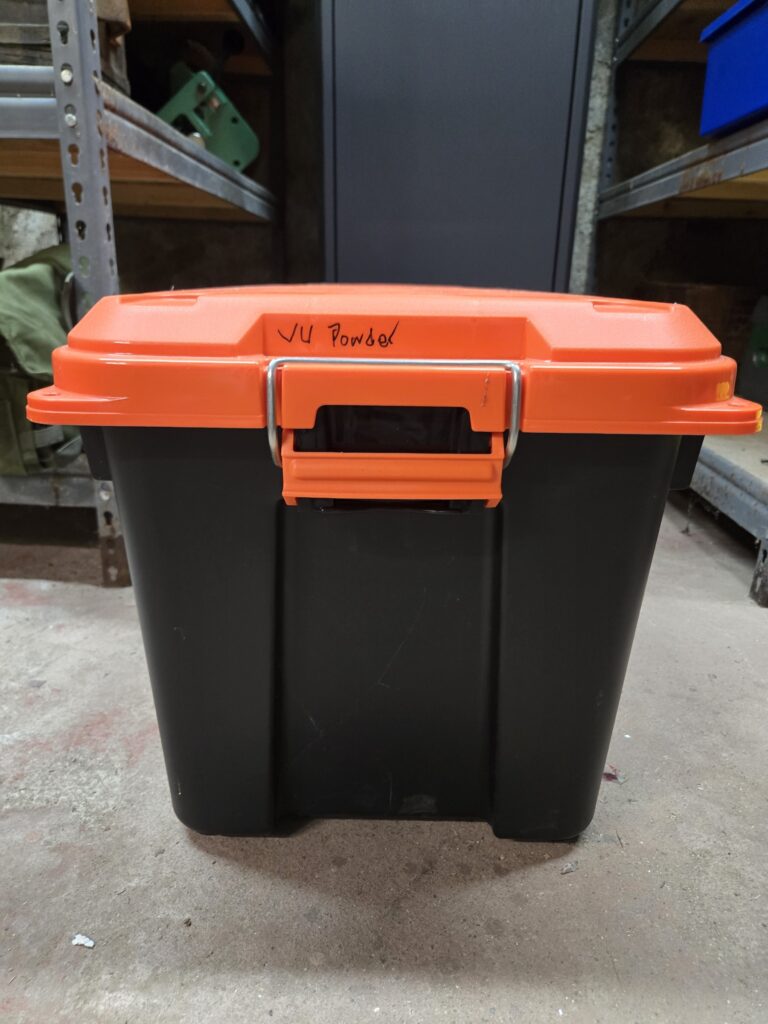
Smokeless powder has another layer. Small-arms smokeless propellant is generally exempted from the federal explosives regulations in this context, but residential fire codes often establish their own storage limits and construction requirements. A commonly adopted approach permits up to 20 pounds in original containers and requires quantities over 20 pounds but not exceeding 50 pounds to be stored in a wooden box or cabinet with walls of at least one inch nominal thickness. Connecticut, for example, has that exact residential requirement, and versions of the International Fire Code use similar 20- and 50-pound thresholds. Other jurisdictions can be stricter, so this is one of those rare occasions where reading your local fire code is more useful than asking the internet what some guy in another state does.
This also means the plastic tote I use to organize powder during a move should not automatically be confused with permanent code-compliant storage. If your local ordinance requires a particular storage box, cabinet, quantity limit, permit, or other arrangement, that rule still applies once the powder is stored at the residence. Moving does not create a temporary vacation from the fire code.
Primers stay in their factory packaging and remain separate from powder. The original packaging keeps the individual primers separated and protected from accidental initiation. SAAMI recommends keeping primers in their factory containers until use and warns against bulk storage in jars, bottles, or similar containers. It also advises against pressure-tight primer storage. A lidded tote can keep the factory boxes organized for handling, but I am not trying to build a sealed container that traps pressure if something goes wrong.
Heat and moisture deserve some common sense too. Powder and primers are not the boxes I leave sitting in the back of a closed vehicle in direct summer sun while I spend three hours figuring out where the couch is going. I want them moved deliberately, kept dry, kept away from excessive heat, and accounted for at both ends of the move. There is already enough confusion on moving day without remembering at 11:00 that night that several thousand primers may still be sitting in a trailer.
If a commercial mover or shipping company is involved, stop treating powder and primers like ordinary household goods. Commercial transportation is regulated differently, and carriers can have their own restrictions on what they will accept. Tell the carrier exactly what you have and determine the rules before moving day rather than assuming a box becomes harmless because you wrote “garage” on the side.
Presses and Machines
Dismounting presses was one of the bigger headaches for me because a serious loading room usually does not have one little aluminum press sitting on the corner of a folding table. There may be several single-stage presses, a turret, one or more progressives, dedicated sizing equipment, bullet-sizing presses, casting equipment, and whatever else has accumulated over the years. We like heavy presses because rigidity is a good thing when sizing brass. That same cast iron becomes considerably less charming when it has to go down a flight of stairs.
I prefer removing the presses from the bench instead of attempting to move the entire bench with everything still mounted. Anything that can be easily removed from the press should come off first. Powder drops, case feeders, bullet feeders, bins, primer systems, handles, brackets, and anything else hanging off the machine can either add weight or provide a wonderful place to catch a doorframe. Progressive presses are tough, but I have no desire to determine whether a case-feeder mount was secretly designed as a lifting handle.
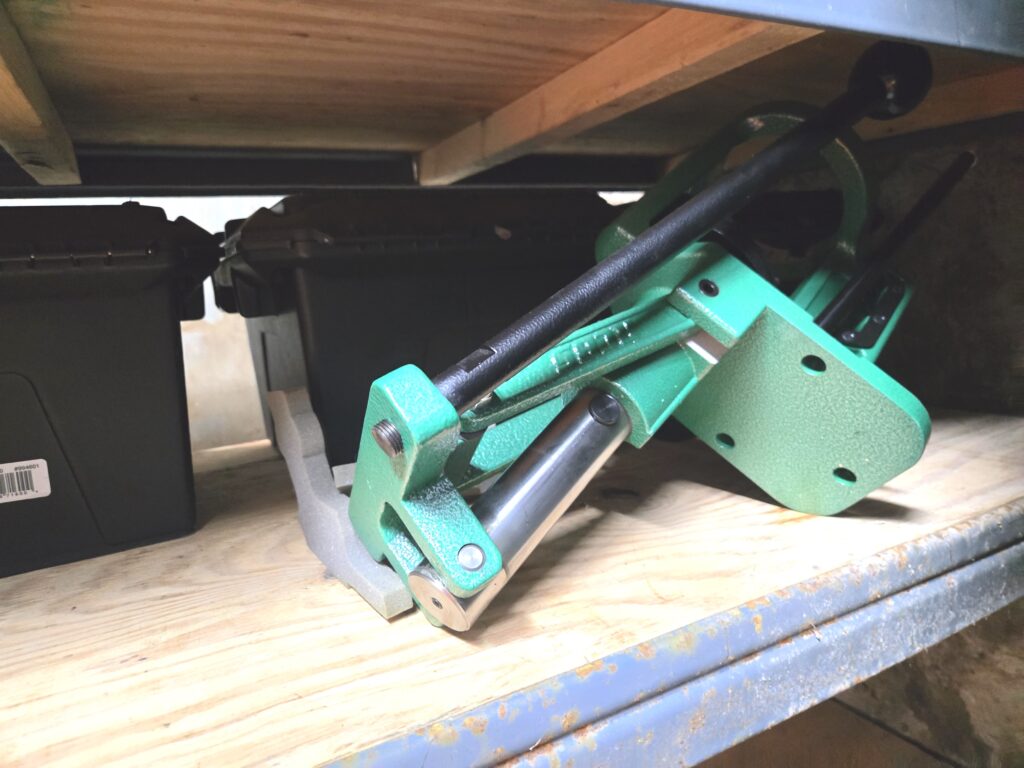
Take pictures before complicated machines come apart. Most progressive setups become customized over time whether we realize it or not. A bracket gets moved, a washer gets added, a spring is adjusted, or a particular piece only fits correctly when it is oriented one way. A few photographs on your phone can save a lot of head scratching later. Small hardware should go into labeled bags with the machine it belongs to. The four bolts holding a press to the bench look incredibly distinctive while they are in your hand. Three weeks later they look exactly like every other bolt in the garage.
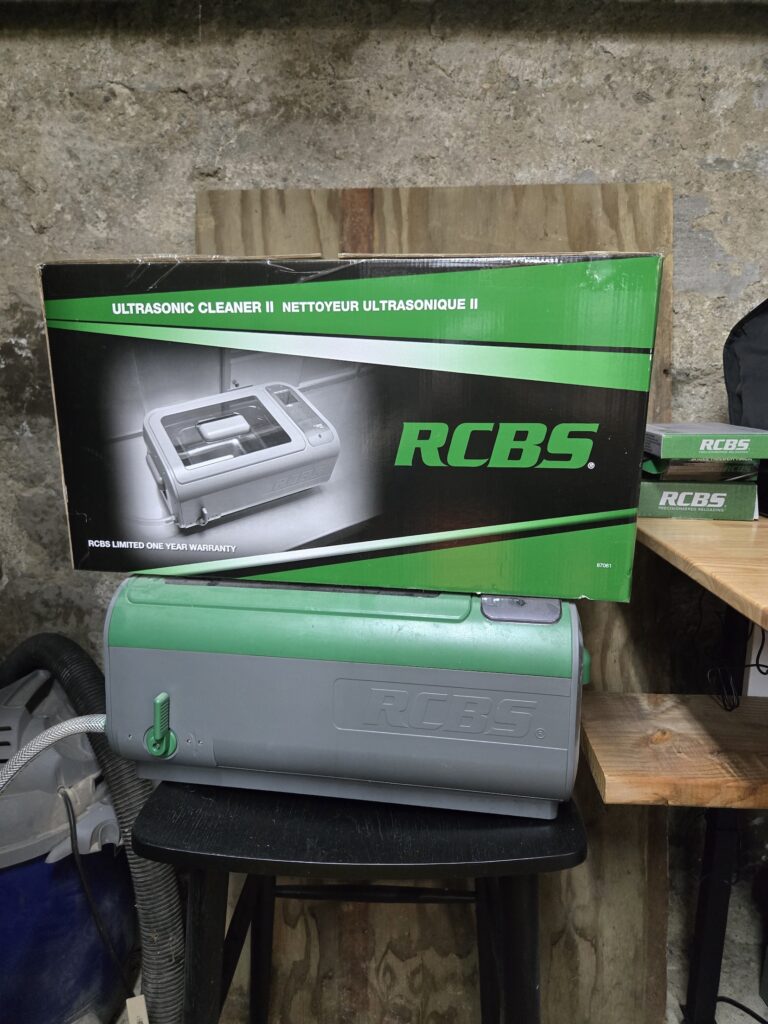
Precision and electronic equipment should get better treatment than the heavy cast-iron stuff. Scales, automatic powder dispensers, annealing machines, ultrasonic cleaners, case-prep centers, chronographs, and similar equipment should be packed so displays, load cells, control panels, and delicate parts are protected. If I still have the factory box and packing material for an electronic scale or dispenser, this is when keeping that giant pile of boxes finally pays off.
Ultrasonic cleaners should be drained, cleaned, and dry before packing. Annealing machines should have loose cases and accessories removed. Powder measures should be completely emptied. Nothing should arrive at the new house with mystery powder still sitting in a hopper because it was easier to deal with later. “Later” during a move has a tendency to become several weeks from now, which is not how I want to identify an unknown powder.
Casting Equipment and Lead
Casting equipment adds another level because it combines machines, molds, chemicals, and a lot of weight. Lead ingots and cast projectiles should be divided into containers that can actually be lifted. It is surprisingly easy to create a 70-pound box that looks half empty. That does not make you efficient. It just gives whoever is helping you move another reason to stop answering your phone.
Molds should be packed dry and protected from moisture and corrosion. If I have molds stored in their original boxes, that is where they stay. Sizing dies, handles, top punches, lubricizers, casting thermometers, and similar equipment should remain organized with the casting system instead of being spread through six unrelated boxes.
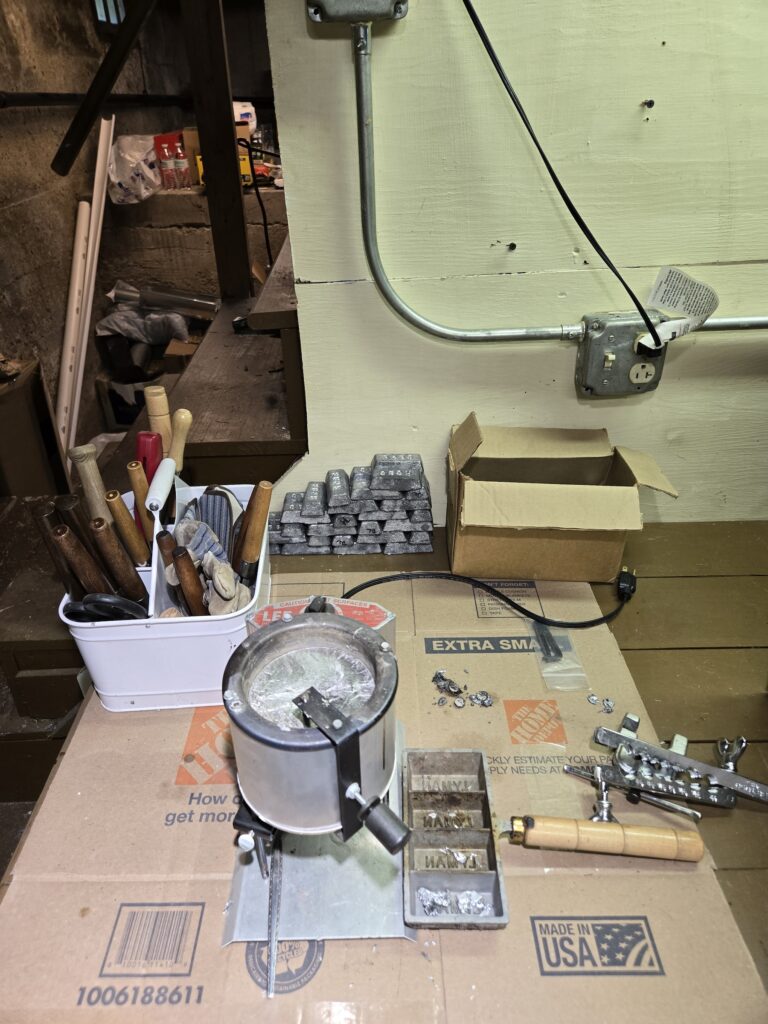
Powder-coating equipment deserves the same treatment. Keep coating powders sealed and identified, protect electrical equipment, and do not pack open coating containers next to precision reloading equipment. One lid coming loose can make an impressive mess. I like powder coating bullets. I do not particularly want to powder coat my scale, annealer, and half the inside of a moving truck.
Casting furnaces should be cold, emptied as appropriate for the equipment and move, and packed so they cannot damage lighter equipment. Lead and heavy machines go on the bottom for a reason. Putting a precision scale underneath them turns the moving truck into a very expensive experiment in gravity.
Firearms Are Not Reloading Equipment
A lot of reloading rooms also contain firearms, ammunition, magazines, spare barrels, stocks, optics, and enough firearm parts to build something if you can remember which box everything is in. I handle firearms separately from the normal reloading equipment. They do not get buried in a tote with dies and shellholders and handed to whoever happens to be carrying boxes that afternoon.
If the move crosses state lines, check the laws at the destination before loading the vehicle. ATF says a person who lawfully possesses firearms may move them interstate when changing residence, but if a moving company is transporting the firearms, the mover must be notified. ATF also advises checking state and local law at the destination, and certain NFA firearms have additional interstate-movement requirements. Those rules have also been undergoing changes, which is another good reason to check current ATF guidance rather than relying on what somebody remembers from ten years ago.
Firearms, powder, primers, and other regulated or sensitive items are where I would rather spend ten minutes checking current rules than discover after the move that my understanding was outdated. A move across town and a move across several states are not necessarily the same thing.
Make Moving Day Boring
A well-organized reloading room should be pretty boring to move. The equipment may be heavy and there may be a lot of it, but there should not be many surprises. Brass is already separated. Projectiles are identified. Dies stay together. Powder remains in original containers. Primers remain in original packaging. Small machine parts are labeled, and the expensive equipment is packed well enough that it should survive the trip.
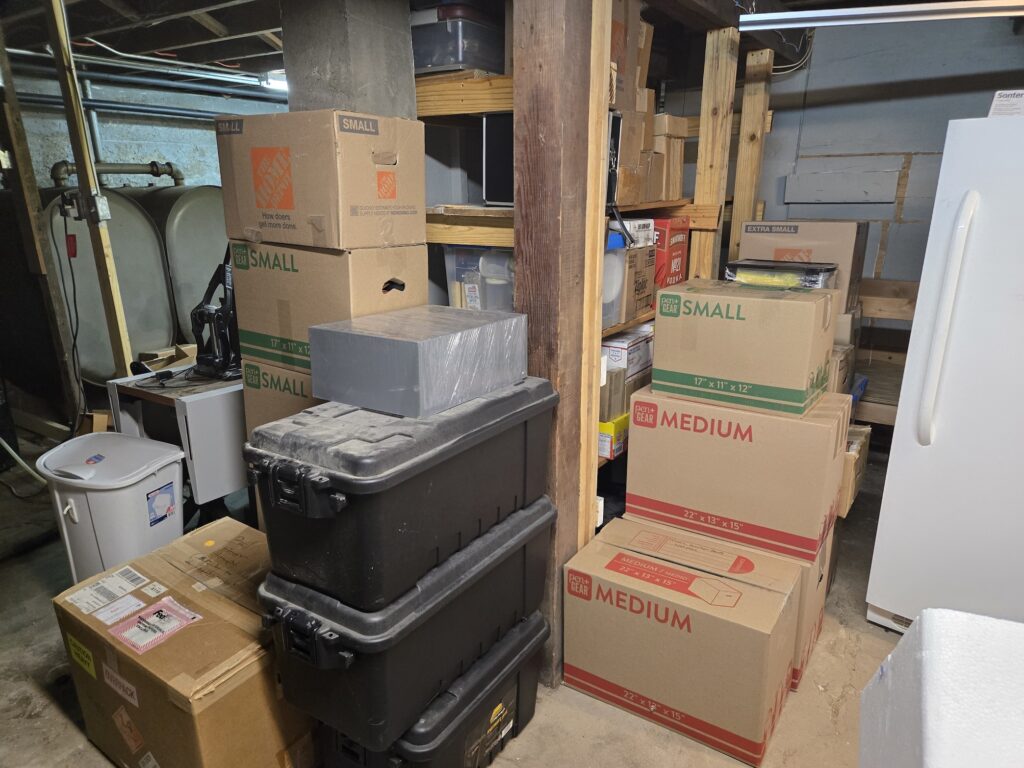
The work becomes miserable when moving day is also organization day. Trying to sort five years of brass while people are carrying furniture past you is not efficient. Neither is discovering that the tote marked “bullets” weighs approximately the same as a small-block Chevy. Spend the time beforehand and divide heavy components into reasonable containers.
I also keep the powder, primers, firearms, and precision equipment under tighter control than the ordinary household goods. I can replace a broken lamp. Replacing thousands of primers, a precision scale, or a progressive press because everything was thrown into the truck like patio furniture is a little more aggravating.
There is also a natural temptation to use the move as the time to redesign the entire loading room. I would not. Getting everything safely from one house to the other is enough for one project. Mounting presses again, deciding where machines should live, recalibrating scales, checking powder measures, setting up component storage, and bringing the new loading area back into operation can be its own job.
Actually, it can be its own article.
For now, I just want everything to arrive at the new house with the same powder in the same bottles, the same primers in the same boxes, the same projectiles in the same containers, and all of the equipment still capable of doing what it did before I started taking bolts out of the bench. A serious reloading setup can represent years of accumulated tools, machines, components, and money. Treat it that way before the first box goes out the door.
Moving will still suck. There is no organizational system I have found that fixes that.
It just does not have to suck twice.