
by Jonathan Kilburn
Walk through the reloading aisle of a major retailer or spend a few minutes browsing manufacturer websites and it becomes clear that the race toward automation is in full swing. Every year seems to bring a new feature designed to reduce operator involvement. Automatic indexing has become standard on many progressive presses. Case feeders have evolved from optional accessories into expected equipment. Sensors monitor powder levels, primer supply, and machine operation. Some systems are approaching the point where the operator’s primary responsibility is simply keeping components supplied and occasionally pulling a handle.
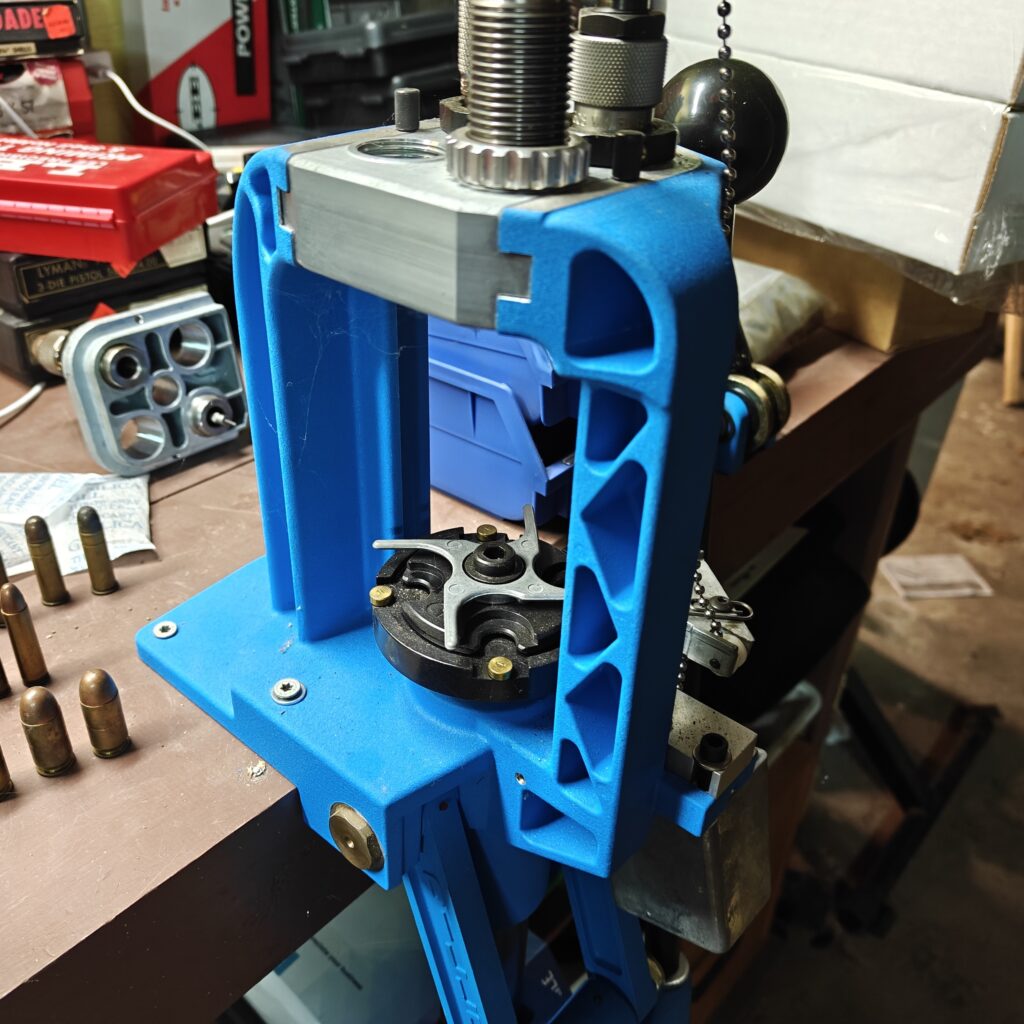
If marketing material alone told the story, it would be easy to conclude that presses like the Dillon RL550 belong to another era. After all, the 550 still requires manual indexing. It lacks many of the automation features that manufacturers now emphasize. On paper, it appears outmatched by newer designs from Hornady, RCBS, and even Dillon’s own higher-end offerings.
Yet decades after its introduction, the RL550 remains one of the most popular progressive presses on the market. It isn’t surviving because reloaders are resistant to change. It remains relevant because it continues to solve a problem that many newer designs sometimes overlook. The goal of a loading press is not to automate the process. The goal is to produce quality ammunition efficiently and consistently.
That distinction matters.
The assumption behind most discussions of progressive presses is that more automation automatically creates a better loading experience. In practice, the relationship is not nearly that simple. Automation can increase production rates, but it also changes the operator’s relationship with the machine. As more tasks become automatic, the reloader spends less time actively participating in each operation and more time supervising the equipment.
That may sound like an advantage until something goes wrong.
Most experienced handloaders can remember discovering a problem not because a sensor alerted them, but because something felt different. A primer seated with unusual resistance. A case entered a die slightly off center. A powder charge looked different than the one before it. The machine communicated something through feel, sound, or visual observation long before a warning system could identify it.
The RL550 has always excelled at maintaining that connection between the operator and the loading process.
The Value of Staying Involved
Its manual indexing system is frequently presented as a disadvantage when compared to more automated presses. The criticism is understandable. Manual indexing is undeniably slower than automatic indexing. What often gets missed, however, is that the extra step forces the operator to remain engaged with each cycle of the press. Every completed stroke requires a conscious action before the next operation begins. That rhythm naturally encourages observation.
While some shooters view manual indexing as an outdated design feature, many long-time reloaders see it differently. They view it as one of the reasons the press remains so useful. The machine is progressive enough to produce ammunition at a meaningful rate, yet it never becomes so automated that the operator turns into a spectator.
There is a tendency in modern reloading discussions to assume that every operation should be faster than the one before it. The reality is that speed is only valuable when it produces a useful outcome. A loading session that ends with five hundred rounds of questionable ammunition is not more successful than one that produces three hundred rounds of excellent ammunition. Most experienced reloaders eventually reach the same conclusion. Quality comes first. Production rate matters, but only after consistency has been achieved.
The RL550 reflects that philosophy. It provides enough output to make loading practical without removing the operator from the process.
Progressive When You Need It, Deliberate When You Don’t
One of the reasons the RL550 has survived for so long is its ability to move between different styles of reloading without becoming awkward.
Many progressive presses are designed around volume production. Once they are running, they perform exceptionally well. The challenge comes when the task changes from production to development.
Load development is rarely a high-speed activity. It often involves small batches, constant measurements, component changes, and careful observation. The handloader may spend more time recording information than actually operating the press.
The RL550 handles these situations surprisingly well. Cases can be advanced deliberately. Individual operations can be monitored closely. The press never feels like it is fighting the operator’s pace.
When a load has been finalized, that same press can immediately transition into production mode. Instead of moving to a different machine, the reloader simply changes the rhythm of operation.
That flexibility becomes increasingly valuable as a handloader gains experience. Most reloaders eventually discover that not every loading session has the same objective. Some days require quantity. Other days require patience.
A useful press should be comfortable doing both.
Versatility Extends Beyond the Loading Cycle
Another area where the RL550 continues to distinguish itself is during caliber changes. It is not the most exciting feature to discuss, nor is it one that receives much attention in marketing materials, but it is one of the areas where the press makes the most sense for the average handloader.
Much of the conversation surrounding progressive presses focuses on output. The assumption is that the press will spend most of its life producing large quantities of a single cartridge. That may be true for some shooters, particularly competitors who consume thousands of rounds of the same ammunition every season. The reality for many handloaders is quite different.
The same bench that produces several hundred rounds of 9mm this month may be used to load .223 Remington the following weekend. Before long, hunting season arrives and attention shifts to .308 Winchester, .30-06 Springfield, or .300 Winchester Magnum. Add a few specialty cartridges, a new rifle purchase, or load development for a specific hunt, and caliber changes become a routine part of the process rather than an occasional inconvenience.
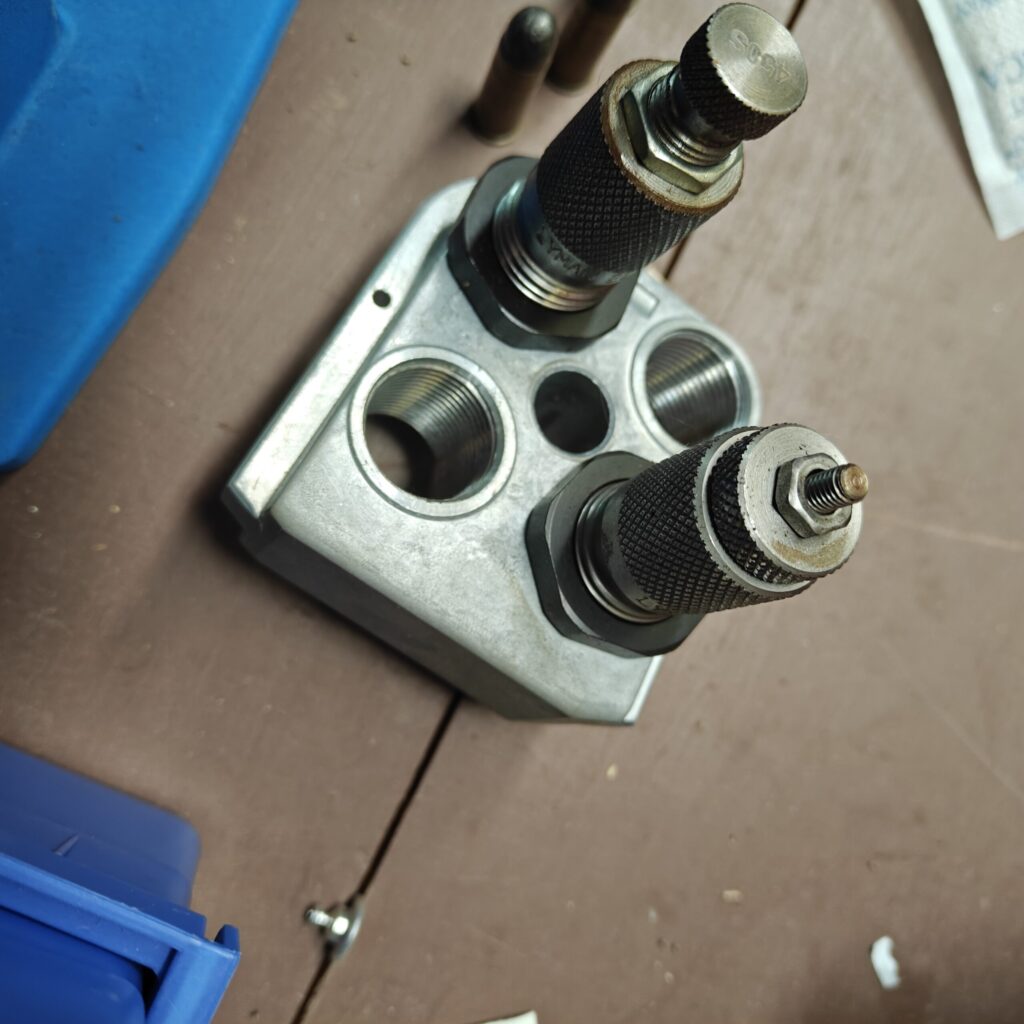
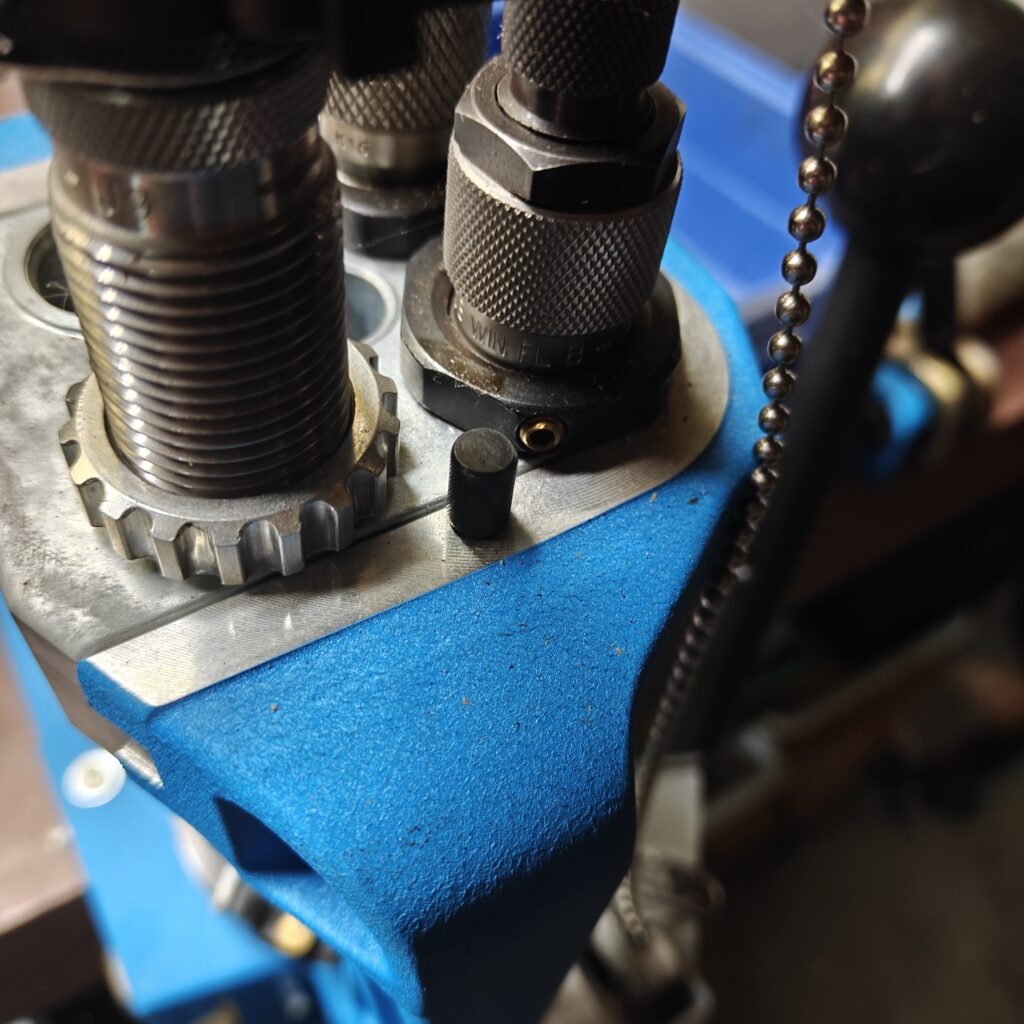
The removable toolhead system allows dies to remain adjusted and ready for use. Once a cartridge setup has been established, the reloader can return to it with minimal effort. Instead of spending time readjusting dies and chasing measurements, the focus shifts back to loading ammunition. Shellplate changes are straightforward, powder system adjustments are uncomplicated, and the entire process reflects the same philosophy that defines the rest of the machine.
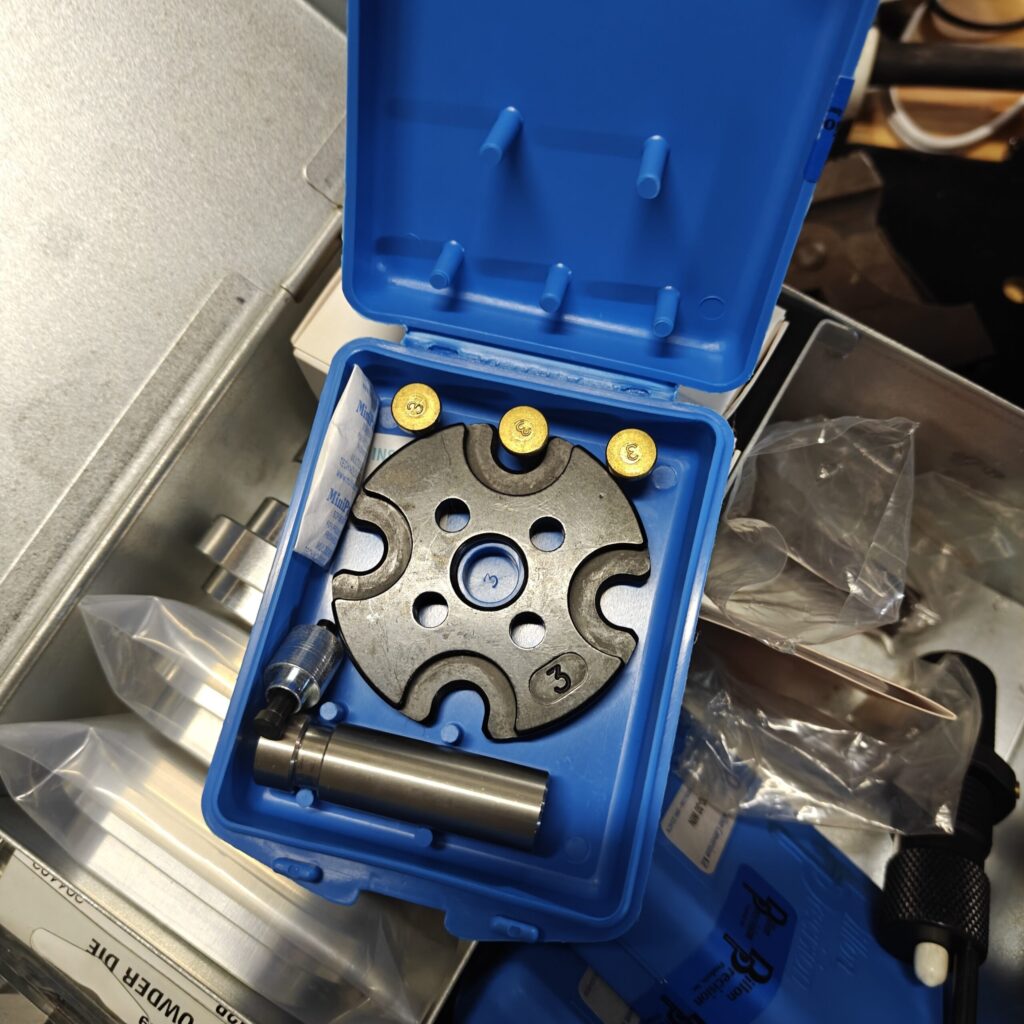
It is easy to underestimate the value of this until a reloading bench begins supporting multiple rifles and pistols. A shooter who loads a single cartridge may never notice the difference. A handloader supporting half a dozen chamberings quickly learns that setup time matters. Saving fifteen minutes every time a caliber change occurs adds up quickly over the course of a year.
Ironically, this is one of the areas where additional automation can become a disadvantage. Features that increase production speed often introduce additional complexity when switching cartridges. More components require adjustment. More systems require synchronization. More opportunities exist for something to be slightly out of alignment when the next loading session begins.
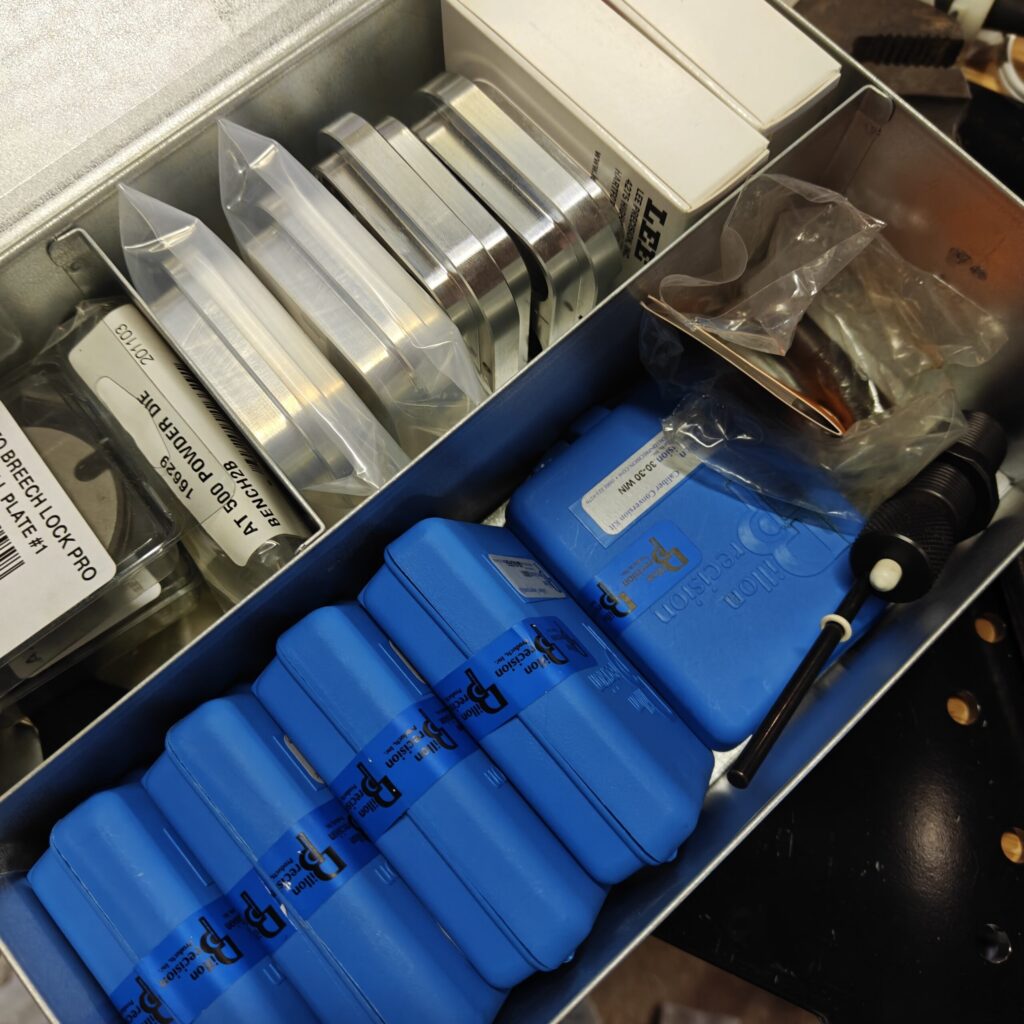
The RL550 takes a different approach. Rather than chasing the highest possible production numbers, it focuses on reducing the friction between different loading tasks. The result is a machine that feels equally comfortable loading a handful of precision hunting rounds as it does producing several hundred pistol cartridges in an evening.
That flexibility is difficult to quantify on a specification sheet, but it becomes increasingly valuable as a reloader gains experience. Most handloaders do not spend their lives loading a single cartridge. They move between projects, firearms, seasons, and goals. The RL550 was built around that reality, which helps explain why it remains relevant decades after its introduction.
Speed Is Often Overrated
Progressive press discussions frequently revolve around rounds per hour. The number becomes a measuring stick for success. If one machine can produce eight hundred rounds per hour and another can produce five hundred, the assumption is that the faster machine is automatically the better choice.
The reality is more complicated.
Most reloaders are not commercial ammunition manufacturers. They are hobbyists, competitors, hunters, and enthusiasts who load according to their shooting habits. The difference between producing four hundred rounds in an evening and producing eight hundred rounds in an evening often sounds more dramatic than it actually is.
What matters is whether the ammunition meets the intended purpose.
The average shooter rarely reaches a point where the RL550’s output becomes a genuine limitation. Long before the machine becomes the bottleneck, component preparation, case inspection, load development, or simple time constraints usually take over.
The obsession with maximum production numbers often overlooks how ammunition is actually made. Cases need to be cleaned. Brass needs to be inspected. Components need to be organized. Load data needs to be reviewed. None of those activities become faster simply because a machine indexes automatically.
The reloading process is larger than the press itself.
Simplicity Has Value
Anyone who has spent significant time around machinery understands a simple truth. Complexity creates capability, but it also creates opportunities for problems.
Additional automation means additional moving parts. Additional moving parts require additional adjustments. More adjustments create more opportunities for troubleshooting.
This is not a criticism of modern progressive presses. Many are remarkable machines. The point is simply that every design involves tradeoffs.
The RL550 has always embraced simplicity. It provides enough mechanical sophistication to dramatically increase production compared to a single-stage press while avoiding much of the complexity associated with highly automated systems.
That simplicity pays dividends over time.
When something requires adjustment, diagnosis is generally straightforward. When a caliber change is needed, the process is manageable. When a reloader returns to the bench after several weeks away, the machine does not require a refresher course to operate effectively.
Those advantages rarely appear in marketing literature because they are difficult to quantify. They become apparent only after years of ownership.
Why the RL550 Refuses to Become Obsolete
Perhaps that explains why the RL550 continues to attract both new reloaders and experienced veterans. It is not the fastest press available. It is not the most automated. It is not intended to be either.
What it offers instead is a combination of versatility, simplicity, and operator control that remains surprisingly difficult to replace.
It produces ammunition quickly enough for most shooters while maintaining the direct involvement that experienced reloaders often value. It handles load development without frustration. It transitions between cartridges with minimal effort. It supports both precision rifle work and volume handgun loading without demanding a different machine for each task.
In an industry increasingly focused on removing the human element from the loading process, the RL550 continues to remind reloaders that the person behind the handle remains the most important component on the bench.
Automation may increase production. Attention produces quality.
The Dillon RL550 succeeds because it never asks the reloader to choose between the two.