Before the era of bans, restrictions, and politicians suddenly becoming firearms experts every election cycle, a few rifles always wandered into my dreams on restless nights. Some because of movies and TV lore, and one because it just made practical sense: the SVD.
Now before the keyboard commandos start foaming at the mouth, yes, I know the title says M91. You’re correct. Gold star. Unfortunately, I can’t afford an SVD or even one of the Norinco clones anymore. I was about fifteen years and three economic collapses too late to buy one at a reasonable price.
That’s where the M91 comes in.
While not remotely “affordable” for the average shooter — especially after taxes, optics, magazines, and the inevitable “might as well” purchases — it is more attainable than a genuine SVD. Of course, it comes with caveats. But these are first-world gun-owner problems. And first-world gun-owner problems usually require first-world gun-owner money.That makes the M91 worth discussing.
What is the M91?
In short: it’s an AK. A big AK.
And for the purists already reaching for their blood pressure medication, yes, technically it’s an AK clone. Any Zastava is hard-pressed to be considered a “true” AK in the strictest sense. It functions like one, field strips like one, and launches brass into neighboring zip codes like one — but the measurements and pattern differences make it its own thing entirely.
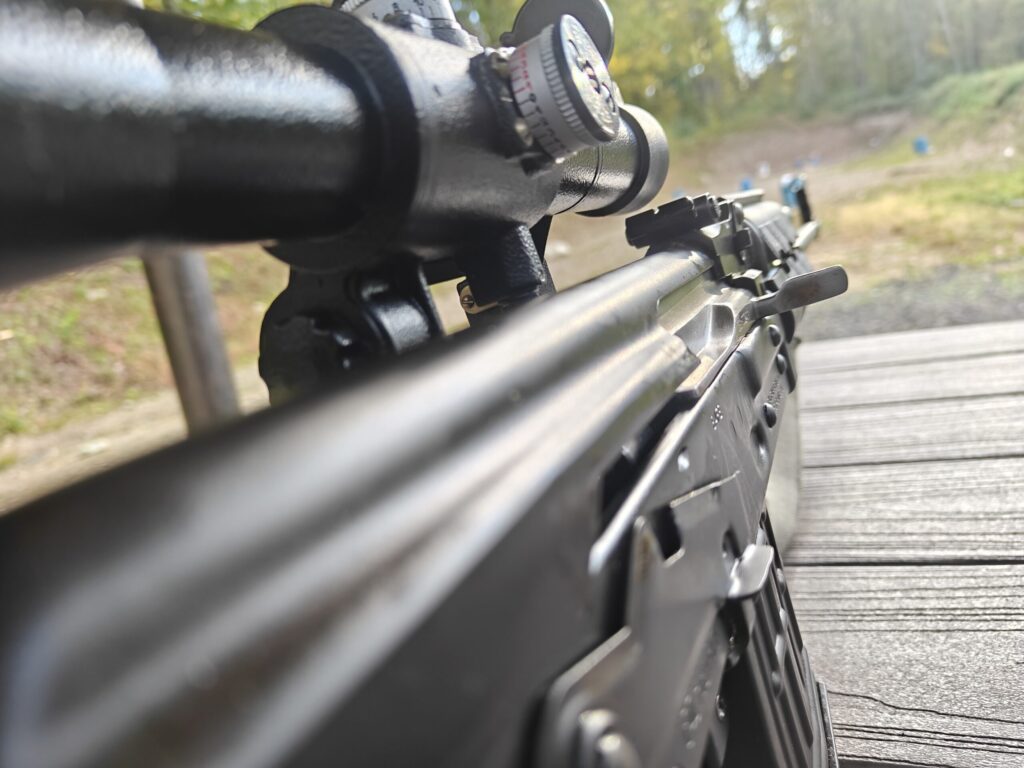
Commonly referred to as “Yugo” AKs, Zastava rifles are essentially a homegrown, reverse-engineered AK platform developed for domestic military use and export. They’ve been doing it that way for decades, and honestly, they’ve gotten pretty good at it.
The M91 itself is an upscaled AK chambered in 7.62x54R. With millions of surplus rounds still floating around in collectors’ basements, overpriced gun shows, and that one weird uncle’s shipping container hidden somewhere in the woods, 54R remains a capable and surprisingly plentiful cartridge.
What separates the M91 from the usual AK crowd is its list of uncommon features — and Zastava has always enjoyed being a little different. The rifle comes equipped with an adjustable gas block, making it ideal for load development and tuning. It also accepts a retro-style optic setup that scratches the Soviet-era aesthetic itch without requiring you to sell a kidney for authentic Russian glass.
And the magazines? Simple, rugged, reliable. Like every old farm truck that somehow still starts in February.
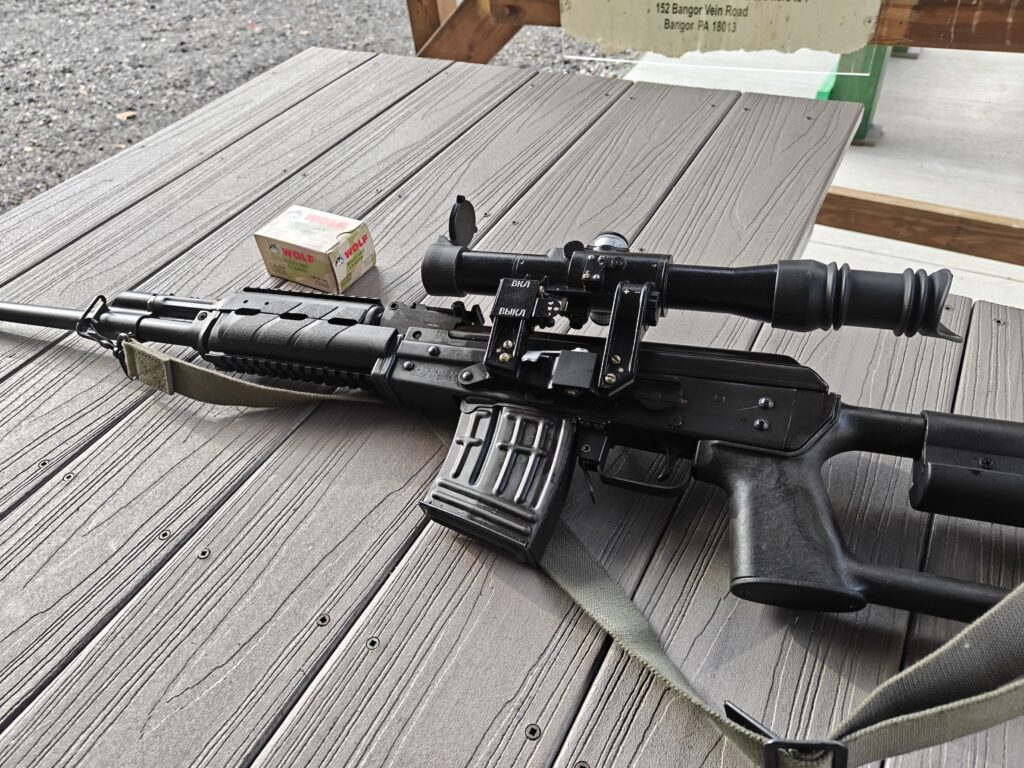
In short, the M91 is an upscaled Yugo-pattern AK with some thoughtful additions. It is not a PSL. It is not an SVD. And no amount of internet arguing is going to change that.
What Else Isn’t the M91?
Lightweight. It is absolutely not lightweight.
At 11.4 pounds, the M91 handles less like a precision rifle and more like a Serbian railroad tie with a gas system. Once you add an optic and loaded magazine, you’re not exactly sprinting through the woods unless your cardiologist is looking for entertainment.
And because the rifle uses Yugo-pattern furniture and dimensions, aftermarket support is limited. “Limited” in AK terms means you’ll finally find the exact part you need three months later on a forum post from 2011 written entirely in capital letters.
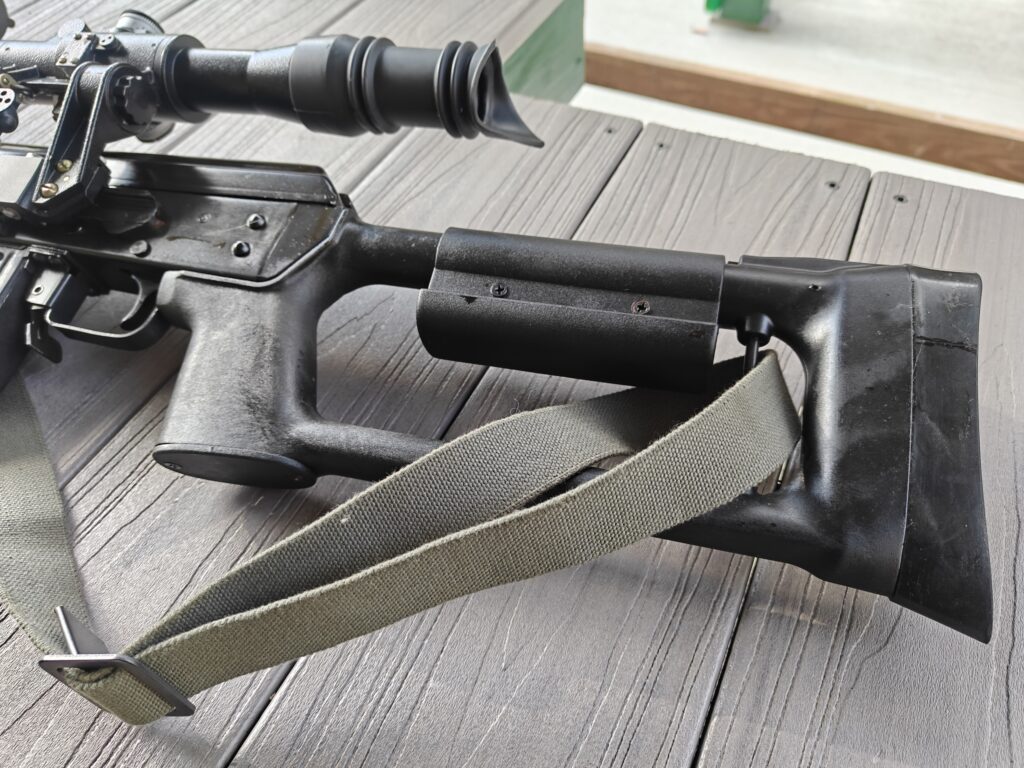
There are wooden furniture variants seen in military service and older photos, but they’re basically unobtainium in North America. Honestly, the polymer furniture may actually save some weight compared to the full wood military configurations — while also making the rifle resemble a Dragunov from across the room and poor financial decisions up close.
The M91 also isn’t a true precision rifle.
Everything about it looks like it should be. The weight, the caliber, the optic setup, and the styling all scream “Cold War sniper rifle.” But underneath all that is still an enlarged AK action.
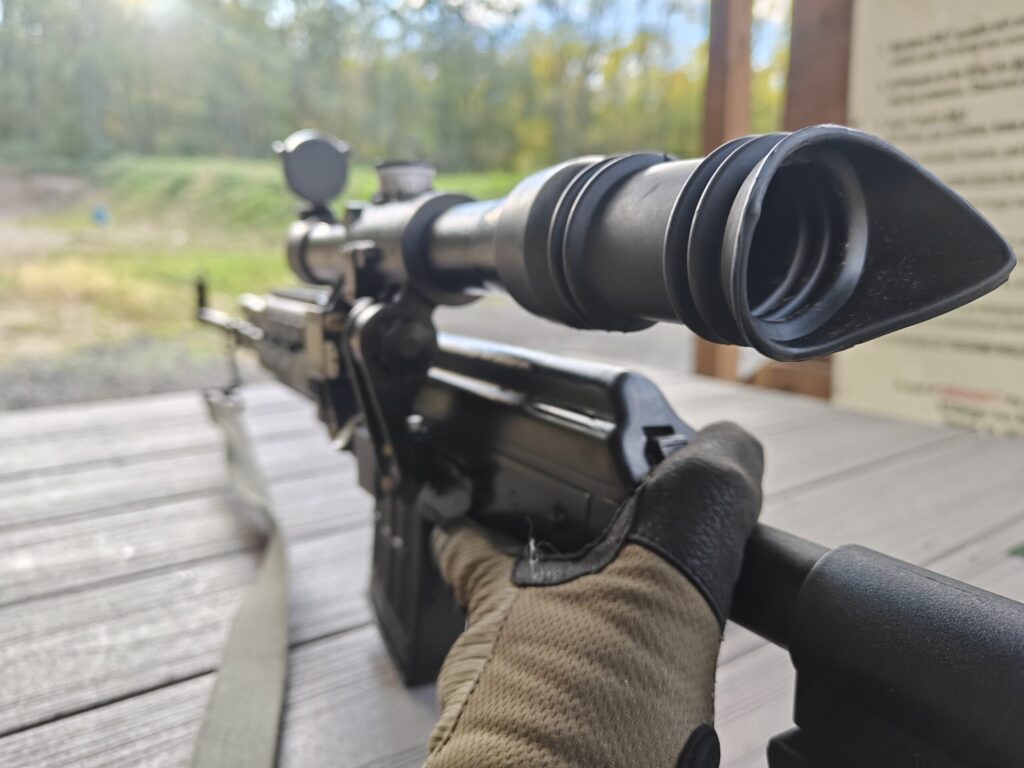
And thus begins the eternal internet argument:
“AKs are inaccurate.”
“No, AKs are extremely accurate.”
“Mine shoots sub-MOA.”
“Sure it does, Gary.”
Reality lands somewhere in the middle.
Some Fundamentals of the M91
The basics are straightforward: Serbian-built, chambered in 7.62x54R, Dragunov-inspired styling, enlarged AK platform, and an adjustable gas block.
But, as mentioned earlier, Zastava likes adding a few unique touches.
The barrel is a 24-inch, cold hammer-forged, chrome-lined barrel with a 1:9 twist rate. The chrome lining is important because it immediately tells you this rifle was built for durability first and precision second.
Chrome-lined barrels tend to lose a small amount of precision compared to premium unlined barrels because the chrome itself is literally a coating inside the bore. That coating can vary slightly in thickness, which changes bore dimensions microscopically and affects consistency.
Now before the internet accuracy cult arrives with spreadsheets and emotional support calipers, yes — chrome-lined barrels can still shoot extremely well. But they’re generally designed for longevity, corrosion resistance, and reliability under abuse. And abuse is something AKs specialize in.
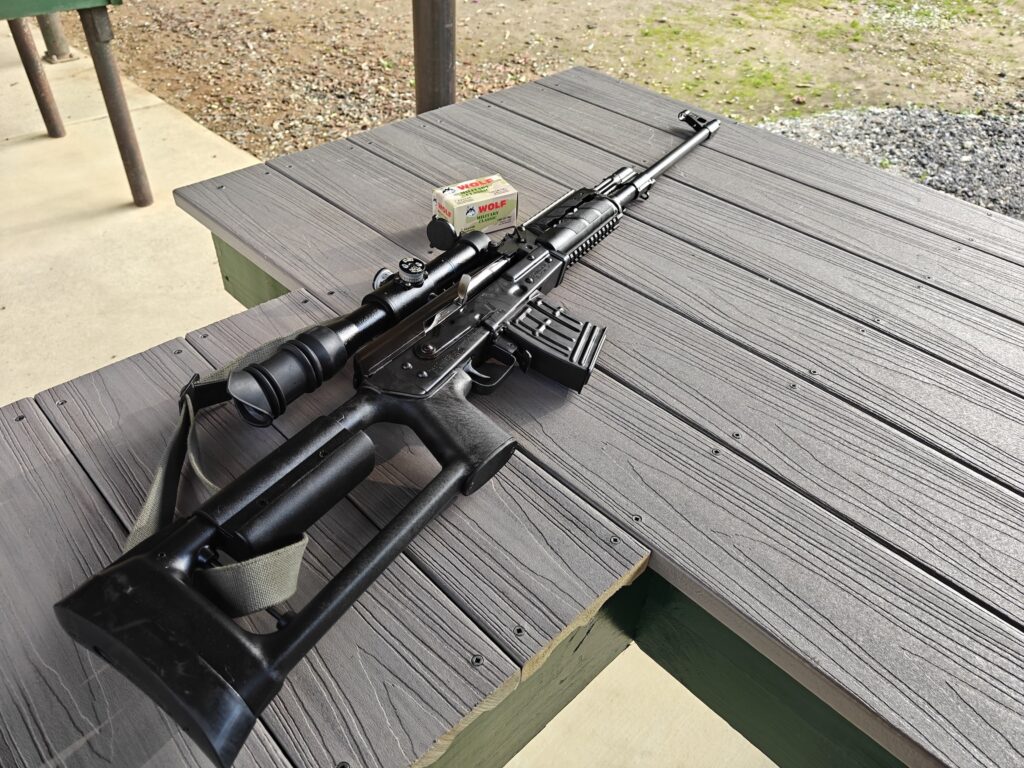
To satisfy import regulations, the muzzle threads are covered and welded. Since I haven’t taken a Dremel and a questionable amount of confidence to mine yet, I can’t personally confirm the threading underneath. Reports claim 14x1LH threads exist under the cap.
I haven’t checked. I also don’t plan to. Mostly because I’ve already spent enough money on this rifle without adding “accidental gunsmithing project” to the list.
The adjustable gas system, however, is one of the rifle’s strongest features. Surplus ammunition, modern factory loads, soft loads, hot loads — the rifle runs them all with minimal drama. And it runs them reliably because of that adjustable gas block. When tuning loads, especially handloads, the ability to fine-tune the gas system becomes a huge advantage. Short-stroking? Add gas. Overgassed and launching brass into low Earth orbit? Dial it back.
It’s an old military hold out that is incredibly useful for reloaders.
The M91 May Actually Be Worth It for Reloaders
Even though the rifle isn’t purpose-built as a precision platform, it can be precision-tuned.
Aftermarket support for Yugo-pattern rifles is limited in general, and even more limited for something as niche as the M91. Still, parts and upgrades do exist if you’re willing to hunt for them hard enough.
Reloaders in the ‘80s and ‘90s had excellent success developing loads for the M76 in 8mm Mauser, and the M91 feels like the modern evolution of that concept. With the M77 now covering the .308 side of things, the M91 steps into the longer-range role.
Accuracy is always the big question.
Fortunately, boxer-primed 7.62x54R brass is becoming easier to find, and handloading opens the rifle’s real potential. There are approximately fourteen billion videos online claiming the M91 is the greatest designated marksman rifle ever built, usually filmed by a guy breathing directly into a phone microphone during a windstorm.
For the average shooter — myself included — the goal isn’t shooting milk jugs at 1,200 yards while narrating ballistic coefficients like a TED Talk. The goal is consistency. Most reports place the rifle somewhere between 1.5 and 3 MOA depending on ammunition and shooter capability. Honestly? That’s respectable. Not revolutionary, but respectable.
The rifle may look like an SVD Dragunov, but it doesn’t carry the same pedigree or precision reputation. Still, it’s a noticeable step above the PSL, and if your goal is practical shooting under 3 MOA, the M91 delivers.
And this is where the handloader becomes the deciding factor. Proper load development, powder selection, fire-forming brass, projectile choice, and gas tuning can significantly tighten performance. The rifle rewards experimentation — which is exactly why reloaders end up enjoying platforms like this.
Because nothing says “fun weekend” quite like spending six hours adjusting powder charges to save a quarter-inch on paper.
Where the M91 Stands Today
My biggest issue with the M91 is simple: price.
Depending on the retailer — or how emotionally unstable GunBroker bidders are feeling that week — these rifles typically sell between $3,000 and $5,000 USD. Magazines are proprietary and expensive as well, averaging around $65 each. Which somehow feels insulting even after buying the rifle itself. This is not a casual purchase. It’s an investment.
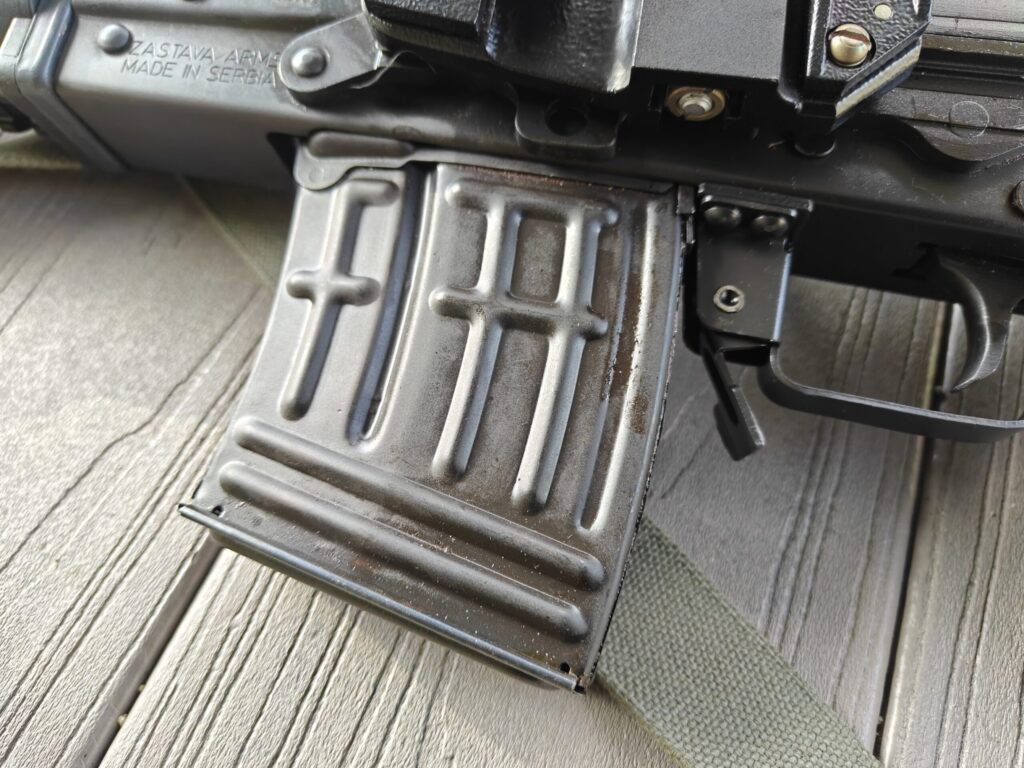
Still, with PSLs, Norincos, and actual SVDs climbing steadily into collector pricing territory, the M91 starts making more sense than it used to. For reloaders especially, it fills a niche that very few rifles currently occupy.
And that adjustable gas system remains one of its best selling points.
What ultimately helps justify the rifle is Zastava’s overall quality and reputation. No, they aren’t perfect. But they stand behind their products, and they’ve been manufacturing firearms longer than many companies have existed. Millions of M70s, M85s, M92s, and M77s have proven Zastava’s reputation for building durable, reliable rifles. The M91 simply continues that tradition — just with more weight, more recoil, and significantly more expensive magazines.