
Most people do not come to reloading because they are chasing some idealized version of precision or because they want to spend their evenings measuring things most people never think about. They come because factory ammunition became expensive, scarce, or unreliable, and reloading offered a way to regain some control over cost, availability, and consistency without depending on whatever happened to be on a store shelf that week. The press gets mounted, dies get set up, powders get compared, and the process starts to feel familiar. Brass, meanwhile, tends to get treated as a reusable container rather than a variable, something you keep using until it obviously fails and then replace without much thought.
That approach works for a while. Then it quietly stops working, usually in ways that cost money rather than announce themselves as a clear problem.
Brass is the only component in the reloading process that is expected to survive repeated firings, and it is also the only one that carries forward a record of everything that has happened to it. Every firing changes its shape slightly. Every sizing pass works the material a little more. Every decision about how hard a load is pushed or how aggressively a case is sized leaves behind evidence, whether the reloader notices it at the time or not.
Uniformity Is Usually Assumed
Most reloaders sort brass by headstamp and consider the job done, especially when the goal is saving money rather than chasing small performance gains. Same manufacturer, same caliber, same bin feels reasonable, and for a while it usually works well enough to reinforce the assumption. 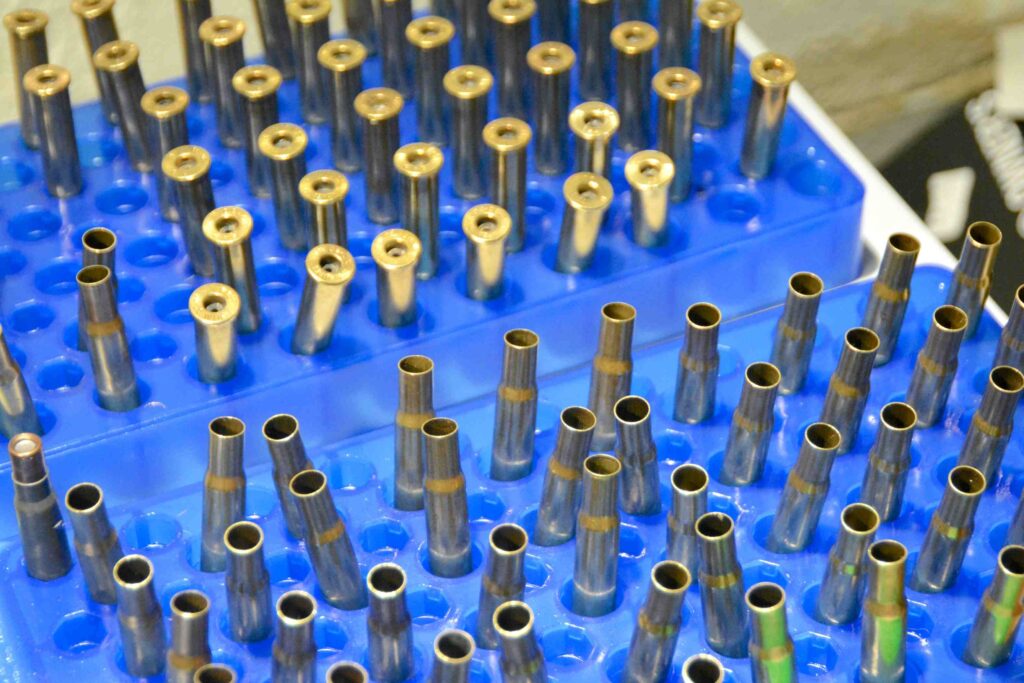
Cases stacked and ready to go may have a different source than their ballistic brethren.
The problem is that brass does not share a common history just because it shares a headstamp. Some cases were fired in tighter chambers. Others were fired hotter. Some were sized harder or trimmed more aggressively. Over time, those differences accumulate, and the brass begins to behave less like a uniform batch and more like a collection of individual cases that only look similar on the outside.
At the bench, this shows up in ways that are easy to dismiss if you are not paying attention. A handful of cases need trimming sooner than expected. A primer seats with less resistance than the rest. The press handle feels slightly different on certain strokes. None of this is dramatic enough to stop a loading session, but it introduces friction into a process that used to feel smooth and predictable.
Most reloaders respond by assuming the issue lies elsewhere and begin adjusting the load itself, when the brass has simply stopped behaving as a uniform component.
Differences Can Cost You But Are Hard to Observe
Internal differences in brass are rarely visible, which is part of what makes them so frustrating for reloaders who are trying to be economical. Two cases can look identical on the outside and still have meaningful differences in internal volume or wall structure, and those differences do not need to be extreme to matter. They only need to be uneven across a batch.
This often shows up as performance that no longer makes sense relative to the effort being put in. Velocities spread more than expected. Accuracy drifts without an obvious cause. Nothing in the process appears overtly wrong, yet the results are no longer predictable. For someone focused on saving money, the natural response is to chase the problem through other components, adjusting powder charges, swapping powders, or loading additional test batches in an attempt to bring things back into line. 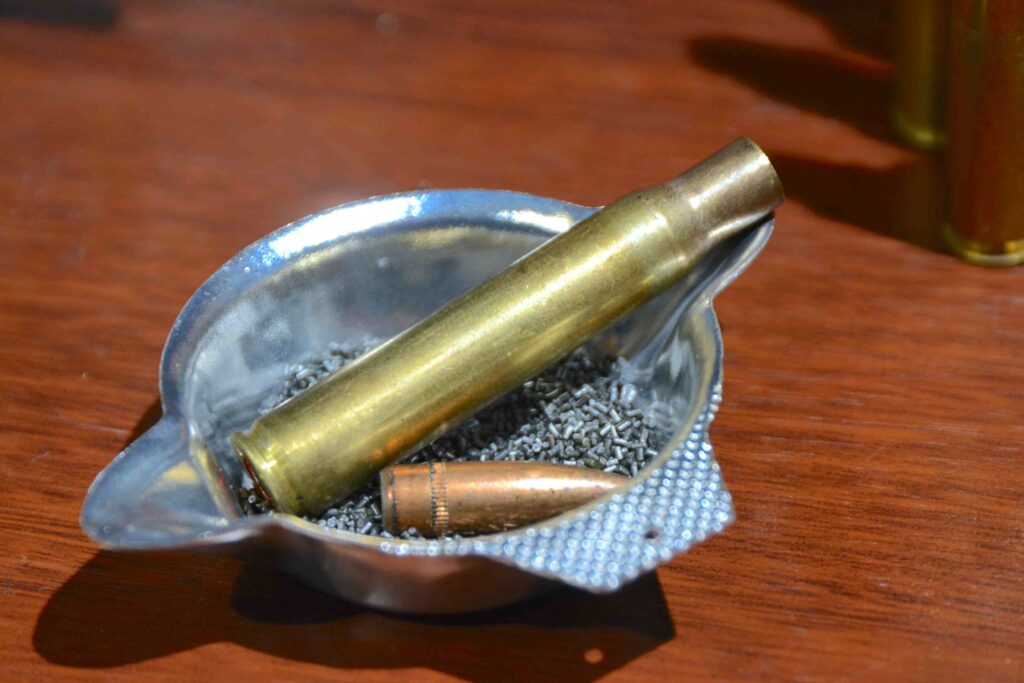
Internal dimensions will affect both the amount of powder stored and pressures when fired
In many cases, the load itself was never the problem. The brass has simply reached a point where it no longer behaves consistently enough to support the assumptions being made about it.
How Brass Changes With Use
Brass does not remain static as it cycles through firing and resizing. It stretches, hardens, and gradually responds differently to the same inputs that once produced uniform results. These changes tend to happen slowly, which is why they are so often misdiagnosed.
At the bench, the signs are subtle and usually felt rather than measured. The press handle no longer moves with the same resistance from case to case. Bullet seating pressure varies just enough to be noticeable. The rhythm that once applied across an entire batch begins to break down even though nothing about the setup has changed. 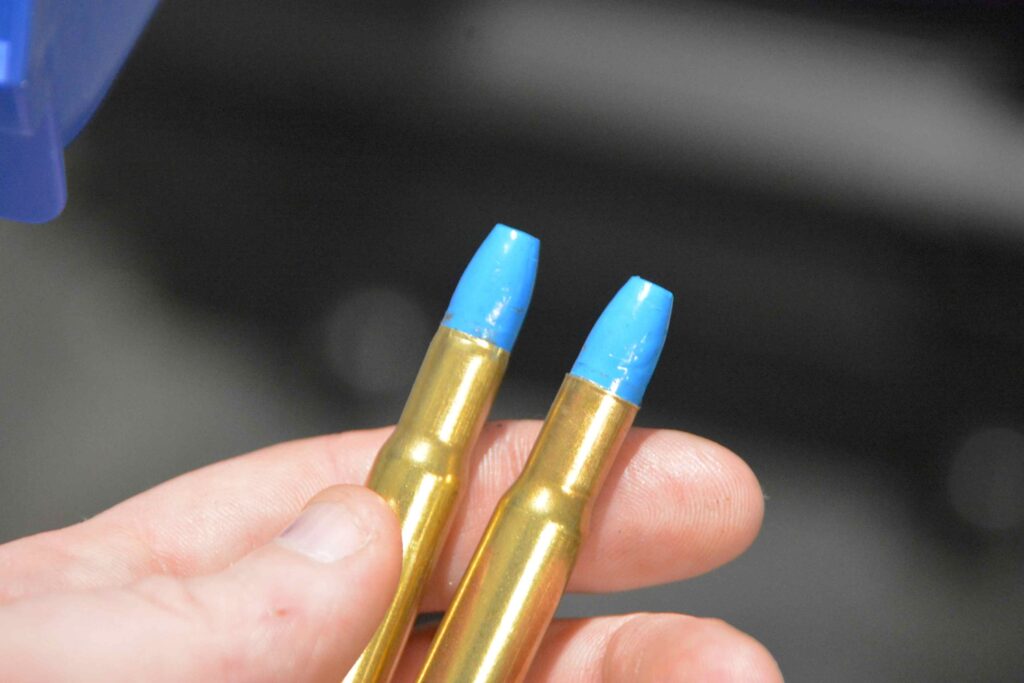
Even when reloading the exact same way, a case may have varied dimensions causing deformity during reloading
Most reloaders assume they are doing something wrong when this happens, because it is easier to question technique than to accept that the brass itself has changed. That assumption leads to wasted time, wasted components, and a growing sense that the process has become less predictable than it used to be.
Sizing Out of Habit Instead or Necessity?
Sizing practices are one of the fastest ways to shorten brass life without realizing it. Many reloaders size cases the same way every time simply because that is how they learned, not because the rifle demands it.
Aggressive sizing works the brass harder than necessary, accelerating stretching and increasing how often trimming is required. Over time, this compounds into shorter case life and greater variability, even when everything else in the process remains consistent. For reloaders focused on saving money, this is one of the more expensive habits to carry forward unchecked.
Allowing the rifle to dictate how much sizing is actually required often extends brass life noticeably. That extension shows up in very practical terms. Fewer cases get discarded. Fewer problems appear midstream. Fewer adjustments are needed to keep loads behaving the way they should.
Signals of the End of Useful Life
Brass rarely fails without warning, and primer pockets are usually the first place those warnings appear. Primers begin to seat with less resistance. Some pockets feel different from others in the same batch. The change is gradual enough that it can be ignored if you are not paying attention. 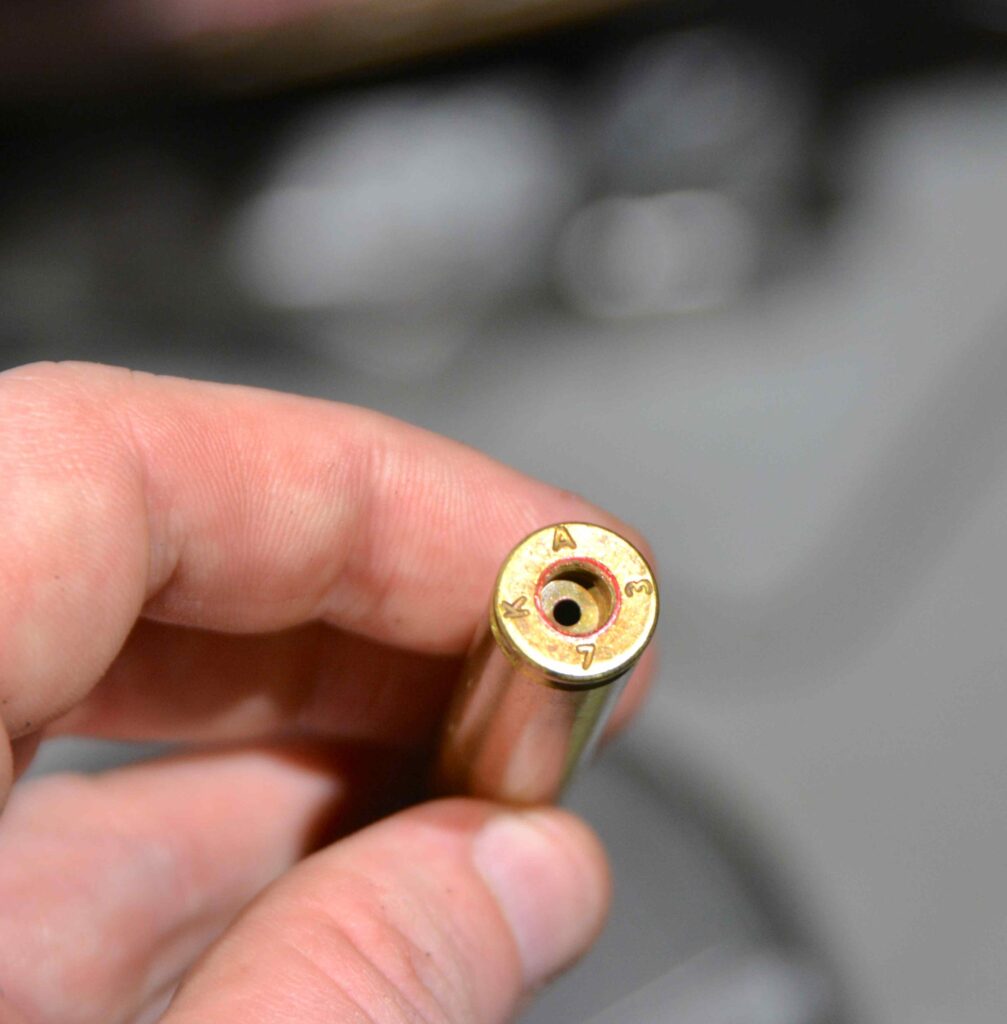
The first area that shows a cases’ useful life is expired are looser fitting primers
These signs are often blamed on hot loads, but they are just as often the result of brass that has been worked too hard for too long. Ignoring them does not save money. It delays an inevitable decision and increases the chance that reliability issues will surface at the worst possible time.
Brass tends to be honest about its condition long before it becomes unsafe, provided someone is listening.
Performance Vs Longevity
Reloaders whose primary goal is saving money gain very little from pushing loads to the edge of performance. Higher velocities shorten brass life, increase trimming frequency, and loosen primer pockets sooner than necessary. The cost of those choices is rarely obvious at first, but it accumulates quietly over time.
Moderate, consistent loads tend to extend case life and reduce wasted effort, and brass that lasts longer also tends to behave more predictably. That predictability reduces the number of batches that need to be reworked or scrapped entirely, which is where much of the hidden cost of reloading actually lives.
Saving money through reloading is less about squeezing every possible bit of performance out of a case and more about making choices that keep the system stable over time.
Pay Attention Instead of Rushing!
The reloaders who save the most money are rarely the ones rushing through the process. They are the ones who pay attention to how their brass behaves over time, who notice when something feels different, and who adjust before small issues turn into expensive ones.
Tracking firings does not require elaborate systems or notebooks. Keeping brass segregated by rifle, paying attention to how it sizes and seats, and recognizing when it has changed character is often enough to prevent problems before they become costly. 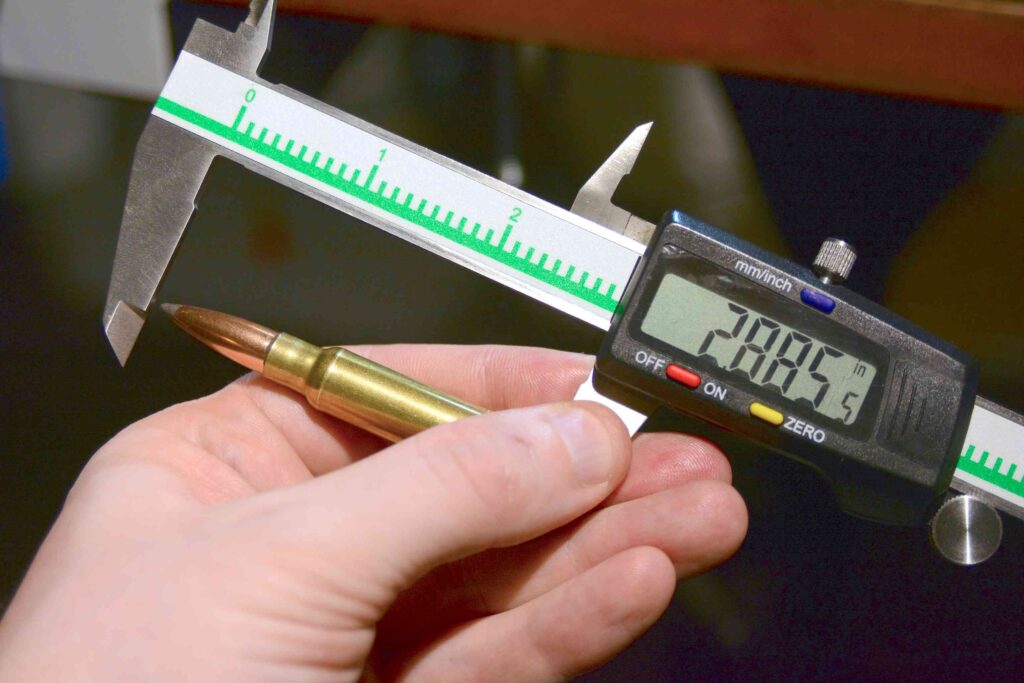
Don’t take your press as the authority on case length; always double check.
Brass reflects everything that happens to it, whether or not the reloader chooses to notice. Pressure, sizing habits, and restraint all leave a record.
What This Changes at the Bench
If you are reloading to save money, the takeaway is not that brass requires constant measurement or obsessive sorting. It is that ignoring brass tends to push you into spending money solving problems that already have explanations. When performance drifts, when consistency erodes, or when the process begins to feel less predictable than it once did, the first place to look is not the powder measure or the load data. It is the brass that has been quietly accumulating those changes over time.
Saving money through reloading often comes down to restraint rather than optimization. Keeping brass organized enough to notice when it changes, letting its condition guide decisions before altering a load, and accepting that moderate loads usually extend case life further than aggressive ones all contribute to a process that stays stable longer. Stability is where the savings actually live. Fewer discarded cases, fewer wasted components, and fewer sessions spent chasing issues that did not originate with the load itself.
Brass does not demand attention for its own sake. It rewards it. When you listen to what it is telling you, you tend to load ammunition that behaves the same way longer, costs less over time, and inspires more confidence when it matters.