
Reloaders have many options when it comes to supplying brass for their reloading projects. You can pick up your own after shooting, you can obtain brass from ranges, or you can buy new brass. Whatever the source, brass should be organized and inspected. A good reloading bench can be set up to easily facilitate performing all the steps necessary to ensure safe brass for your reloading project.
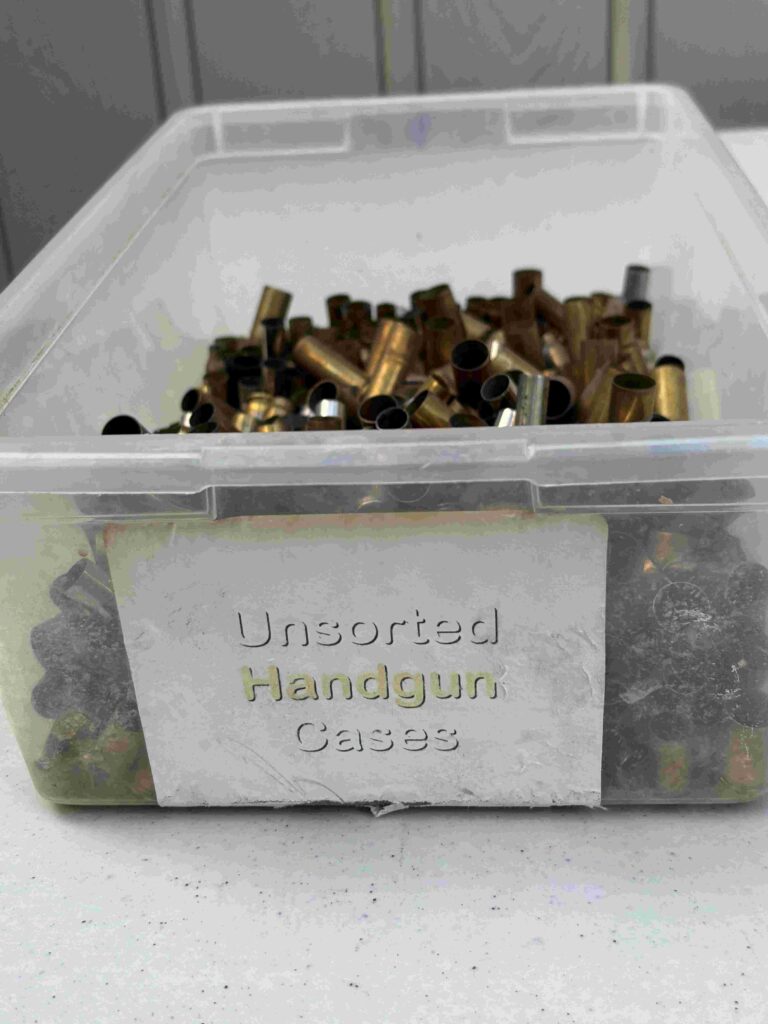
Previously fired shell casings are gathered from a variety of sources awaiting cleaning and sorting.
I start with a bin to accumulate brass from the various sources. Actually, there are two bins I work from. One is for unsorted handgun cartridges and the other for unsorted rifle cartridges. When I’m ready to start a reloading project, I shuffle enough brass for the project from the appropriate unsorted bin to the tumbler.
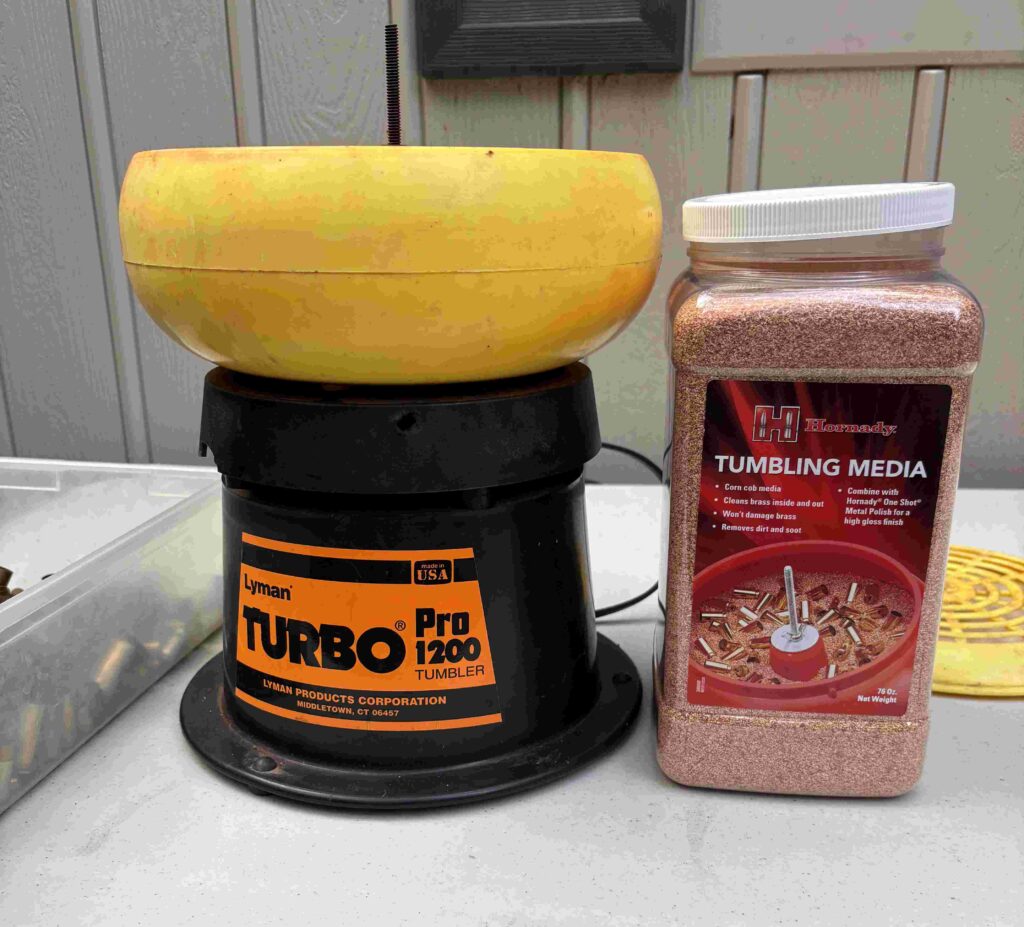
Lyman Turbo Tumbler and media, the first step in cleaning used brass.
Lyman and Hornady each make tumblers of various sizes. The one I use is the Lyman Turbo Pro 1200. If I were starting from scratch building my reloading setup, I’d get a kit that includes a separator along with the tumbler. The separator is great for dumping media out of the brass once it has been cleaned. For now, I use a kitchen strainer for that part of the project.
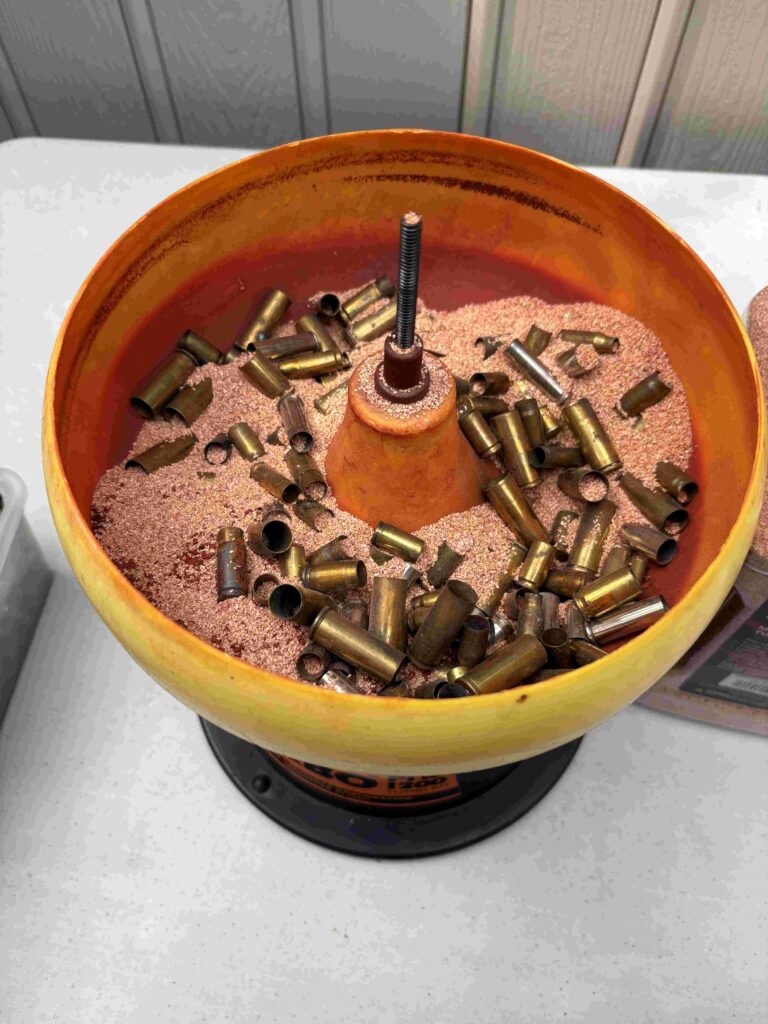
Brass is cleaned in the tumbler and will be inspected and sorted as it is removed.
To ensure the brass is ready for the press, make sure all the media has been removed, then set it aside for inspection. Look each case over for defects and discard any that have cracks or splits. Check carefully for separation which will show up as a bright ring around the case head. Any sign of corrosion or gas leak around the primer hole should result in rejection.
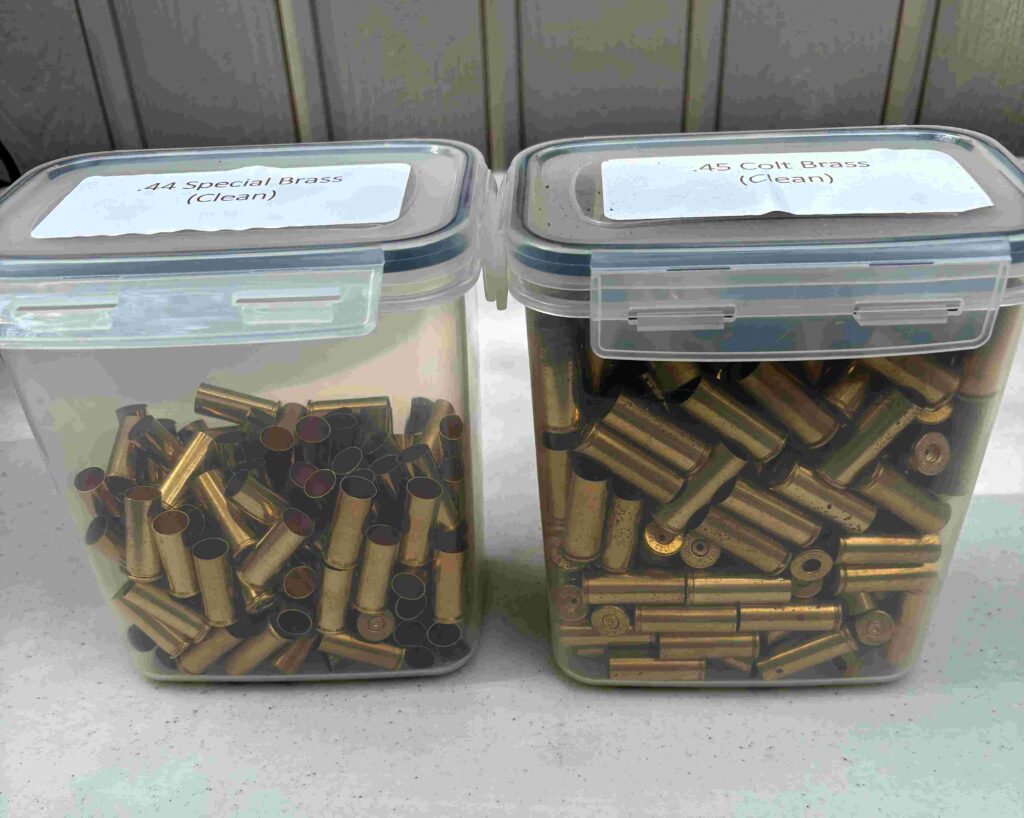
As clean brass is removed from the tumbler it is sorted by caliber.
Sometimes you’ll see a cartridge case with bulges around the base that would be a sign the cartridge was overstressed during firing. As each case passes inspection, it should be placed in a loading block to indicate it’s ready to be loaded.
Take each case from the loading block and brush the inside with a brush of the appropriate caliber. Lubricate each case by rolling it lightly across a pre-lubed pad. Now your case is ready for primer seating. Modern progressive presses will run a die set that will remove the existing die and seat a new one. For this to work, everything on the press has to be perfect, and frankly, I find it challenging. So, I find primer work off the press speeds up my reloading process and results in a smoother operation for the rest of it.
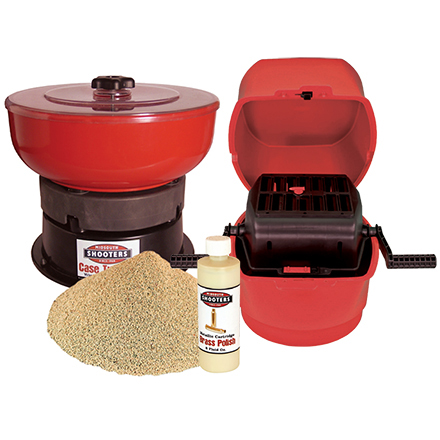
Midsouth Tumbler Kit Pro With Brass Sorter (Tumbler, Media, Brass Polish, & Separator Sorter Combo)
I use a Harvey Primer Universal Handheld Deprimer to remove primers from my spent brass. Then a quick turn with a Lyman Primer pocket reamer ensures the primer hole is clean. My next step is with either a Lyman or Hornady manual priming tool to prime the brass I have that’s ready to reload. Once the primers are seated, the brass is ready to load.